What to Make With Leftover Ingredients
What to make with leftover ingredients gets easier with a simple system for matching scraps, staples, and quick meals you can actually cook.
You open the fridge to half a bell pepper, a cup of rice, a few eggs, some yogurt, and a container of spinach that needs to be used tonight. That is usually the moment people search for what to make with leftover ingredients, then lose ten minutes scrolling and still end up ordering takeout. The real fix is not finding one clever recipe. It is having a repeatable way to turn random food into dinner.
Leftovers become useful when you stop thinking in recipes first and start thinking in formats. Most extra ingredients fit into a small number of meal types that are flexible, fast, and forgiving. Once you know those formats, the question shifts from “Do I have the exact ingredients?” to “Which meal can absorb what I already have?” That is a much easier problem to solve on a weeknight.
What to make with leftover ingredients starts with categories
Before you cook, sort what you have into four groups: protein, vegetables, starch, and sauce or flavor boosters. Protein might be chicken, beans, tofu, eggs, or deli meat. Vegetables include fresh produce, cooked leftovers, herbs, and even that last scoop of roasted broccoli. Starch covers rice, pasta, bread, potatoes, tortillas, and grains. Sauce and flavor boosters are the things that make a dish taste finished, like salsa, soy sauce, broth, pesto, cheese, lemon, mustard, or a spoonful of curry paste.
This matters because most fast meals are built from some version of those parts. If you have vegetables and a starch but no protein, eggs or beans can usually close the gap. If you have protein and vegetables but no starch, soup, salad, or lettuce wraps may be the better path. You do not need perfect balance every time, but having a structure keeps you from wasting both food and attention.
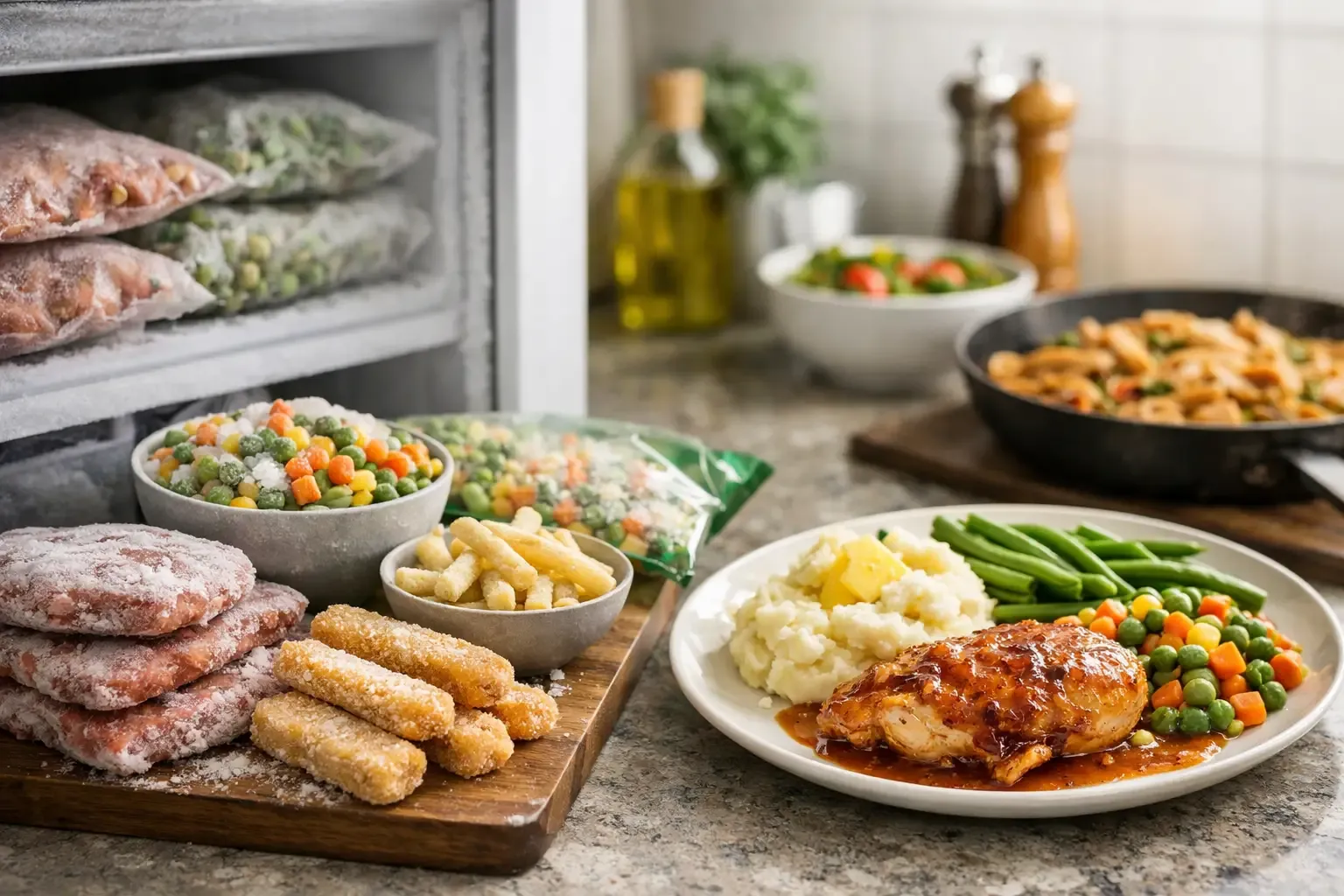
The other useful filter is urgency. Soft herbs, berries, salad greens, mushrooms, ripe avocados, and cooked seafood need a plan now. Carrots, cabbage, hard cheese, and frozen vegetables can wait. Use the fragile ingredients first and let the durable ones support the meal later in the week.
The five meal formats that solve most leftovers
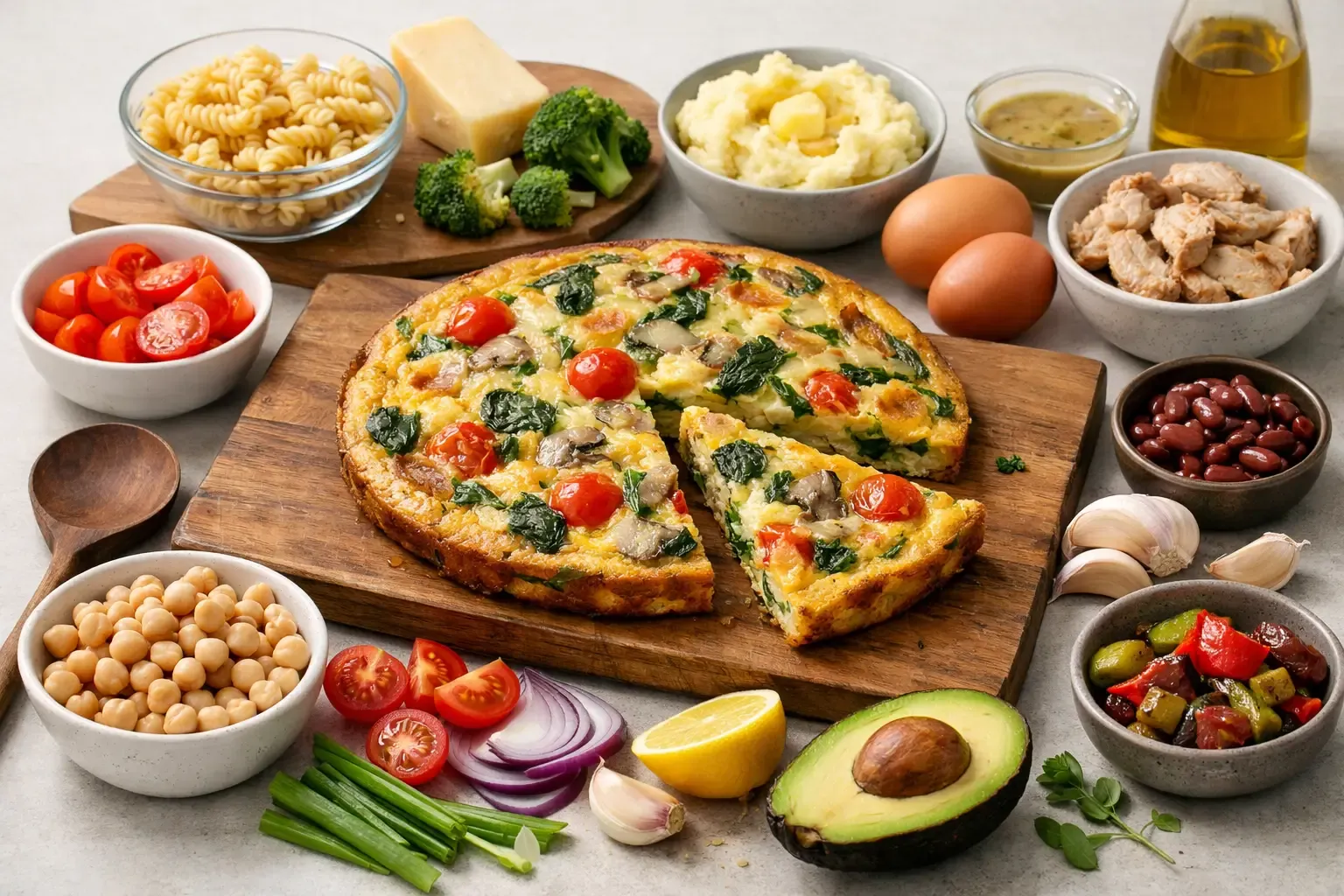
The easiest answer to what to make with leftover ingredients is usually one of five formats: fried rice, frittata, soup, bowls, or pasta. These work because they handle uneven quantities well.
Fried rice is the classic clean-out-the-fridge option for a reason. Cold rice gives you a base, but quinoa and farro also work. Add chopped vegetables, a cooked protein if you have one, and an egg if you need extra substance. Soy sauce, sesame oil, chili crisp, or garlic butter can take it in different directions. The trade-off is moisture. Watery vegetables like zucchini or fresh tomatoes can make it soggy, so cook them hard first or leave them out.
A frittata or scramble is one of the fastest ways to use small amounts of produce, herbs, cheese, or cooked meat. Eggs smooth over the fact that you only have a little of everything. This is especially useful when you have leftovers that are already cooked, like roasted vegetables or breakfast potatoes. Just watch salt levels if you are adding cheese, bacon, or olives.
Soup is better than people think for leftovers because it does not need exact measurements. Broth, canned tomatoes, coconut milk, or even water plus bouillon can become the base. Toss in vegetables, beans, grains, noodles, or shredded chicken. Soup is also where tired produce often gets a second life. Slightly limp carrots or celery still have plenty to offer once cooked.
Bowls are the lowest-friction option when you do not want to make a full recipe. Start with rice, greens, potatoes, or noodles. Add whatever protein and vegetables you have. Finish with a sauce that ties the components together. This works well for busy households because each person can build their own version from the same leftover ingredients.
Pasta is the fastest route when the fridge looks sparse but not empty. A little spinach, garlic, one sausage link, leftover chicken, frozen peas, or half a jar of marinara can all become dinner. If you do not have enough sauce, pasta water, butter, olive oil, and grated cheese can bridge the gap.
Build around one anchor ingredient
When the fridge feels chaotic, pick one ingredient that must be used and build around it. That anchor might be cooked chicken, half a head of broccoli, leftover rice, or a carton of mushrooms. Starting with the most urgent item narrows your options fast.
If your anchor is vegetables, decide whether they are better raw, roasted, sautéed, or blended. Cucumbers and herbs want salad or wraps. Broccoli, cauliflower, peppers, and Brussels sprouts fit bowls, pasta, and stir-fries. Tomatoes on the edge can become a quick sauce. Spinach can go into almost anything, but it shrinks so much that it is rarely the whole plan.
If your anchor is a protein, ask whether it should stay the star or get stretched. A single leftover chicken breast can top salads and grain bowls, or it can be chopped into tacos, soup, or fried rice and feed more people. Stretching usually works better when quantity is low and flavor is already strong.
If your anchor is a starch, use it to absorb loose ends. Rice, noodles, bread, and potatoes are useful because they make leftovers feel like a meal instead of a collection of ingredients.
A practical method for deciding fast
Use a simple sequence. First, identify what needs to be used today. Second, choose a meal format. Third, fill the missing role with a pantry staple.
Say you have spinach, mushrooms, and cooked rice. A bowl could work, but it may feel incomplete. Add eggs and make fried rice. If you have mushrooms, yogurt, and herbs, but no starch, blend the yogurt with lemon and garlic, roast the mushrooms, and serve them on toast or with a simple salad. If you have leftover chicken, tortillas, and one bell pepper, tacos are the obvious answer because the format matches the quantity.
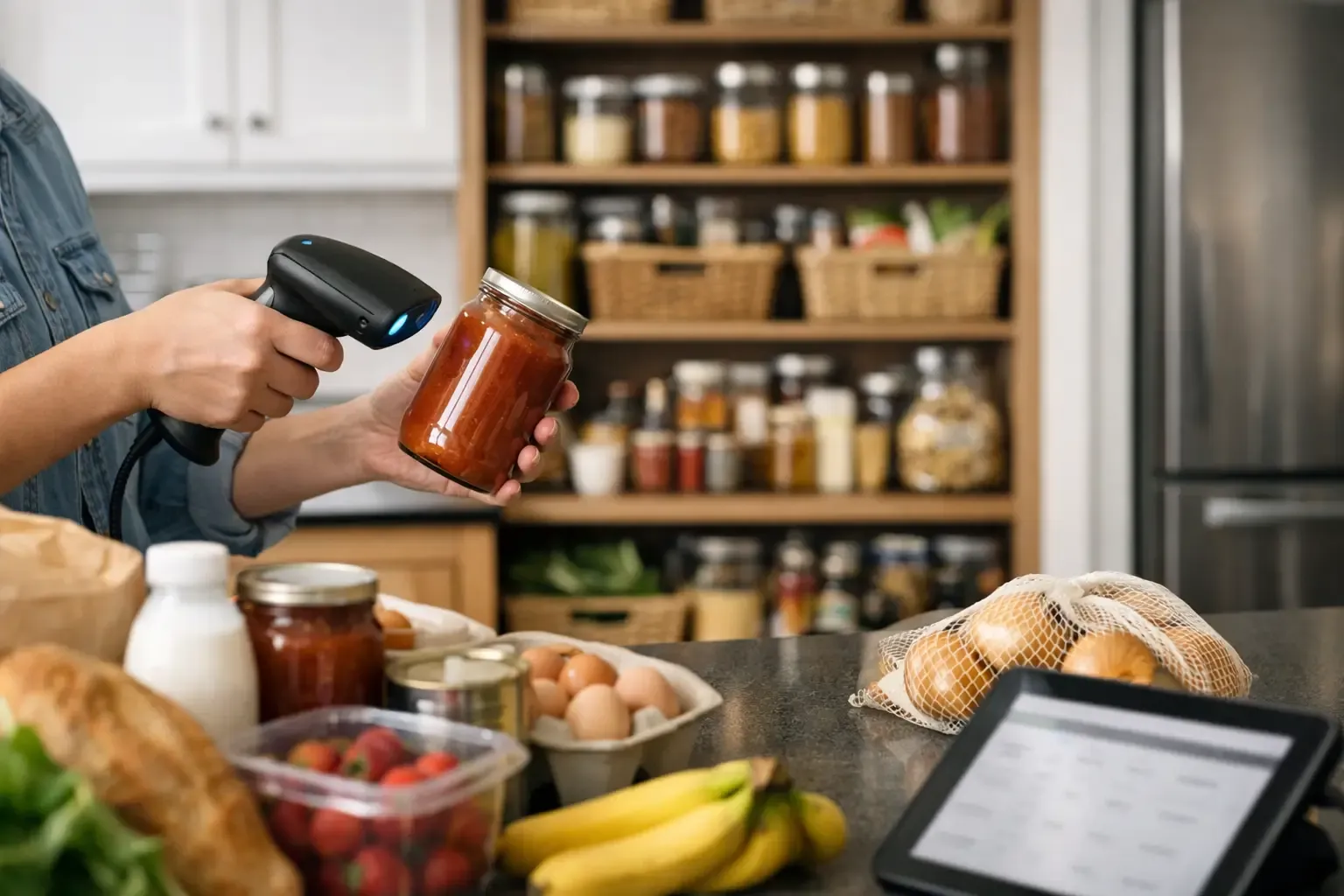
This is where organized pantry tracking helps more than another recipe site. If you can quickly see what is in the fridge, freezer, and pantry, you make better substitutions and buy less duplicate food. The goal is not culinary creativity for its own sake. It is reducing the gap between “I should use this” and “Dinner is done.”
Good substitutions beat perfect recipes
Most leftover cooking depends on substitution. That works best when you swap by role, not by ingredient name. Beans can replace meat in soups, bowls, and tacos. Yogurt can stand in for sour cream or part of a creamy sauce. Frozen vegetables can replace fresh in cooked dishes. Bread can become croutons, toast, melts, or breadcrumbs. Herbs can be turned into sauces before they go bad.
The trade-off is that substitutions change the result. Greek yogurt adds tang and can split if overheated. Frozen spinach brings more water than fresh. Canned beans are softer than cooked lentils and may not hold shape the same way in a skillet. None of that makes the meal wrong. It just changes whether a dish is crisp, creamy, loose, or hearty.
If you are missing one major component, buy only that. The smartest grocery run is often a targeted one: eggs, tortillas, broth, pasta, or a rotisserie chicken that turns scattered leftovers into actual meals for two or three days.
What to make with leftover ingredients when you have almost nothing
Sometimes the fridge is not overflowing. It is just awkward. A few condiments, a partial onion, some eggs, and one cooked vegetable can still become dinner.
This is where pantry staples matter most. Keep a short list that consistently rescues leftovers: pasta, rice, canned beans, canned tomatoes, broth, tortillas, eggs, shredded cheese, and a few strong sauces. You do not need a stocked gourmet pantry. You need a practical one that can connect ingredients you already have.
Even simple combinations work. Toast plus ricotta or cottage cheese plus roasted vegetables. Rice plus egg plus chili oil. Pasta plus garlic plus greens. Beans plus salsa plus cheese in quesadillas. None of these are glamorous, but they are fast, low-waste, and reliable.
If you want less guesswork, this is exactly the kind of problem Sously is built to solve. Instead of manually checking shelves, remembering what is in the freezer, and stitching together a shopping list by hand, you can work from what is actually on hand and generate a meal that fits the gap.
The goal is less waste, not kitchen perfection
A lot of people overcomplicate leftover cooking because they assume every meal needs a recipe-worthy identity. It does not. It just needs enough structure to use what you have before it expires, enough flexibility to handle substitutions, and enough flavor to make dinner worth eating.
That means some nights the right answer is soup, even if soup was not the plan. Some nights the spinach goes into eggs because the pasta sauce is not enough to carry it. Some leftovers should be frozen instead of forced into tonight's meal. Efficiency beats purity here.
The best system is the one you will actually use after work when you are hungry and short on time. Start with the ingredient that needs attention, choose a flexible format, and fill one missing piece from the pantry. That is usually all it takes to turn leftovers into a meal instead of another thing you forgot to use.
Cook from what you have.
Sously is the meal-planning kitchen co-pilot the blog is written from — free to start on iPhone and Android.
Get Sously