12 Foods That Expire Fastest at Home
Learn which foods that expire fastest need priority use, how long they last, and simple ways to waste less with better fridge planning.
That bag of spinach you bought three days ago should not already look defeated, but here we are. If you regularly end up throwing out produce, dairy, or leftovers, the pattern usually starts with the same problem: the foods that expire fastest are the easiest to forget, bury, or overbuy.
The fix is not a more ambitious cooking routine. It is better sequencing. Once you know which foods have the shortest useful life, you can plan meals around them first, freeze what will not get used, and stop treating every grocery item like it has the same clock.
Why some foods that expire fastest keep catching people off guard
Most food waste at home is not caused by dramatic spoilage. It is caused by friction. Delicate ingredients get pushed to the back of the fridge. A package gets opened without a clear plan. You buy with good intentions on Sunday, then life changes by Wednesday.
Highly perishable foods usually share a few traits. They have high moisture, lots of exposed surface area, or active bacteria and enzymes that keep changing the food after you bring it home. Some also react badly to temperature swings, which is why a long drive from the store or a crowded fridge can shorten their useful life.
Sell-by and best-by dates do not solve this on their own. Those dates are often about retailer timing or peak quality, not a guaranteed stop line for safety. The real question at home is simpler: what needs to be eaten first?
12 foods that expire fastest in a typical kitchen
1. Berries
Strawberries, raspberries, blackberries, and blueberries can go from fine to fuzzy fast. Raspberries and blackberries are usually the shortest-lived, often lasting just 2 to 4 days in the fridge. Strawberries may give you 4 to 7 days. Blueberries tend to be a little more forgiving.
Moisture is the problem. One crushed berry can speed up the decline of the whole container. Store them dry, unwashed, and loosely covered. Wash only what you plan to eat right away.
2. Bagged salad greens and tender lettuces
Spring mix, arugula, baby spinach, and chopped romaine have a short runway, especially once the bag is opened. Expect about 3 to 7 days, sometimes less if the greens were already warm in transit.
These greens collapse quickly because they bruise easily and trap moisture. If you buy them, put them in the first half of the week meal plan. If not, they become a limp side dish you keep meaning to rescue.
3. Fresh herbs
Cilantro, parsley, dill, basil, and mint are small but expensive sources of waste. Some herbs last under a week. Basil is especially sensitive to cold and can blacken in the fridge, while cilantro tends to wilt fast even when chilled.
The trade-off is convenience versus commitment. Fresh herbs improve food quickly, but they need a use case. If you only need a tablespoon, you need a follow-up plan for the rest.
4. Mushrooms
Fresh mushrooms often last 4 to 7 days, but that depends on how they are packed and how damp your fridge runs. Too much moisture makes them slimy. Too little airflow speeds up off textures.
Keep them in paper if possible, not sealed in a sweaty plastic environment. Once they start darkening and softening, they move from versatile ingredient to urgent assignment.
5. Raw seafood
This is one of the shortest windows in the kitchen. Most raw fish and shellfish should be cooked within 1 to 2 days of purchase. If you are not using it soon, freeze it.
Seafood is not a category for vague planning. Buy it for a specific meal, or buy frozen. Fresh can be great, but only if your schedule is actually stable enough to support it.
6. Ground meat and fresh sausage
Ground beef, turkey, chicken, pork, and uncooked sausage usually last 1 to 2 days in the fridge. Their larger surface area gives bacteria more room to work, so they spoil faster than whole cuts.
This is where people overestimate shelf life. A pack of ground turkey bought on Monday may not be a safe Friday dinner. If dinner plans are uncertain, freeze it the same day.
7. Soft cheeses
Ricotta, cottage cheese, fresh mozzarella, queso fresco, and cream cheese do not all behave the same, but many soft cheeses decline quickly after opening. Some are fine for a week or two, others less. Fresh mozzarella is especially short-lived once opened.
Texture and smell matter here. Watery separation, sour notes, or surface discoloration are useful signs. Hard cheeses buy you time. Soft cheeses do not.
8. Milk and cream
Milk often lasts about 5 to 7 days after opening, sometimes longer with careful refrigeration. Heavy cream can last a bit more, but it is still perishable enough to deserve a plan.
The issue is not just spoilage. Dairy gets forgotten because it feels universal, like it will always get used eventually. Then a partial carton sits behind leftovers until it becomes a science project.
9. Avocados
Whole avocados can flip from hard to overripe with very little warning. Once ripe and cut, they are even less forgiving. A cut avocado may only look good for 1 to 2 days.
This is a classic timing problem rather than a safety issue. You buy them early, wait too long, then have a very small window where they are actually useful.
10. Bananas
Bananas do not spoil as dangerously as raw meat or seafood, but they move through quality stages fast. Green becomes ripe, then spotted, then soft in a matter of days depending on room temperature.
That matters because people often buy too many. If your household only eats them at one stage, the useful window is narrower than you think. Freeze extras for smoothies or baking before they pass your cutoff.
11. Cooked leftovers
Most leftovers are best used within 3 to 4 days. That includes cooked rice, pasta, chicken, vegetables, soups, and casseroles. Rice deserves special attention because it is often left out too long before being refrigerated.
The problem with leftovers is not usually that you forgot they existed. It is that there is no system for deciding which container gets eaten first. The fridge becomes a holding area instead of a plan.
12. Cut fruit and cut vegetables
Whole produce often has a decent lifespan. Once cut, it changes fast. Melon, pineapple, sliced cucumbers, chopped onions, and cut peppers usually lose quality and safety margin much sooner than their whole versions.
Prepping ahead can save time, but it shortens the clock. That is the trade-off. Convenience increases, storage life decreases.
What to use first, freeze first, and buy more carefully
If your goal is less waste, not just better trivia, it helps to split food into action groups.
Use first: berries, salad greens, herbs, mushrooms, seafood, ripe avocados, and leftovers. These should shape the next 24 to 72 hours of meals.
Freeze first if plans are uncertain: ground meat, sausage, fish, bread, ripe bananas, and many cooked meals. Freezing is not failure. It is scheduling.
Buy more carefully: bagged greens, herbs, fresh mozzarella, large tubs of dairy, and produce you only use for one recipe. These are common overbuy items because they look useful in theory.
A practical system for foods that expire fastest
A better kitchen workflow beats good intentions. Start by identifying your short-life foods when you unpack groceries. Put them where they are visible, not hidden behind condiments or drinks.
Then build the week in order of urgency. Early week meals should use delicate greens, seafood, herbs, berries, mushrooms, and ripe produce. Midweek can use sturdier vegetables, opened dairy, and leftovers. Later in the week is where frozen ingredients, dry goods, eggs, pasta, and canned staples do their best work.
This is also why pantry tracking matters. When you can actually see what is on hand and what is nearing its limit, meal planning gets easier and waste drops without much effort. A tool like Sously helps by keeping fridge, freezer, and pantry items in one place, so the ingredients with the shortest clock stop disappearing into kitchen blind spots.
When dates matter less than signs
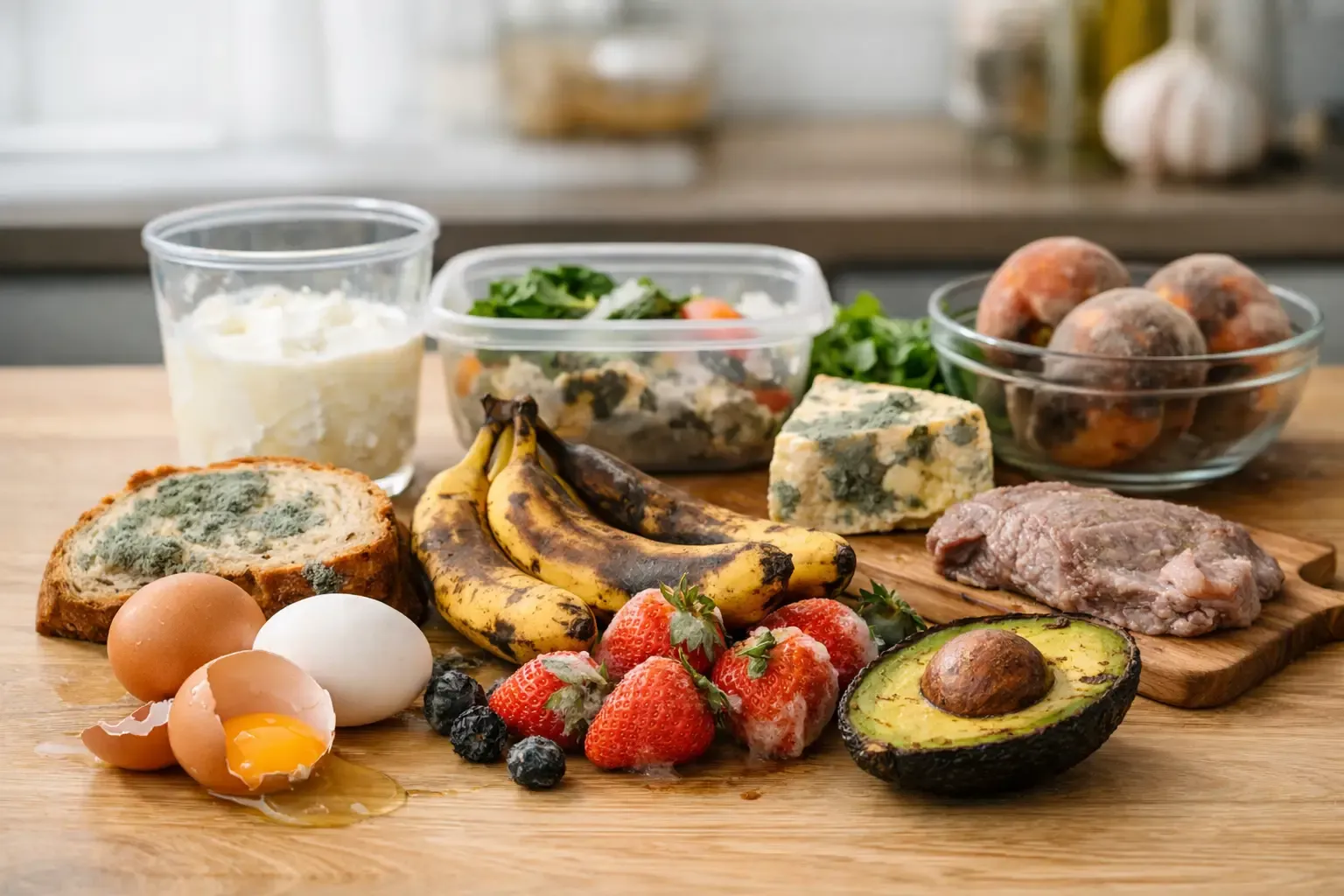
A printed date is useful, but your senses still matter. Mold, slime, bubbling where it should not be, strong sour smells, and major texture changes are clearer signals than a date on a package. That said, safety is not always visible, especially with meat, seafood, and leftovers. If something is questionable, throwing it out is cheaper than food poisoning.
There is also an important distinction between spoiled and just less appealing. Wilted herbs can become sauce. Soft berries can become compote. Overripe bananas can become baked oats or freezer smoothie packs. You do not need every ingredient to remain in perfect original form to make it useful.
The goal is not to run your kitchen like a lab. It is to know which foods deserve priority, which ones buy you time, and which ones should never be purchased without a near-term plan. Once that becomes routine, the fridge gets less chaotic, grocery trips get tighter, and dinner gets easier before anything has a chance to go bad.
Cook from what you have.
Sously is the meal-planning kitchen co-pilot the blog is written from — free to start on iPhone and Android.
Get Sously