How to Plan Dinners From Your Pantry
Learn how to plan dinners from pantry staples, use what you already have, cut food waste, and build easier weeknight meals with less stress.
You do not need a fresh recipe hunt at 5:30 p.m. You need a repeatable way to decide what dinner is based on what is already in the kitchen. That is the real answer to how to plan dinners from pantry ingredients: get clear on what you have, group it into usable meal parts, and fill only the gaps that matter.
Most weeknight dinner stress comes from one of two problems. Either you do not know what is in the pantry, fridge, and freezer, or you know what is there but cannot turn it into a meal quickly. A good pantry-based dinner plan fixes both. It reduces food waste, cuts duplicate grocery buying, and makes dinner feel less like a daily reset.
How to plan dinners from pantry staples without overthinking it
Start with categories, not full recipes. Full recipes are useful when you want a specific dish. They are less useful when your real goal is to use what you already own. Pantry dinner planning works better when you think in modules: a base, a protein, vegetables, flavor, and a finishing element.
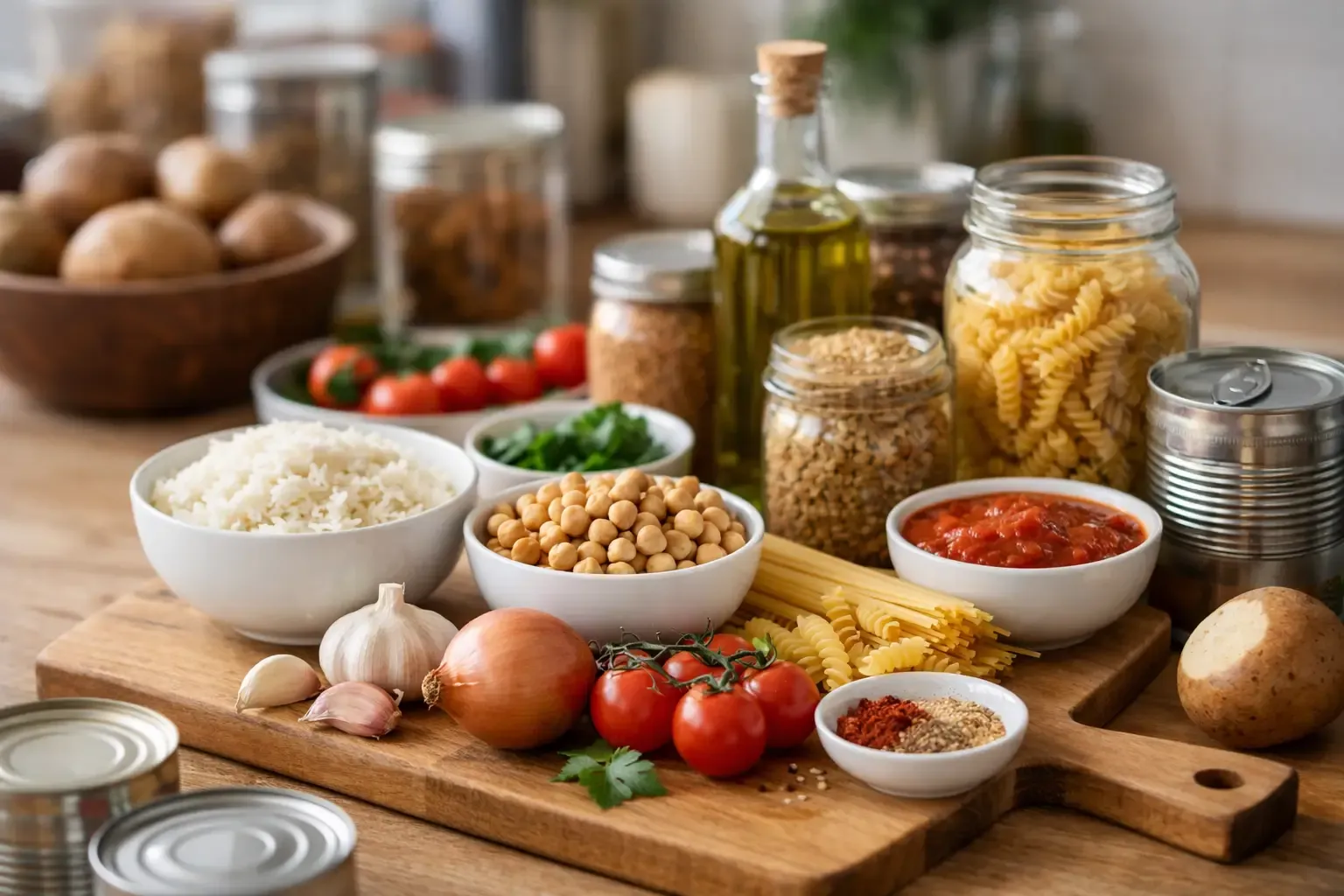
A base might be pasta, rice, tortillas, potatoes, bread, or canned beans. Protein could be eggs, tuna, lentils, frozen chicken, tofu, or ground meat. Vegetables might come from the freezer, the crisper drawer, or cans. Flavor is where meals stop feeling repetitive: garlic, soy sauce, salsa, broth, curry paste, tomato paste, Parmesan, chili flakes, lemon juice. A finishing element can be herbs, crunchy breadcrumbs, shredded cheese, yogurt, or a fried egg.
Once you think this way, dinner options appear faster. Rice, frozen broccoli, eggs, and soy sauce becomes fried rice. Pasta, canned tomatoes, garlic, and white beans becomes a quick skillet pasta. Tortillas, black beans, salsa, and shredded cheese becomes tacos or quesadillas. None of that requires a perfect pantry. It requires visibility.
Build a 10-minute pantry inventory
If your inventory is vague, your dinner plan will be vague too. You do not need a spreadsheet or a full kitchen overhaul. You need a quick snapshot of what is usable this week.
Check the pantry, fridge, and freezer in that order. Write down ingredients that can anchor meals, not every spice jar you own. Focus on grains, pasta, canned goods, proteins, sauces, dairy, eggs, tortillas, bread, frozen vegetables, and produce that needs to be used soon.
Then mark three things. First, what is highly perishable and should be used in the next one to three days. Second, what is flexible and can fit multiple meals. Third, what is missing if you want to turn those ingredients into actual dinners.
This is where many people overbuy. They see half a plan and shop for a whole new one. A better move is to identify the smallest purchase that unlocks several meals. If you already have rice, beans, onions, and frozen corn, buying cilantro, lime, and Greek yogurt may do more than buying ingredients for an entirely separate dinner.
If you use a pantry tracker, this step gets much easier because you are not relying on memory. A tool like Sously is built for exactly this workflow: see what is on hand, plan around it, and generate only the shopping list needed to close the gap.
Plan dinners by ingredient pressure, not by mood
Planning from the pantry works best when you decide based on what needs attention. Think of ingredients in three groups: use now, use soon, and shelf stable.
Use now ingredients are the short-life items - spinach, mushrooms, open yogurt, leftover cooked chicken, herbs, half an onion, a soft zucchini. These should shape your first dinners of the week.
Use soon ingredients are items with some flexibility - carrots, cabbage, cheese, eggs, tortillas, broccoli, tofu. Shelf-stable ingredients are your support system - pasta, rice, canned tomatoes, beans, broth, peanut butter, oats, spices.
A simple weekly rhythm often works better than a rigid recipe calendar. Early week meals should use the most perishable items. Midweek meals can rely on a mix of fresh and shelf-stable ingredients. End-of-week dinners are where freezer and pantry staples do most of the work.
That approach is less glamorous than planning seven aspirational recipes, but it is much more reliable. It also leaves room for real life. If Tuesday gets hectic, you can swap in a pantry-heavy meal without wasting the ingredients you meant to use on Friday.
Use dinner formulas instead of starting from scratch
The fastest way to answer what is for dinner is to keep a short list of meal formulas that can absorb different ingredients. These are not strict recipes. They are decision shortcuts.
A grain bowl can use rice, quinoa, or farro with any protein, roasted or sautéed vegetables, and one sauce. A pasta skillet can combine pasta, a vegetable, a protein, and a sauce based on tomatoes, cheese, broth, or olive oil. A soup can start with onion, garlic, broth, beans, pasta, lentils, greens, or leftover vegetables. Tacos, fried rice, sheet pan dinners, baked potatoes, omelets, and quesadillas all work the same way.
The point is not variety for its own sake. The point is reducing friction. When you know your fallback meal structures, pantry planning becomes matching instead of inventing.
There is a trade-off here. Formula cooking is efficient, but it can feel repetitive if the flavor profile never changes. That is why sauces and seasonings matter so much. The same bowl of rice and vegetables can go in a totally different direction with salsa and cumin, soy and sesame oil, or lemon and Parmesan.
How to fill the gaps without rebuilding the cart
Once you have four or five plausible dinners, shop for support ingredients, not replacements. This is where pantry-based planning saves money.
If you already have most of the components for chili, pasta, and tacos, your grocery list should be small and targeted. Buy the lettuce, cheese, scallions, or broth that makes those meals complete. Do not abandon the plan because one ingredient is missing.
Substitutions matter here. No black beans? Use pinto beans. No fresh garlic? Garlic powder can still carry the dish. No spinach? Frozen kale or peas may work better than a special store trip. The best planners are not the people with the fullest kitchens. They are the ones who can judge when a substitute changes the dish in a manageable way and when it changes it too much.
That last part matters. Sometimes it does depend. Swapping coconut milk for dairy in a curry may be fine. Swapping salsa for canned tomatoes in a pasta sauce usually pushes the meal into a different category. Good pantry planning is practical, not dogmatic.
Keep the plan realistic for your actual week
A pantry dinner plan should match your schedule as much as your ingredients. If Monday is packed, that is not the night for a project meal just because the produce is fresh. Put the fastest meal first if that is what makes the plan usable.
A helpful rule is to assign each dinner a workload. One low-effort meal, two standard meals, one flexible leftovers night, and one freezer or pantry reset meal is enough for many households. You do not need to script every single dinner if your pantry is organized and your fallback options are clear.
This matters even more for couples and small households. Leftovers can either reduce effort or create waste depending on how deliberately you use them. If a roast chicken turns into tacos the next night and soup later in the week, it is a plan. If it sits in the fridge until Saturday, it is just deferred waste.
A simple weekly pantry planning workflow
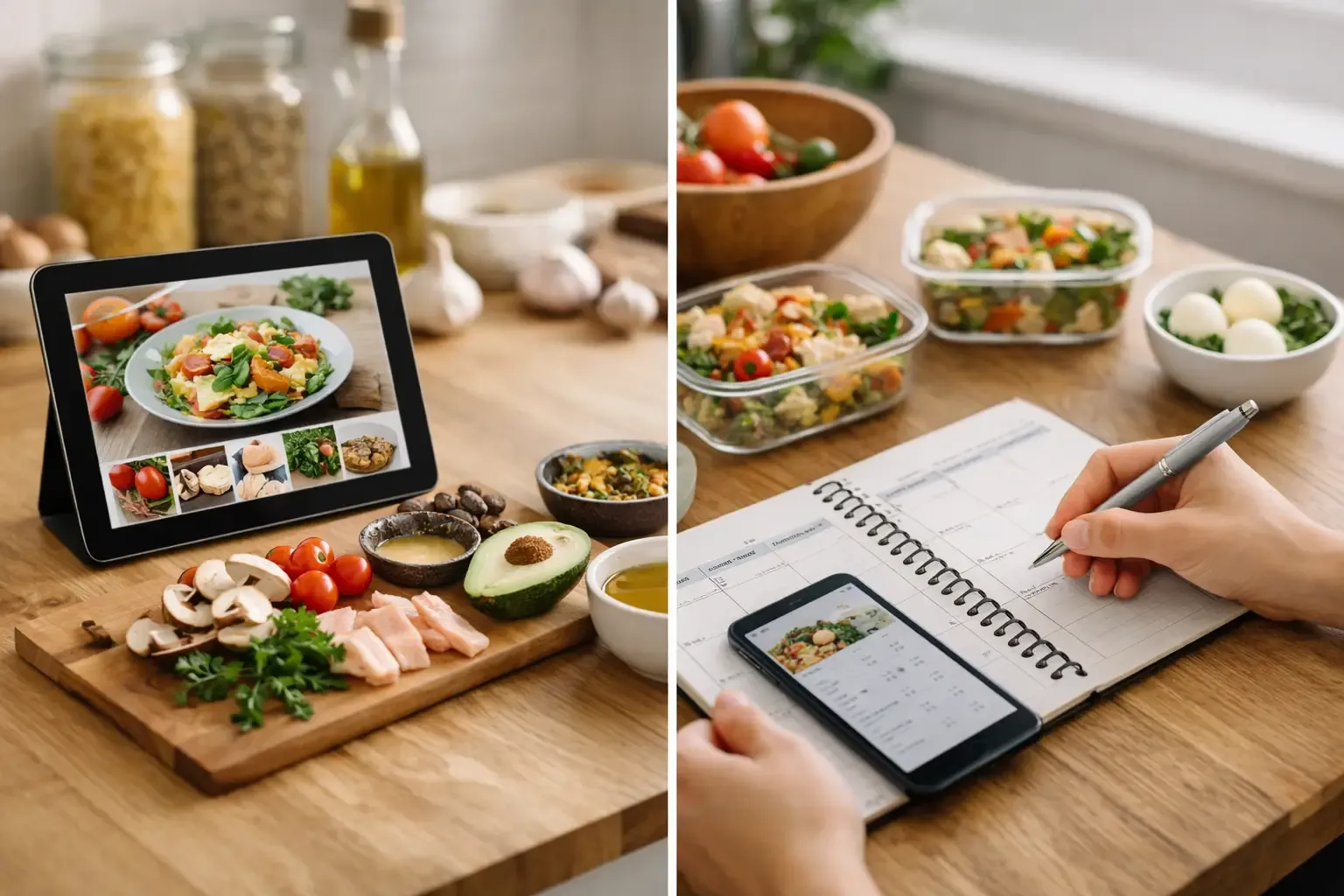
Set aside 10 minutes before shopping or at the start of the week. Check what you have. Pull out the ingredients that need to be used first. Sketch four dinners using formulas you already know. Then make a short grocery list only for the missing pieces.
That is enough.
You do not need a wall calendar, ten browser tabs, and a recipe bookmark system that falls apart by Wednesday. You need a kitchen view that is current, a short list of repeatable meal types, and a way to turn ingredients into dinner without extra admin.
If your current process depends on memory, paper scraps, and grocery app notes that do not reflect what is already at home, that is the bottleneck. Fix the visibility, and dinner planning gets easier fast.
The best pantry plan is not the most creative one. It is the one you can actually use on a tired Tuesday, when the fridge is half full, the sink is not empty, and dinner still needs to happen. Start there, and the kitchen gets a lot less chaotic.
Cook from what you have.
Sously is the meal-planning kitchen co-pilot the blog is written from — free to start on iPhone and Android.
Get Sously