
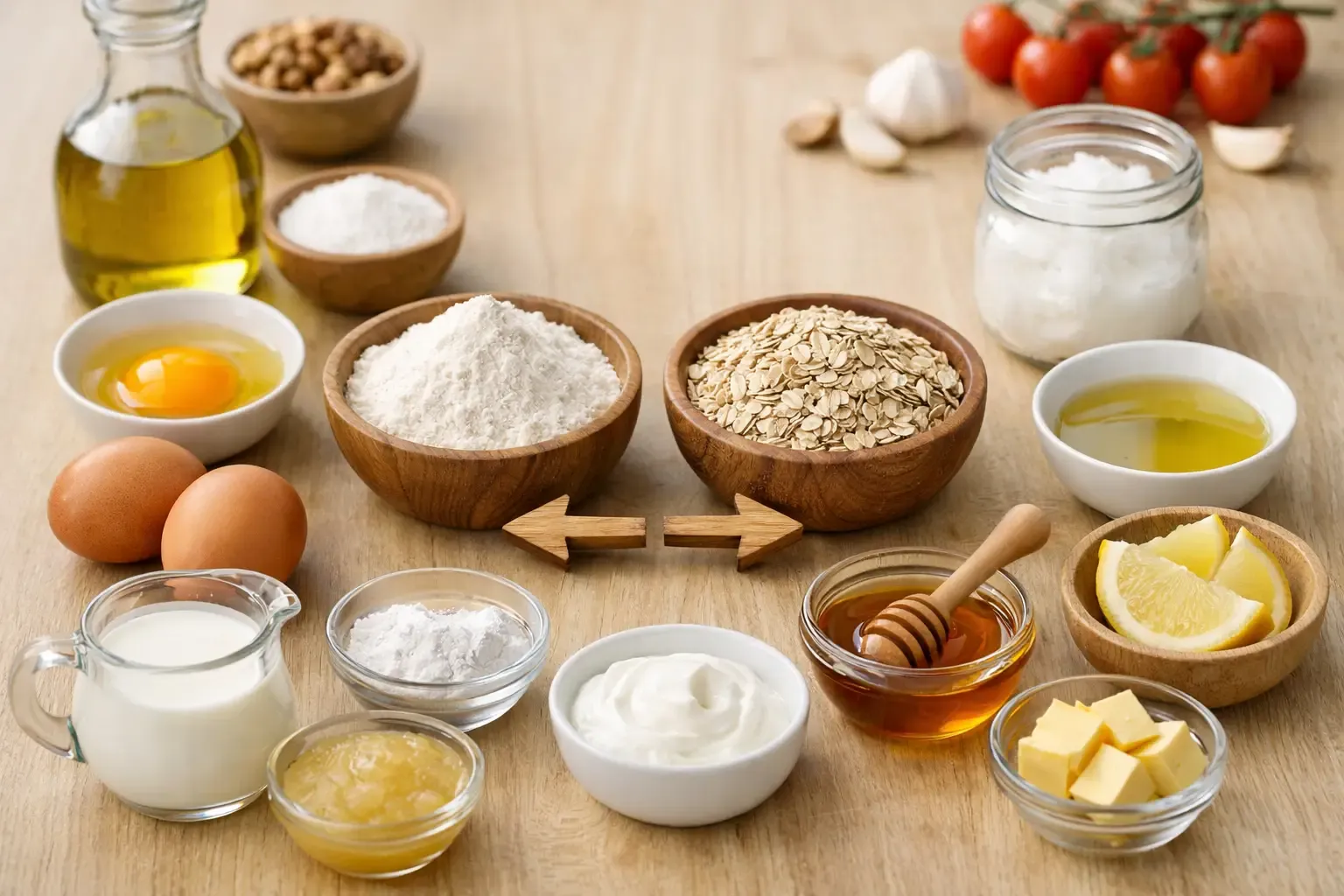
Ingredient Substitution Chart for Cooking
Use an ingredient substitution chart cooking reference to swap dairy, eggs, flour, and spices with the right ratios and realistic dish impact.
Running out of buttermilk at 6:20 p.m. is not a cooking problem. It becomes one when you have no clear fallback, guess the swap, and end up with flat pancakes or a broken sauce. A good ingredient substitution chart cooking reference solves that fast. It tells you what to use, how much to use, and what will actually change in the dish.
That last part matters. Most substitution lists stop at naming an alternative. Real cooking is less forgiving. Sour cream can stand in for yogurt, but the result may be richer. Cornstarch can replace flour as a thickener, but the timing changes. Maple syrup can replace sugar, but now you have extra liquid to manage. A useful chart does not just say yes or no. It helps you keep dinner on track.
What an ingredient substitution chart for cooking should actually do
A practical chart is not a collection of random swap ideas. It should answer three questions quickly: what replaces the ingredient, what ratio works, and how the replacement affects texture, flavor, and cooking behavior.
That is the difference between a salvage tool and kitchen clutter. If you are cooking on a weeknight, you do not need ten poetic paragraphs about the history of yogurt. You need to know whether plain Greek yogurt will work in place of sour cream in a taco sauce and whether it will split if heated too hard.
The best substitutions also depend on the job the ingredient is doing. Eggs can bind, leaven, or add moisture. Butter can bring fat, flavor, or structure. Flour can thicken a sauce or build a cake. One substitute may work for one role and fail in another. That is why broad one-line advice often disappoints.
The most useful ingredient substitution chart cooking categories
Dairy swaps
Milk is one of the easiest ingredients to replace, but the dish still matters. For baking, 1 cup of milk can usually be replaced with 1 cup of unsweetened plant milk. Oat milk and soy milk tend to work better than thinner options because they have a bit more body. In creamy sauces, whole dairy milk has more richness, so a swap may taste lighter unless you add a little extra fat.
Buttermilk is often replaced with 1 cup of milk plus 1 tablespoon of lemon juice or vinegar, rested for about 5 minutes. This works well in pancakes, muffins, and quick breads because the acidity is the main point. It is less ideal in dressings or cold sauces where true cultured flavor matters more.
Heavy cream can often be replaced with half-and-half or whole milk plus melted butter, but this is not a perfect match. In soups, it usually works. In whipped applications, it does not. Fat content matters there, and there is no shortcut around it.
Sour cream and plain Greek yogurt are close substitutes at a 1:1 ratio. Greek yogurt is tangier and usually leaner. That makes it a solid swap in dips, baked potatoes, and marinades, but a little riskier in hot sauces unless you temper it or keep the heat low.
Egg swaps
Egg substitutions are where context matters most. If you are binding meatballs or burgers, 1 tablespoon of mayonnaise, 1 tablespoon of ground flax mixed with 3 tablespoons of water, or even a small amount of breadcrumbs plus moisture can work. If you are baking brownies, mashed banana or applesauce can add moisture and some structure, but they also change flavor and density.
A common baking swap is 1 tablespoon ground flaxseed plus 3 tablespoons water for 1 egg. Let it sit until gelled. This works best in dense baked goods like muffins, pancakes, and cookies. It is weaker in cakes that rely on eggs for lift.
For moisture in simple bakes, 1/4 cup unsweetened applesauce can replace 1 egg. Expect a softer texture. For banana bread, that is usually fine. For sugar cookies, it may not be.
Flour and starch swaps
All-purpose flour as a thickener can be replaced with cornstarch, but not at the same amount. Use about half as much cornstarch as flour. If a sauce calls for 2 tablespoons flour, start with 1 tablespoon cornstarch mixed into cold water before adding it. Cornstarch thickens faster and gives a glossier finish.
For baking, flour substitutions are more limited. Bread flour can often replace all-purpose flour in yeast recipes, though the texture may be chewier. Cake flour can be approximated by using all-purpose flour with a small amount removed and replaced by cornstarch, but if you are just trying to get dinner on the table, that level of precision only matters for more delicate cakes.
Self-rising flour can be made from all-purpose flour plus baking powder and salt. That is useful in biscuits and pancakes. It is less useful if the recipe has already been carefully balanced for other leavening.
Sugar and sweetener swaps
White sugar can usually be replaced with brown sugar at a 1:1 ratio in cookies, sauces, and quick breads. The result will be darker, a little moister, and slightly more caramel-like. In very light cakes, that flavor shift may be noticeable.
Honey and maple syrup can replace granulated sugar, but because they are liquid sweeteners, you usually need less of them and may need to reduce other liquid slightly. A common starting point is 3/4 cup honey or maple syrup for 1 cup sugar, then reduce other liquid by a few tablespoons. This is a practical rule, not a law. It depends on the recipe.
Powdered sugar is harder to swap directly because it behaves differently. In frostings and glazes, blending granulated sugar into a finer texture can help, but the result is rarely as smooth. For most everyday cooking, this only matters if you are making dessert.
Butter and oil swaps
Butter and oil often substitute for each other, but not perfectly. In sauteing, 1 tablespoon oil can replace 1 tablespoon butter easily. In baking, butter brings water and milk solids along with fat, so oil tends to make cakes moister but less structured and less flavorful.
A basic rule is that 1 cup butter can often be replaced by about 3/4 cup oil in cakes and muffins. That works because the oil is pure fat. In cookies or pastries where butter firms up as it cools, the same swap can change spread and texture quite a bit.
Applesauce is often used to replace part of the butter in baking. That can cut fat, but it also changes texture. Good for muffins. Less good for pie crust.
Acid, seasoning, and aromatics
Lemon juice and vinegar can often replace each other in small amounts, though the flavor is not interchangeable. White wine vinegar is sharper than lemon juice. Apple cider vinegar is fruitier. Rice vinegar is milder. If the acid is there to brighten a soup or dressing, start small and taste.
Garlic powder can replace fresh garlic when needed. A rough guide is 1/8 teaspoon garlic powder for 1 clove of garlic. Onion powder works similarly for fresh onion in sauces and seasoning blends, but not in recipes where onion bulk matters.
Dried herbs are stronger than fresh by volume. A common rule is 1 teaspoon dried for 1 tablespoon fresh. That works for many herbs, but not all. Dried parsley is weak. Dried oregano is strong. Taste and adjust.
How to use a substitution chart without wrecking the recipe
Start by asking what the missing ingredient is doing. If it is there for moisture, you have options. If it is there for structure or lift, your options narrow. This one question prevents a lot of bad swaps.
Then check whether the recipe is flexible. Soups, skillets, sauces, tacos, stir-fries, and casseroles are forgiving. Custards, macarons, pie dough, and some cakes are not. You can substitute aggressively in a bean chili. You should be more careful in a cheesecake.
Ratios are the next filter. A trustworthy chart gives you a starting amount, not just a vague suggestion. That keeps you from replacing 1 cup of flour with 1 cup of almond meal and wondering why the texture collapsed.
Finally, expect trade-offs. Some swaps are nearly invisible. Others are acceptable only if speed matters more than precision. That is a fair trade on a Tuesday night.
Building your own working chart
The smartest substitution chart is the one shaped around your actual kitchen. If you regularly keep Greek yogurt, canned beans, oats, eggs, broth, tortillas, and a few core spices, your swap guide should center on those ingredients. That is more useful than a giant master list full of ingredients you never buy.
This is where a tool like Sously fits naturally. When your pantry is visible, substitutions get easier because the question changes from what could work in theory to what do I already have that will work tonight. That saves money, cuts waste, and removes one more decision from dinner.
A strong ingredient substitution chart cooking setup is not about becoming a chef. It is about staying functional when the fridge is imperfect, the recipe is missing one thing, and you still want a meal that works. Keep the swaps practical, respect what each ingredient actually does, and let good-enough cooking stay good enough.
Cook from what you have.
Sously is the meal-planning kitchen co-pilot the blog is written from — free to start on iPhone and Android.
Get Sously