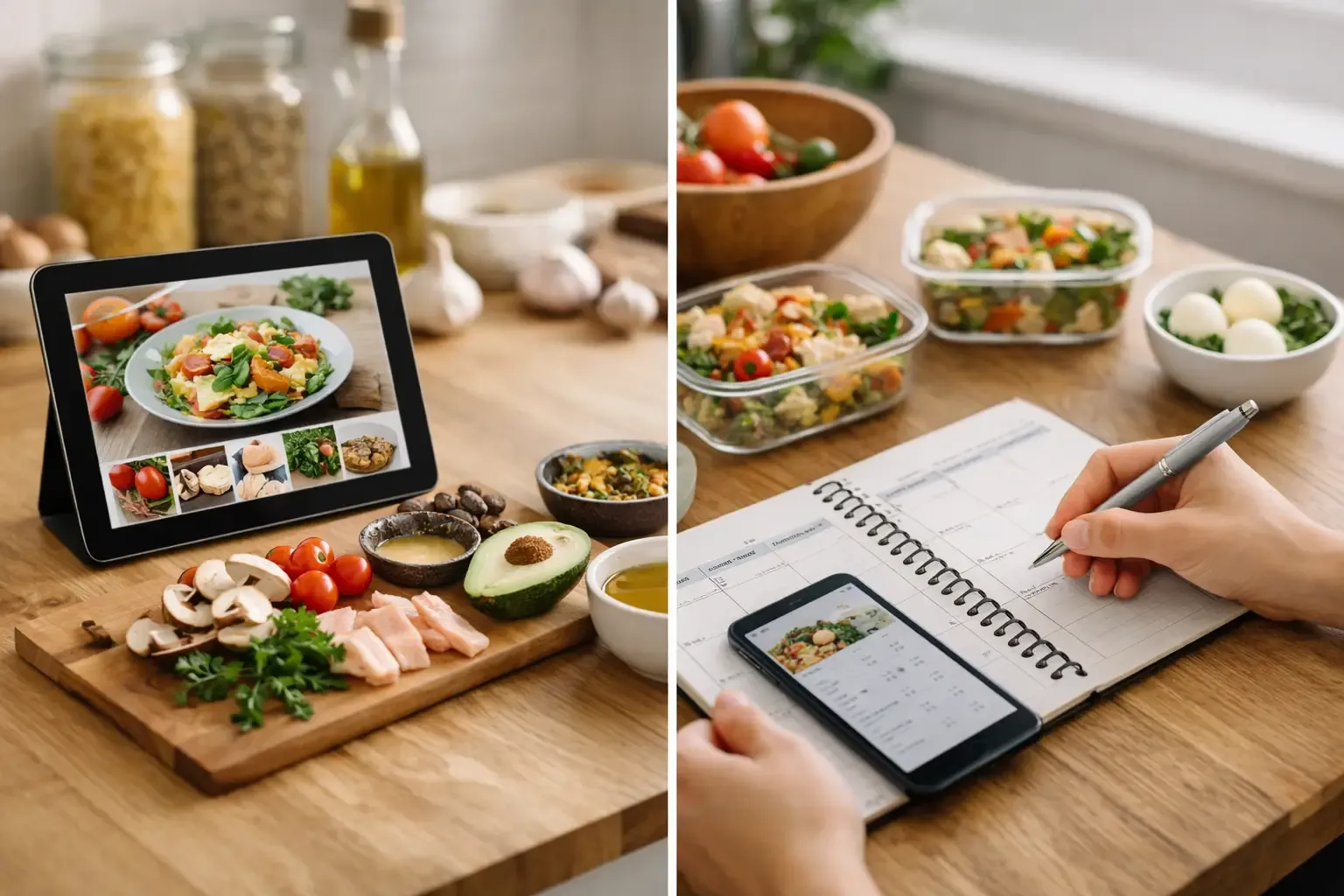

What Recipes Can I Make With Ingredients I Have?
Wondering what recipes can I make with ingredients I have? Use a simple system to turn pantry, fridge, and freezer items into real meals fast.
You open the fridge, see half a bag of spinach, a few eggs, leftover rice, and a jar of salsa, and the question shows up again: what recipes can I make with ingredients I have? Most people do not need more recipe content. They need a faster way to turn what is already in the kitchen into dinner without wasting food, buying duplicates, or reading ten pages before the ingredient list starts.
The good news is that cooking from what you have is not a talent problem. It is an inventory problem. When you can see your options clearly, most meals become a simple matching exercise: pick a base, add protein, add vegetables, choose a flavor direction, and fill the gaps with smart substitutions.
What recipes can I make with ingredients I have? Start with meal structure
If you try to invent a dish from scratch every night, cooking feels harder than it is. A better approach is to think in repeatable meal formats. Most home meals fall into a short list of structures that can absorb small ingredient changes without falling apart.
A grain bowl works with rice, quinoa, farro, or even toasted bread as the base. A pasta dish can handle fresh vegetables, frozen vegetables, canned beans, sausage, shredded chicken, or a simple butter-and-garlic finish. Eggs can become a scramble, omelet, frittata, or fried-rice add-in. Tortillas can turn leftovers into tacos, quesadillas, wraps, or breakfast burritos. Soup is one of the easiest ways to use up produce that is close to the edge, especially when you have broth, canned tomatoes, beans, or lentils.
This matters because the format tells you what is missing. If you have rice, broccoli, and soy sauce, you are not staring at random ingredients. You are one protein away from a stir-fry bowl. If you have bread, cheese, and tomato paste, you are close to melts or quick pizzas. The decision gets easier when the ingredients are assigned jobs.
Build meals from your pantry, fridge, and freezer
A practical way to answer what recipes can I make with ingredients I have is to check your kitchen in three zones.
Pantry gives you the backbone
Dry pasta, rice, canned beans, lentils, canned tomatoes, broth, oats, flour, peanut butter, tortillas, breadcrumbs, and jarred sauces do a lot of heavy lifting. These ingredients are not glamorous, but they are what turn a few leftovers into a complete meal.
If your fridge looks sparse, pantry staples can still carry dinner. Pasta plus canned tomatoes plus garlic becomes a basic red sauce. Rice plus beans plus salsa becomes burrito bowls. Oats, eggs, and banana become pancakes or baked oatmeal. Chickpeas plus olive oil plus spices can become a quick tray bake or mash for sandwiches.
Fridge ingredients add urgency and opportunity
The fridge is where waste usually happens, so start there. Look for produce that needs to be used soon, cooked grains, open jars, dairy, herbs, and leftovers. Bell peppers, spinach, carrots, onions, yogurt, cheese, and cooked chicken all have strong reuse potential.
Use the most perishable items first. Soft herbs, greens, mushrooms, berries, and cut vegetables should move to the front of your decision-making. Hard vegetables, aged cheese, and condiments can usually wait. This one shift reduces waste fast.
The freezer fills the gaps
Frozen vegetables, fruit, cooked meat, broth cubes, bread, and batch-cooked meals are your buffer. The freezer is not just backup storage. It is what keeps you from ordering takeout because one ingredient is missing.
Frozen peas can complete pasta, soup, or fried rice. Frozen spinach can bulk up eggs, curry, or lasagna filling. Frozen fruit handles smoothies, oatmeal, or quick compotes. If you have a partial bag of anything in the freezer, treat it as a priority item rather than something to save for later forever.
Use a simple formula instead of searching endlessly
People often think they need the exact right recipe. Usually, they need a reliable formula.
Start with one base: pasta, rice, bread, potatoes, greens, tortillas, oats, or beans. Add one or two main ingredients that need using, such as cooked chicken, eggs, zucchini, spinach, or tofu. Then choose a flavor profile based on what you already keep around.
If you have soy sauce, sesame oil, garlic, and rice vinegar, go in an Asian-inspired direction. If you have cumin, chili powder, salsa, and tortillas, make it Tex-Mex. If you have olive oil, lemon, Parmesan, tomatoes, and herbs, go Mediterranean. If you have butter, broth, mustard, and cream or milk, a simple skillet sauce is probably available.
This is where substitutions matter. No onion? Use shallot, leek, scallions, or onion powder, but expect a slightly different sweetness and intensity. No buttermilk? Milk plus lemon juice works for many batters. No fresh garlic? Garlic powder is fine in sauces, soups, and roasted vegetables, but less ideal when garlic is the main flavor. Good cooking at home is not about purity. It is about knowing which swaps preserve the dish and which ones change it.
Real meal ideas from common leftovers
Here is the useful part: not abstract inspiration, but combinations that come up in real kitchens.
Cooked rice plus eggs plus any leftover vegetables becomes fried rice. Add soy sauce, chili crisp, or frozen peas and it is dinner in ten minutes.
A can of beans plus broth plus spinach plus pasta makes a fast soup. Add sausage if you have it, or finish with lemon and cheese if you do not.
Tortillas plus shredded cheese plus leftover chicken or black beans become quesadillas. If all you have is cheese and salsa, that still works.
Potatoes plus eggs plus onion become a skillet hash. Add spinach, leftover bacon, or a spoonful of pesto if available.
Pasta plus cream cheese or a little milk plus Parmesan becomes a quick sauce. Fold in peas, broccoli, mushrooms, or tuna.
Bread plus eggs plus milk becomes savory strata if you have cheese and vegetables, or French toast if you have cinnamon and fruit.
Yogurt plus frozen fruit plus oats can be breakfast, but it can also be dinner on a low-energy night. Not every meal needs to be elaborate to count.
The trade-off is that some ingredient combinations are better for speed, while others are better for using up more items. A stir-fry may use five vegetables at once, but pasta might be more realistic on a busy weeknight. The best choice is the one you will actually cook.
Why ingredient visibility matters more than recipe volume
The biggest blocker is usually not cooking skill. It is not knowing what you already own. If you forget about the spinach in the crisper, buy another carton of eggs, or overlook the frozen ground turkey in the back, no recipe search will fix the underlying problem.
That is why a kitchen workflow matters. Keep an updated view of your pantry, fridge, and freezer. Group ingredients by type. Track what is running low. Plan meals around what needs to be used first. When your shopping list subtracts what is already on hand, you stop buying duplicates and start cooking more intentionally.
This is where a tool like Sously fits naturally. Instead of juggling notes, screenshots, and grocery apps, you can organize what you have, generate meals from those ingredients, and build a shopping list around actual gaps. It is a cleaner system, and it removes a lot of the friction that turns dinner into guesswork.
When to improvise and when to follow a recipe
Improvising is useful, but there are limits. If you are baking, ratios matter more. If a dish depends on texture, like biscuits or a specific cake, random swaps can go sideways quickly. The same goes for recipes built around one defining ingredient you do not have.
For everyday cooking, though, flexibility is usually an advantage. Soups, grain bowls, salads, scrambles, tacos, sheet-pan dinners, and pasta are forgiving. They are designed for variation. The goal is not to produce a restaurant-perfect plate. The goal is to turn your existing ingredients into a meal you want to eat.
A helpful rule is this: if the ingredient is structural, replace it carefully. If it is supportive, replace it freely. Flour, eggs in baking, and large liquid ratios are structural. Herbs, vegetables, cheese types, and many proteins are supportive. That line alone makes substitution much less risky.
Make future meals easier, not just tonight's
The fastest way to answer this question tomorrow is to leave less chaos for yourself today. Cook extra rice. Freeze half the soup. Store opened ingredients where you can see them. Keep a short set of repeat meals that use overlapping staples. Buy ingredients with multiple uses instead of one-off ambitions.
You do not need a perfectly stocked kitchen. You need a kitchen you can read quickly. When ingredients are visible and meals are built from repeatable formats, dinner gets easier, food waste drops, and grocery shopping gets less expensive.
If you are asking what recipes can I make with ingredients I have, that is already the right question. It means you are cooking from what is available, not from idealized plans. Start with the ingredients that need using, fit them into a meal structure, and let practical substitutions do the rest.
Cook from what you have.
Sously is the meal-planning kitchen co-pilot the blog is written from — free to start on iPhone and Android.
Get Sously