Recipe Blogs Versus Cooking Apps for Weeknights
Recipe blogs versus cooking apps solve different problems. See which fits weeknight cooking, meal planning, pantry use, and smarter grocery trips at home.
A recipe can look perfect at 4:00 p.m. and still be useless at 6:15 when you are missing two ingredients, the chicken needs thawing, and no one has decided what else to eat this week. That is the real distinction in recipe blogs versus cooking apps: one is usually built to help you find a dish, while the other can help you get dinner from idea to table with fewer loose ends.
Recipe blogs are not the enemy. They are a valuable source of tested recipes, cooking knowledge, and specific inspiration. But for busy households, finding a recipe is only one part of the job. You still need to know what is in the fridge, adjust for what is missing, plan the rest of the week, and buy only what you need.
Recipe blogs versus cooking apps solve different jobs
A recipe blog is a publishing format. Its job is to present recipes, explain techniques, tell a food story, and build an audience around a creator's point of view. A good blog can teach you why a sauce broke, how to roast vegetables properly, or what makes a particular chili worth repeating.
A cooking app is a tool. Its job is usually more operational: organize recipes, help choose meals, create a shopping list, track ingredients, guide cooking, or some combination of those tasks. The best apps reduce the number of decisions and manual steps between asking, What can I make? and serving dinner.
That difference matters because the friction around home cooking rarely comes from a lack of recipes. Most people already have more recipes saved than they will cook. The friction is scattered information: a grocery list in one app, a recipe in a browser tab, pantry items remembered imperfectly, and a meal plan that exists only in your head.
Where recipe blogs are better
Blogs are excellent when you want a specific result and are willing to explore. If you are making your first batch of biscuits, looking for an authentic regional dish, or troubleshooting a technique, a detailed recipe post can be genuinely useful. Strong creators provide testing notes, ingredient explanations, process photos, and the context that helps a beginner understand what success looks like.
They are also better for discovery. A blog can introduce you to a flavor combination you would not have searched for, or make a seasonal ingredient feel worth buying. That open-ended browsing has value when cooking is a hobby, not just another item on the evening checklist.
The trade-off is that blogs are optimized for reading and discovery, not necessarily for execution. Ads, pop-ups, long personal introductions, autoplay video, and repeated page reloads can make a simple task feel slower than it should. Even a clean recipe page usually does not know what you already own or what meals you have planned for Thursday.
Where cooking apps are better
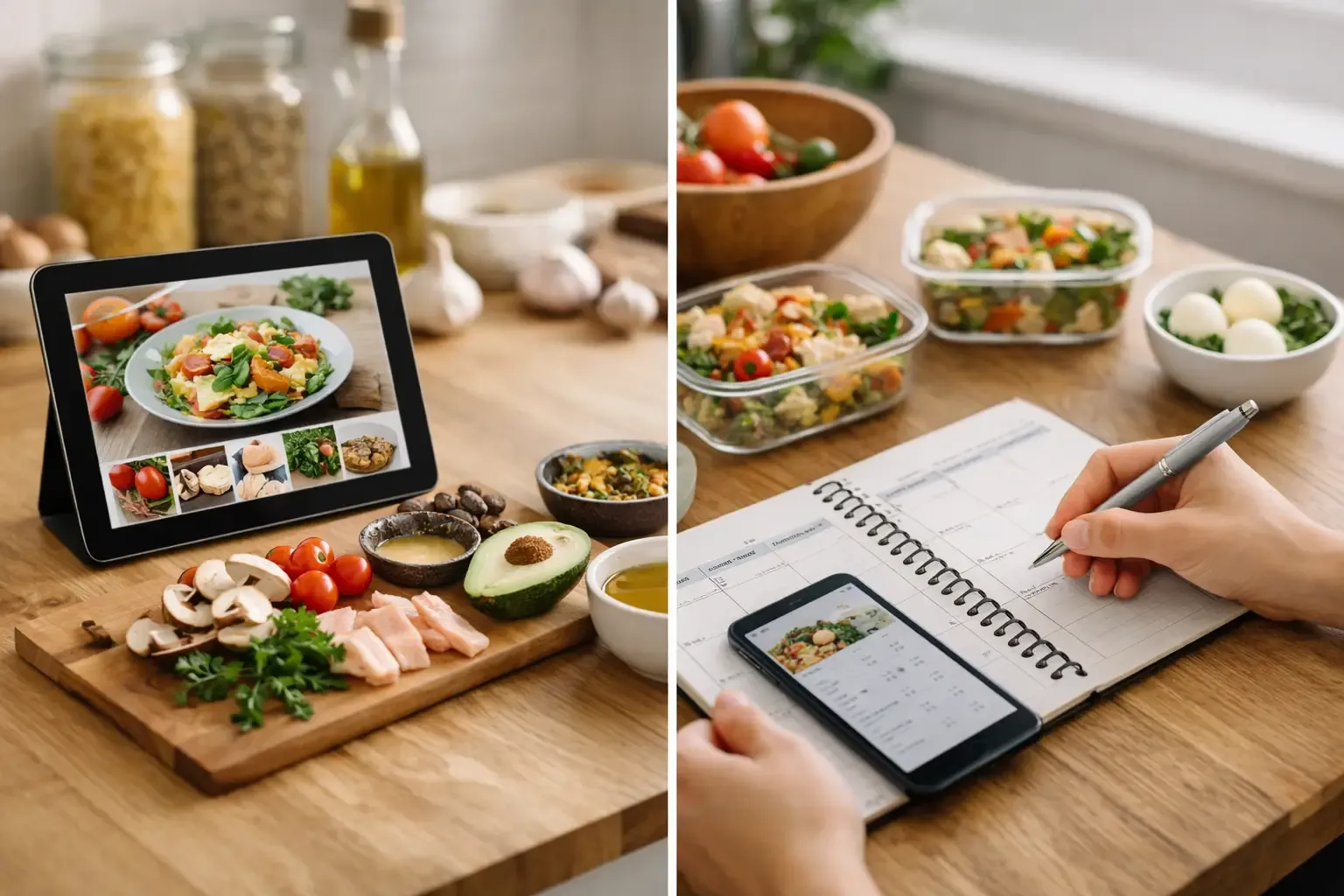
Cooking apps are most useful when the question is practical: What should I cook with what I have? What do I need to buy? How can I avoid another unused bag of spinach? Instead of treating every dinner as a fresh search, an app can connect planning, pantry visibility, recipes, and shopping.
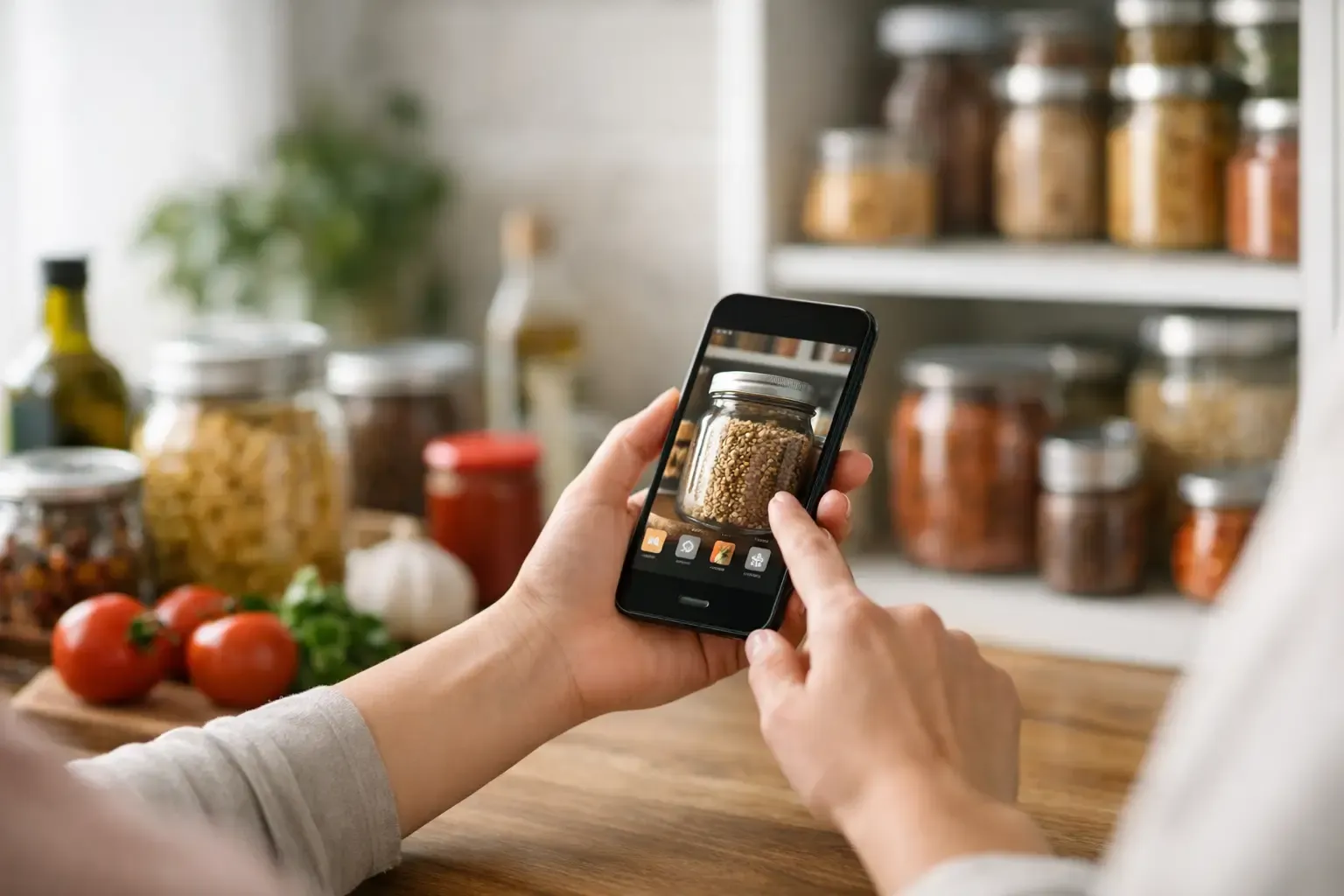
That workflow changes the grocery trip. Rather than adding every recipe ingredient to a list, a pantry-aware app can subtract what is already on hand. Rather than guessing whether you have rice or another can of tomatoes, you can check before buying duplicates. Small corrections like these are where food waste and grocery overspending start to drop.
Apps also work well for repeatable household routines. A couple may rotate five dependable weeknight meals. A small household may use a template that plans leftovers intentionally. Someone cooking for one may want recipes that use up half a package of herbs before it goes soft in the crisper. These are planning problems, not content problems.
The trade-off is that apps vary widely. Some are little more than recipe collections. Others require extensive manual setup before they become helpful. An app only earns a permanent spot on your phone if it saves more effort than it asks for.
The Tuesday-night test
The easiest way to compare recipe blogs and cooking apps is to picture a normal Tuesday. You have ground turkey, a zucchini that should be used soon, half a jar of salsa, and a few pantry staples. You need dinner for two, plus a realistic plan for the next few days.
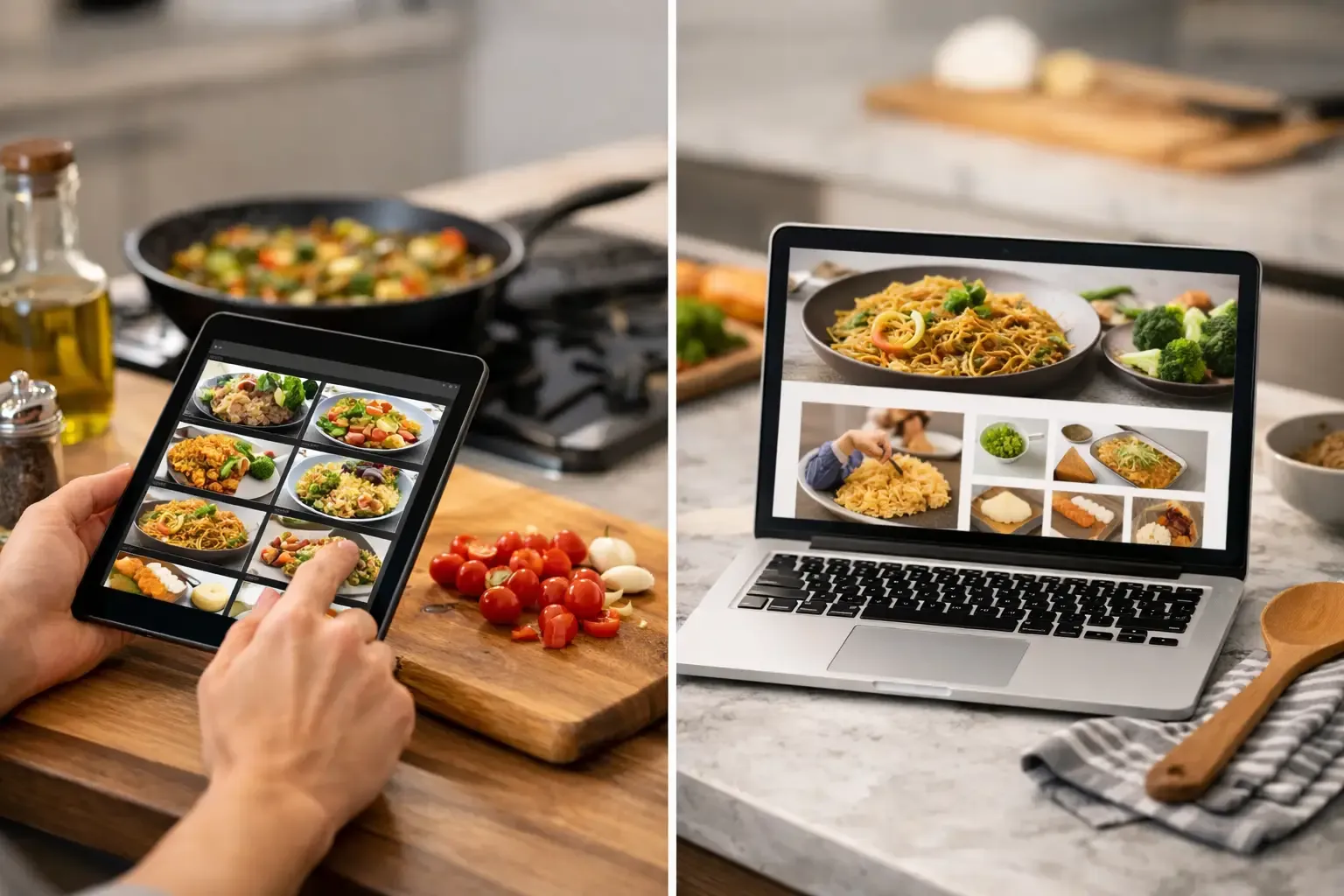
With a recipe blog, you might search for ground turkey and zucchini recipes, open several tabs, scan ingredient lists, and settle on something close. Then you make a separate list of missing items, check the fridge, and decide whether the leftover ingredients have another use. This can work well, especially if you enjoy the process. It is also easy to abandon when you are tired.
With a capable cooking app, you start with the ingredients instead. The app can suggest meal ideas based on what you have, flag likely gaps, and turn the chosen recipe into a grocery list. If it includes meal planning, it can help you select another meal that uses the remaining salsa or zucchini instead of leaving both behind.
Neither approach guarantees a great dinner. Cooking still involves preferences, timing, and judgment. But one approach organizes the surrounding work so dinner does not begin with twenty minutes of browser searching.
What to look for in a cooking app
If you are considering an app, skip the feature count and look at the workflow. Can it help you plan a week without forcing a rigid schedule? Can it keep track of pantry, fridge, and freezer items without turning inventory into a second job? Does its shopping list reflect what you already have?
Recipe flexibility matters, too. Real kitchens run out of ingredients. Helpful substitutions should say more than use this instead. They should provide an amount, explain how the swap changes flavor or texture, and warn you when it will not work in the same way. Swapping Greek yogurt for sour cream is different from swapping baking soda for baking powder.
Nutrition data is another area where details matter. Generic estimates can be misleading when serving sizes and ingredient entries are inconsistent. A USDA-backed nutrition database gives home cooks a more dependable starting point, especially when they are managing protein goals, sodium, or dietary needs.
Privacy and onboarding deserve attention as well. A kitchen tool should not require a lengthy account setup before it can help you make dinner. Local-first options that work on your device and offer useful free planning tools are often a better fit for people who want less friction and less data sharing.
The strongest setup is not always either-or
For many cooks, recipe blogs and apps work best together. Use blogs for expertise, inspiration, and recipes you want to learn. Use an app for the recurring operational work: choosing meals from available ingredients, organizing the week, coordinating groceries, and keeping track of what needs to be used.
This division is especially useful if you have favorite creators whose recipes you trust. You do not need to stop using them. The goal is to stop rebuilding the same shopping list, rechecking the same cabinets, and forgetting the same ingredients every week.
Sously is designed around that practical layer. Its Smart Pantry, weekly planner, automated shopping list, and Sous Chef focus on turning the food already in your kitchen into a workable plan. Core tools are available without an account, which keeps the first step simple: add what you have, decide what to cook, and buy the gaps.
Choose based on the problem you actually have
Choose recipe blogs when you want to learn, explore, or cook something specific. They are ideal for weekend projects, new techniques, and recipes where a creator's experience adds real value.
Choose a cooking app when your bigger problem is coordination. If you regularly overbuy groceries, lose track of produce, struggle to plan more than one meal ahead, or waste time converting recipes into lists, a tool built for execution will likely help more.
The useful question is not whether blogs or apps are better in the abstract. Ask where dinner breaks down in your house. If the answer is finding something interesting to cook, start with a recipe. If the answer is everything that happens before and after choosing one, put your kitchen information in one place and let the plan do more of the work.
Cook from what you have.
Sously is the meal-planning kitchen co-pilot the blog is written from — free to start on iPhone and Android.
Get Sously