Smart Grocery List Planning Guide for Busy Weeks
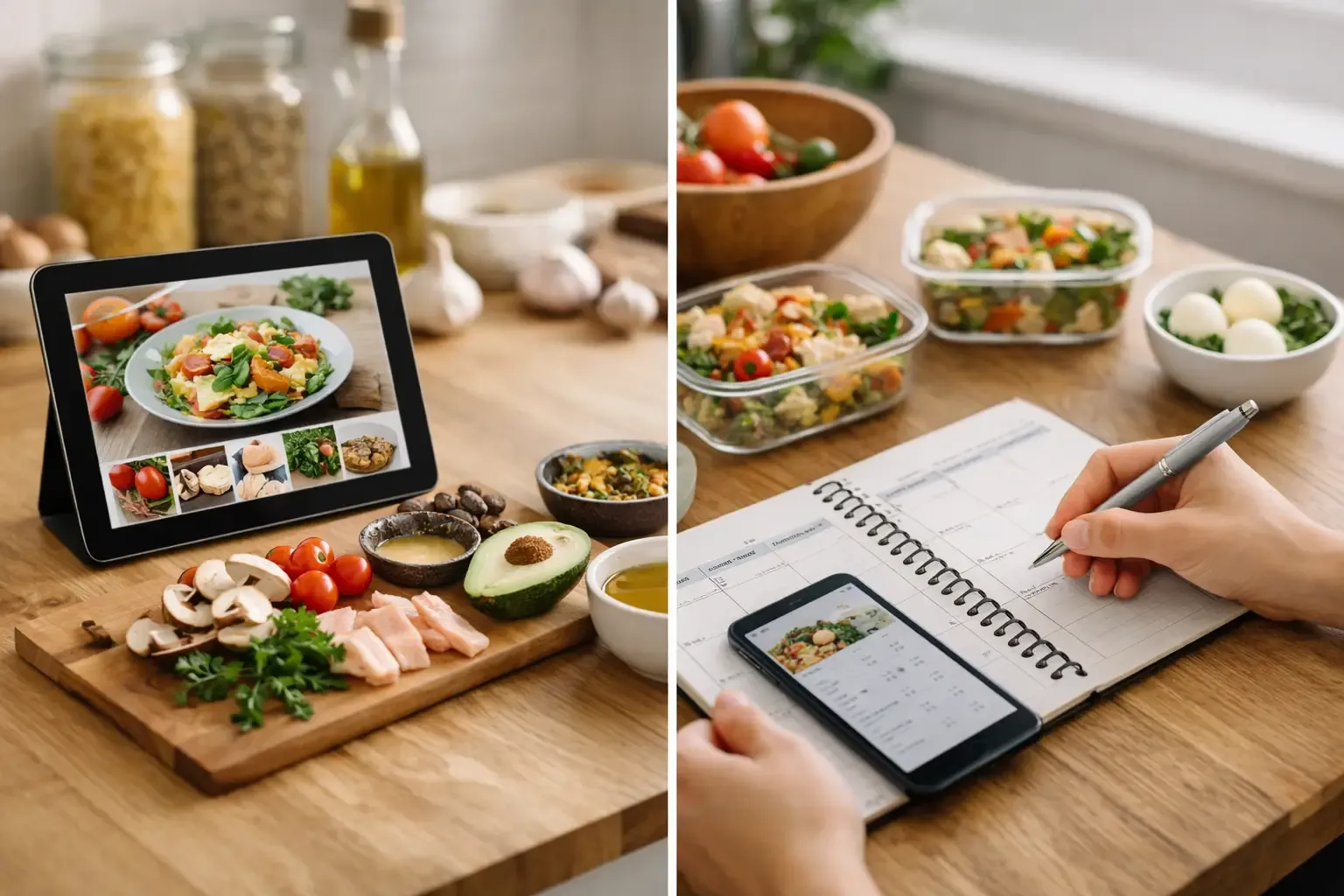
This smart grocery list planning guide helps you use what you own, shop with purpose, cut food waste, and make weeknight cooking easier all week at home.
A grocery list should prevent the 6 p.m. question, not create another task before it. This smart grocery list planning guide is built around a simpler operating rule: check what you have, plan a realistic number of meals, then buy only the gap.
That order matters. Most overbuying starts when the list is made from recipes alone. You add another bag of spinach without checking the crisper drawer, buy pasta while three boxes sit in the pantry, and end the week with ingredients that were never assigned a job. A better list connects your kitchen, your calendar, and your cart.
Start With the Food You Already Have
Before choosing meals, take a quick inventory of the ingredients most likely to be wasted: produce, proteins, dairy, opened jars, and leftovers. You do not need to catalog every grain of rice to get value from this step. Start with the items that have a short window or that you routinely forget.
Look for ingredients that can anchor a meal. Half a rotisserie chicken can become tacos, salad bowls, or soup. A bag of vegetables nearing its end can be roasted for grain bowls or folded into eggs. An open jar of tomato sauce gives you a clear direction for pasta, pizza, or shakshuka.
This is where a pantry tracker earns its place. Instead of relying on memory, you can see what is in the fridge, freezer, and pantry before you plan. The goal is not perfect inventory management. The goal is fewer duplicate purchases and more meals that use food while it is still good.
Plan Fewer Meals Than You Think You Need
A full seven-night meal plan looks organized, but it often ignores real life. One night turns into takeout. Leftovers cover another. Plans change when work runs late or someone is not hungry.
For most one- or two-person households, planning three or four cooked dinners is enough. Add one flexible meal built from freezer staples, eggs, or pantry basics, then leave room for leftovers and plans that shift. If you cook lunch at home, apply the same logic: plan a few dependable options rather than a different recipe every day.
Choose meals that share ingredients on purpose. If tacos and grain bowls both use cilantro, avocado, and a lime-based sauce, those purchases work harder. If one recipe requires a specialty ingredient you will use once, decide whether it is worth it before it reaches the list. Sometimes the right move is a substitution, not another bottle or jar.
A good plan balances variety with overlap. You want meals that feel different, but you do not need a separate set of 12 ingredients for every dinner.
Build around your actual week
Match meal effort to the calendar. Put the fastest meals on late workdays and save longer cooking for a quieter night. If you know Thursday is unpredictable, plan a freezer meal or a simple backup instead of a recipe that needs chopping, multiple pans, and 45 minutes.
Also consider when groceries will last. Delicate greens and fresh fish belong earlier in the week. Frozen vegetables, beans, pasta, and sturdier produce can carry the later days. This small adjustment helps prevent the familiar Friday situation where the planned meal is still there, but the key ingredient is not.
Turn Meals Into a Smart Grocery List
Once meals are selected, list their ingredients, then subtract what is already on hand. That subtraction is the difference between a recipe list and a useful grocery list.
Be specific about quantity and form. “Onions” is less helpful than “2 yellow onions.” “Chicken” can mean breasts, thighs, ground chicken, or the cooked chicken already in your fridge. Clear entries reduce store-side decisions and make it easier for another person in the household to shop accurately.
Group the remaining items by how you move through your store: produce, meat and seafood, dairy, pantry, frozen, and household essentials. This is not about making a beautiful list. It is about avoiding backtracking and the impulse buys that happen when you wander every aisle.
A shopping list should also separate true needs from optional upgrades. If dinner requires rice, add rice. If a recipe suggests a garnish that is nice but not necessary, mark it as optional or skip it. A list becomes expensive when every meal is treated as a restaurant project.
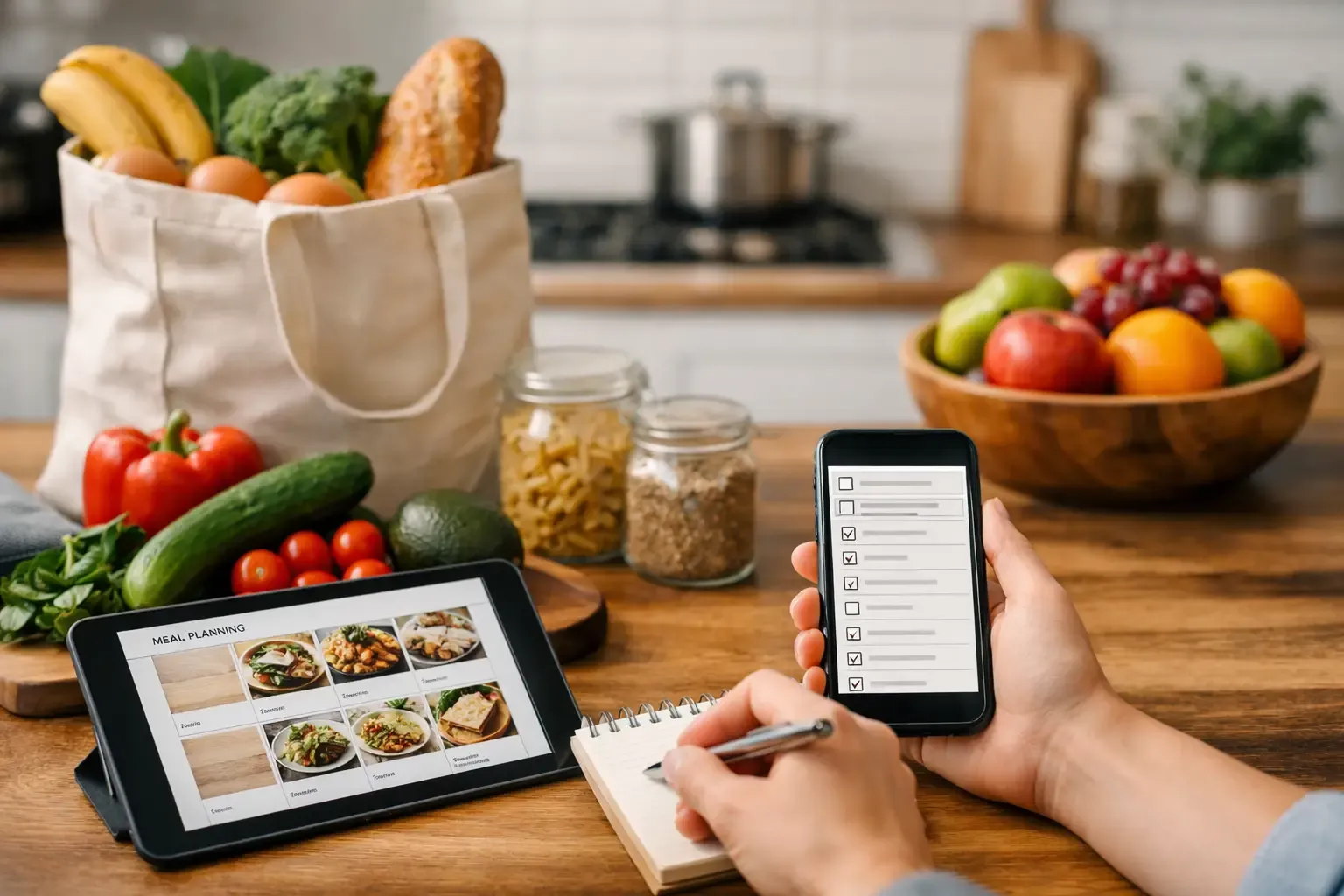
Automation can remove much of this manual work. In Sously, meal plans can generate a shopping list while accounting for ingredients already tracked in your kitchen. That keeps the workflow in one place: plan meals, see what you own, and shop for the difference.
Use a Core List Without Buying on Autopilot
A reusable core list is helpful for staples you regularly replace, such as eggs, milk, fruit, bread, yogurt, coffee, cooking oil, and a few reliable proteins. But a core list should be a prompt to check stock, not a standing order.
The trade-off is simple. Keeping staples on the list reduces forgotten basics, especially on busy weeks. Buying them automatically can create waste when plans change or when you already have enough. Check quantities before adding them, particularly perishables.
It also helps to set a loose spending guardrail. If your list grows larger than expected, scan for single-use ingredients, duplicate proteins, and meals with too little overlap. You do not need to strip the plan down to the cheapest possible food. You just need to make intentional choices before the store makes them for you.
Make the List Useful at the Store
Your planning work can still fall apart if the list is hard to use while shopping. Keep it mobile, check items off as they go into the cart, and update it when plans change. If your partner picks up milk on the way home, the list should reflect that before you buy a second gallon.
Avoid replacing every missing item with the first substitute you see. For a key ingredient, decide what role it plays in the dish. Is it adding protein, acidity, creaminess, heat, or bulk? That makes substitutions practical instead of random. Greek yogurt may replace sour cream in many cases, but it changes the tang and thickness. Frozen broccoli can replace fresh in a casserole, but it releases more water. Those details protect dinner from becoming an experiment on a night when you need it to work.
If a product is out of stock, use a simple decision rule: substitute when the role is flexible, change the meal when the ingredient is central, and skip the purchase when it would create waste. No list needs to be rigid enough to force a bad dinner.
Review Once, Then Let the System Work
After a few shopping trips, notice what consistently goes unused. Maybe you plan too many vegetables for one household. Maybe bulk packages do not fit your schedule. Maybe a certain recipe sounds good on Sunday but never wins against an easier option on Wednesday.
Adjust the system, not your willpower. Buy smaller quantities, repeat meals you actually cook, freeze portions earlier, or keep a short list of fallback dinners. The best grocery plan is not the most ambitious one. It is the one that survives a normal week.
A smart list gives every purchase a reason to be there. When your kitchen inventory, meal plan, and shopping cart agree, dinner becomes a decision you already made - and the food you buy has a much better chance of getting used.
Cook from what you have.
Sously is the meal-planning kitchen co-pilot the blog is written from — free to start on iPhone and Android.
Get Sously