What to Make With Ingredients I Already Have
What to make with ingredients i already have starts with a simple system. Use your pantry, fridge, and freezer to plan fast, low-waste meals.
You do not usually have a food problem. You have a visibility problem. On a Tuesday night, the question is not whether there is enough to cook. It is whether you can tell, fast, what to make with ingredients I already have without pulling everything out of the fridge, opening five tabs, and giving up for takeout.
That is the real bottleneck for most home cooks. Ingredients are scattered across the pantry, fridge, and freezer. A half bag of spinach hides behind yogurt. Tortillas sit in the back of a drawer. Ground turkey is frozen, but forgotten. Then groceries get bought again, produce goes soft, and dinner feels harder than it should.
The fix is not more recipe content. It is a better decision system.
How to answer what to make with ingredients I already have
Start by thinking in parts, not recipes. Most weeknight meals are built from the same few components: a protein, a vegetable, a starch, a sauce or seasoning, and a cooking method. Once you can see those pieces clearly, your options open up quickly.
If you have eggs, rice, and any vegetable, you have fried rice, a grain bowl, or an omelet with a side. If you have pasta, canned tomatoes, and garlic, you have a pasta night. If you have beans, tortillas, cheese, and salsa, you are one skillet away from tacos, quesadillas, or burrito bowls. The goal is not culinary originality. The goal is to convert what is already in your kitchen into a solid meal with as little friction as possible.
This is why strict recipe matching often fails. Real kitchens are uneven. You may have chicken but no lemon, pasta but no parsley, black beans but no onion. A useful system does not stop there. It asks what role each ingredient plays and what can replace it without wrecking the dish.
Use a three-zone scan, not a full inventory
You do not need to catalog your entire kitchen every time you are hungry. A fast scan works better.
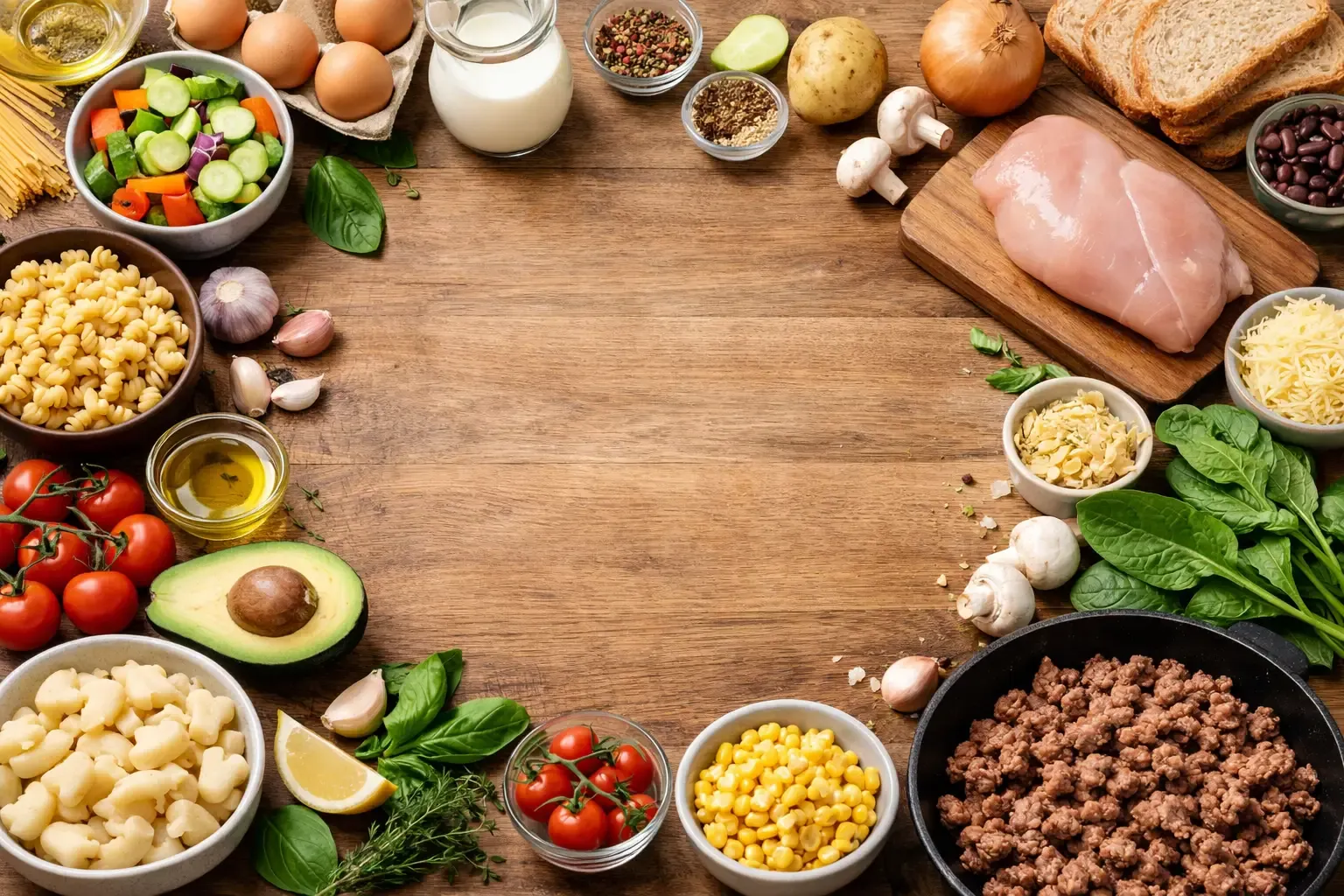
Check your fridge first for short-life items. This is where waste usually starts. Look for produce, cooked grains, leftover proteins, dairy, herbs, and open containers that need a job. Then check the pantry for anchors like pasta, rice, beans, canned fish, broth, tomatoes, noodles, and spices. Finish with the freezer, where forgotten meals and backup ingredients often live longer than expected.
This order matters. The fridge contains your most urgent ingredients. The pantry provides structure. The freezer fills gaps.
Once you have looked through those three zones, group what you found into categories. Maybe tonight you have spinach, carrots, Greek yogurt, rice, chickpeas, frozen peas, eggs, and tortillas. That is more than enough. You are not looking for one perfect recipe. You are looking for the shortest path to dinner.
Build from reliable meal formats
When people get stuck on what to make with ingredients they already have, it is usually because they are searching by dish name instead of meal format. Dish names can feel narrow. Formats are flexible.
Bowls are one of the easiest options because they absorb odds and ends well. Start with rice, quinoa, noodles, or greens. Add one protein such as beans, eggs, chicken, tofu, or canned tuna. Add vegetables, raw or cooked. Finish with something creamy, acidic, or spicy. That could be yogurt with lemon, soy sauce with sesame oil, salsa, hot sauce, or even a quick vinaigrette.
Skillet meals are another reliable format. A pan of ground meat, beans, chopped vegetables, and seasoning can become taco filling, pasta sauce, rice topping, or a hash with eggs. The same ingredients change character depending on whether you add cumin, soy sauce, curry powder, or tomato paste.
Soups and stews are good when ingredients are slightly mismatched or nearing their end. Broth, canned tomatoes, lentils, frozen vegetables, cooked chicken, and leftover grains all work here. Texture matters, so add something hearty enough to make it a meal.
Then there are egg-based meals. Eggs are useful because they bridge leftovers that do not obviously belong together. Roasted vegetables become a frittata. Rice becomes fried rice. Tortillas and cheese become breakfast tacos, even if you are eating them at 8 p.m.
Pasta, baked potatoes, quesadillas, and sheet pan dinners belong in the same category of dependable formats. They are not glamorous, but they are efficient and forgiving, which is what weeknight cooking usually needs.
Work with substitutions that actually make sense
Most substitution advice online is either too vague or too precious. Real substitution logic is simpler.
First, decide whether the ingredient is structural or optional. Pasta cannot replace chicken in a chicken stir-fry, but broccoli can replace green beans with little impact. Rice vinegar and lemon juice are not identical, but both can provide acid. Greek yogurt can replace sour cream in many cases. Butter and olive oil often trade places, though the flavor shifts.
Second, pay attention to moisture, salt, and cooking time. Frozen spinach behaves differently from fresh. Canned beans need less time than dried. Soy sauce adds both salt and liquid. Tomato paste is concentrated, while canned tomatoes are not. Good substitution is less about category and more about the effect on the pan.
Third, know when not to force it. Some leftovers are better redirected than repaired. If you only have a small amount of cooked chicken and one serving of rice, that may not be dinner for two. But it can become part of fried rice, soup, or quesadillas if you add eggs, beans, or vegetables.
This is where a practical tool helps more than a search engine. A recipe generator that works from pantry items and gives concrete substitutions can save time because it narrows choices based on what is actually available, not what an idealized kitchen should have.
What to make with ingredients I already have when the fridge looks random
Random does not mean unusable. It usually means your ingredients have not been grouped yet.
Say you have eggs, cheddar, tortillas, bell peppers, and half an avocado. That is an easy quesadilla or breakfast taco situation. If you have pasta, spinach, cream cheese, and frozen peas, that becomes a quick creamy pasta. Rice, canned tuna, cucumber, mayo, and soy sauce can become a rice bowl. Potatoes, sausage, and any sturdy vegetable can become a sheet pan dinner.
The pattern is simple: combine one base, one or two strong ingredients, then use seasoning to define the meal. Garlic and olive oil pull things one way. Salsa and cumin pull them another. Curry paste changes everything. You do not need more ingredients. You need a clearer frame.
Reduce waste by cooking the oldest ingredient first
If your kitchen feels chaotic, use a first-in-line rule. Identify the ingredient most likely to spoil first and build around it. This keeps waste down and decision-making simple.
Soft zucchini, wilting herbs, open ricotta, leftover rice, and cooked chicken should move before unopened pantry goods. The rest of the meal can stay flexible. If spinach needs using, make pasta, eggs, soup, or grain bowls. If Greek yogurt is near the end, use it in sauces, marinades, dressings, or breakfast.
This approach also helps with grocery restraint. Once you know what is already urgent, you stop buying duplicate ingredients that create more clutter.
Make the next decision easier than this one
The best answer to what to make with ingredients I already have is not a single meal. It is a repeatable kitchen workflow.
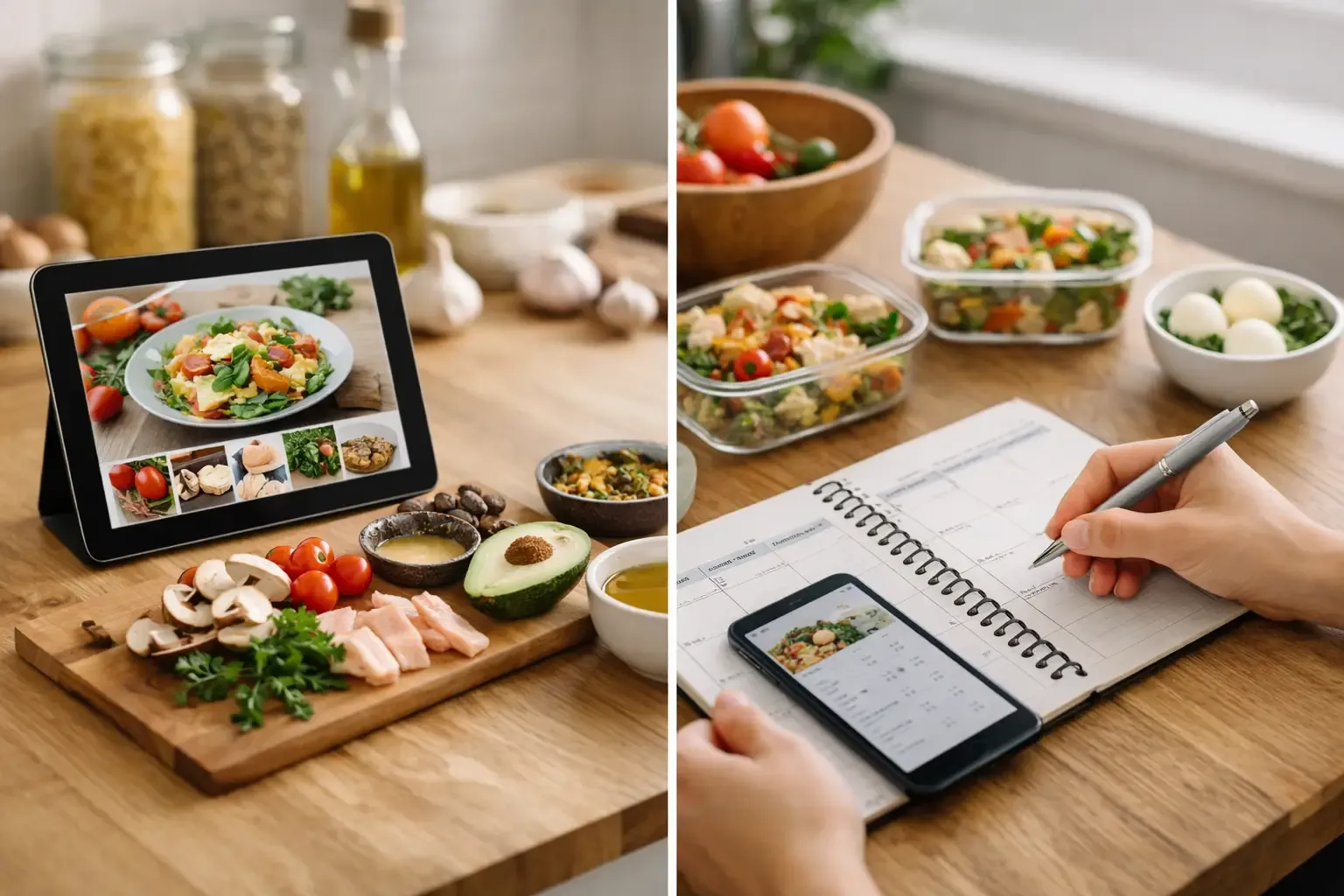
Keep a basic view of what is in your fridge, freezer, and pantry. Store ingredients by type so they are easy to scan. Reuse a small set of meal formats instead of chasing novelty every night. Save combinations that worked. If you use an app, choose one that combines pantry tracking, planning, and recipe generation in one place so the system does not create more work than it removes. That is the practical value of a tool like Sously - fewer disconnected steps, fewer duplicate groceries, and faster dinner decisions from ingredients already on hand.
Cooking what you already have should feel efficient, not improvised. Once your kitchen is visible and your meal formats are familiar, dinner gets a lot less dramatic.
Cook from what you have.
Sously is the meal-planning kitchen co-pilot the blog is written from — free to start on iPhone and Android.
Get Sously