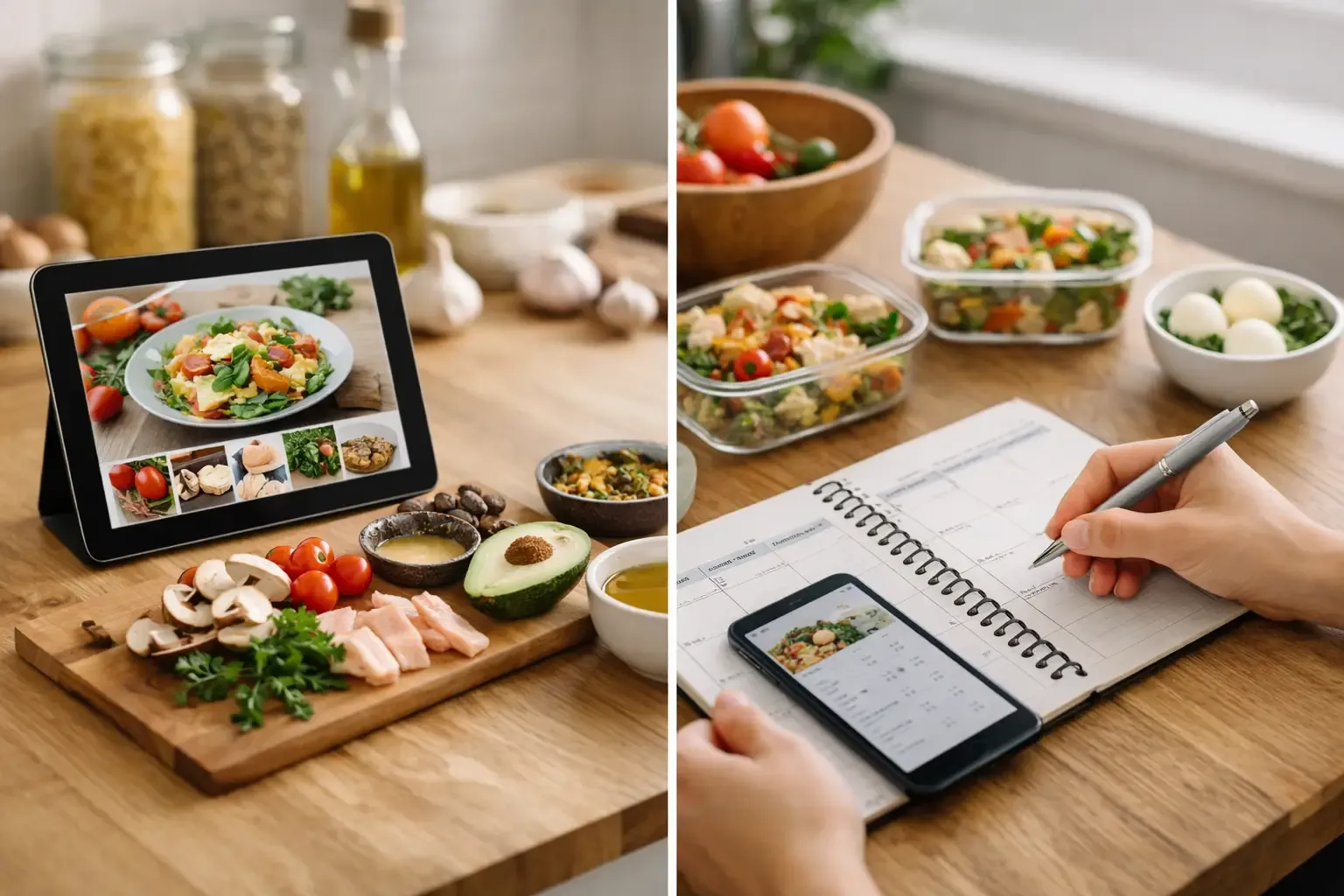
How to Build a Rotating Dinner System
Learn how to build a rotating dinner system that cuts food waste, simplifies shopping, and makes weeknight cooking faster with less stress.
The problem usually is not cooking. It is deciding. At 5:47 p.m., with a half-used bag of spinach, frozen chicken, and no clear plan, even simple dinner feels harder than it should. If you want to build a rotating dinner system, the goal is not to make meals repetitive. It is to remove daily friction without boxing yourself into a rigid plan you will stop using in two weeks.
A good rotation gives you structure, not rules. You keep a short list of dinners your household already likes, group them in a way that makes shopping and prep easier, and repeat them often enough to save effort. The payoff is practical: fewer wasted ingredients, less impulse takeout, faster grocery runs, and fewer nights spent staring into the fridge hoping a plan appears.
What a rotating dinner system actually does
A rotating dinner system is a repeatable dinner plan built from meals you already know you will cook. Instead of starting from zero every week, you reuse a small set of reliable dinners on a schedule that fits your life.
That schedule can be weekly, biweekly, or monthly. For a single person or couple, a two-week rotation often works better than seven completely different dinners because ingredients overlap more naturally. For a family with predictable routines, a monthly rotation can offer enough variety without creating extra planning work.
The key is that rotation is not the same as meal prep culture. You do not need matching containers, a Sunday production line, or a spreadsheet with color codes. You need a working list of dinners, a rough rhythm for when they happen, and a way to track what you already have.
Start with your real dinner patterns, not aspirational ones
Most meal planning systems fail because they are built around fantasy cooking. They assume every Tuesday has the energy of a Saturday afternoon. That is rarely true.
To build a rotating dinner system that survives real life, begin with dinners you already make at least semi-regularly. Think in terms of repeatable wins: tacos, sheet pan sausage and vegetables, rice bowls, pasta with greens, baked potatoes with toppings, soup and grilled cheese, stir-fry, breakfast-for-dinner.
If a meal sounds healthy or ambitious but keeps getting skipped, it does not belong in the core rotation yet. You can still make it sometimes. It just should not be carrying your weekly plan.
A useful filter is simple. Keep dinners that meet at least two of these conditions: they use ingredients you often buy, they take 30 minutes or less, they create decent leftovers, or they are easy to modify with substitutions.
That last point matters more than people think. The best rotating dinners are flexible. If broccoli becomes green beans, or ground turkey replaces beef, the meal still works. Flexibility protects the system when grocery prices shift, ingredients run out, or your fridge contains almost-but-not-exactly what the recipe calls for.
Build your rotation around categories, not exact recipes
This is where dinner systems get easier to maintain. Instead of locking yourself into 14 precise recipes, organize your rotation by dinner type.
For example, you might have one taco night, one pasta night, one bowl night, one soup or stew night, one tray bake, one sandwich or quesadilla night, and one use-it-up night. Inside each category, you can swap ingredients based on what is in the fridge, freezer, or pantry.
That approach keeps the decision small. You are not asking, “What should I cook?” You are asking, “What version of pasta night makes sense with what I already have?” That is a much faster question.
It also reduces food waste. Categories let you absorb leftovers and partial ingredients naturally. Extra roasted vegetables can become grain bowls. Rotisserie chicken can move from wraps to soup. Half a jar of marinara can anchor pasta night instead of getting lost in the back of the fridge.
How to build a rotating dinner system in practice
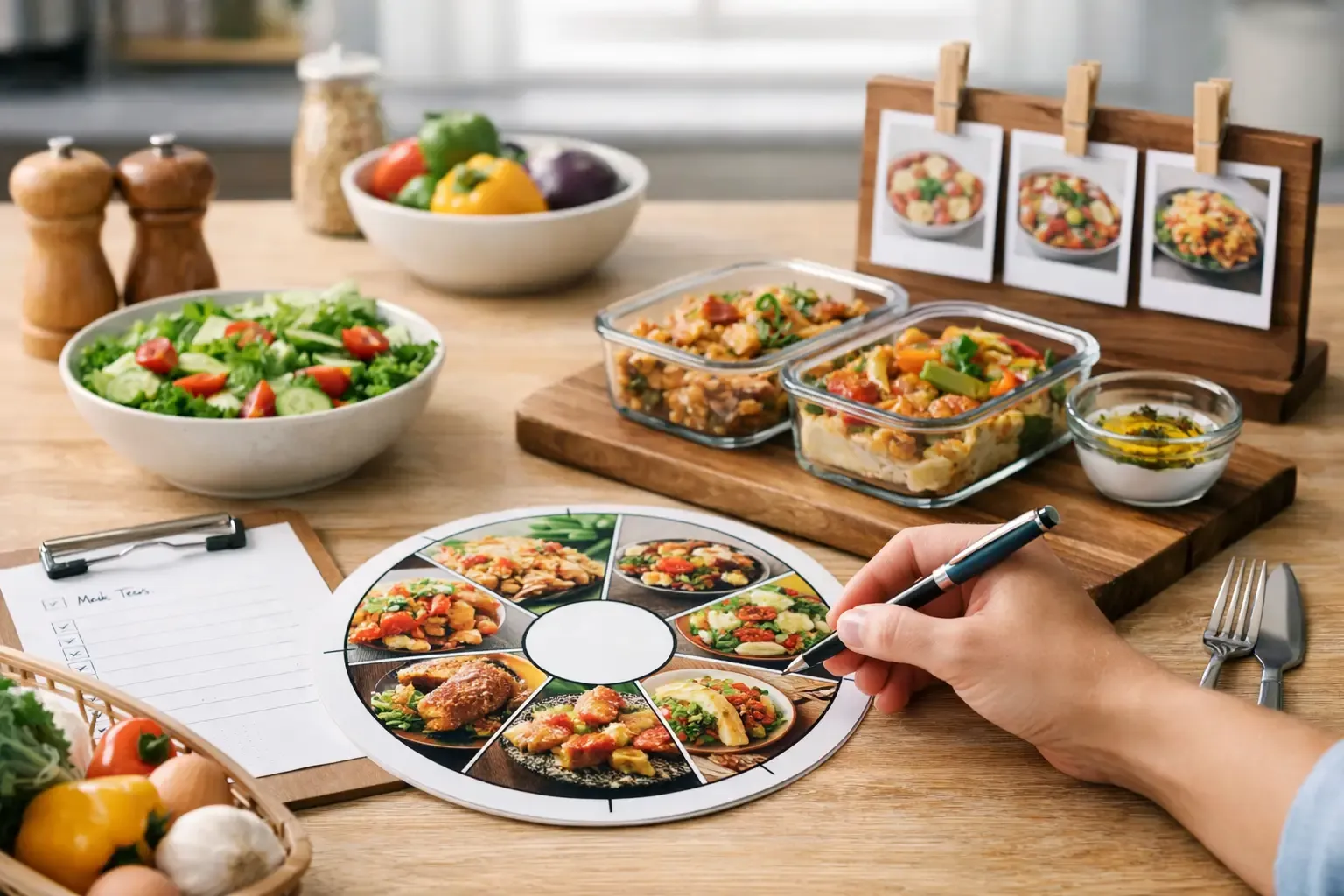
Start with 10 to 14 dinners. That is enough variety for most small households without turning the system into admin work. If you cook only four nights a week, even eight reliable dinners may be enough for a two-week cycle.
Next, sort those dinners by effort level. Every rotation needs a few low-lift meals for nights when energy is low. Think eggs, sandwiches, frozen dumplings with vegetables, simple pasta, or anything that can be made with minimal prep and very few dishes. If every dinner in the system requires chopping, marinating, and active stovetop time, the plan will break.
Then look for ingredient overlap. This is where the rotation starts saving real money and time. If two or three dinners use spinach, tortillas, Greek yogurt, rice, or ground meat, shopping gets simpler and ingredients are more likely to be fully used.
After that, assign a loose order. You do not need a strict calendar, but it helps to place meals based on perishability and effort. Cook seafood and delicate produce earlier in the week. Use hardier vegetables, freezer staples, and pantry dinners later. Put one low-effort meal near your busiest day.
Finally, create a fallback slot. One night each week should be intentionally flexible. This can be leftovers, frozen backup meals, or a use-it-up dinner built from ingredients that need attention. Without this buffer, small schedule changes cascade into wasted food.
The best rotating dinner system starts with inventory
A dinner rotation works best when it is connected to what you actually have on hand. Otherwise, you are just repeating meals and still buying duplicates.
Before finalizing your rotation, get visibility into your staples. You do not need to log every spice with laboratory precision, but you should know your core fridge, freezer, and pantry items. Proteins, grains, canned goods, sauces, tortillas, pasta, eggs, broth, frozen vegetables, and produce with short shelf life all matter.
This is the difference between planning and useful planning. A good system does not just tell you what to cook. It helps you cook what you already bought.
That is also why disconnected tools create friction. If your recipes live in one place, your grocery list in another, and your pantry in your memory, the system depends on constant manual checking. A tool like Sously is useful here because the planning, pantry tracking, recipe generation, and shopping list all work in one flow. That matters when the goal is less kitchen admin, not more.
Keep the system stable, but not rigid
The biggest trade-off in any rotation is variety versus consistency. Too much variety and planning becomes work again. Too little and everyone gets bored.
For most households, the fix is simple: keep 70 to 80 percent of your dinners stable and leave the rest open. Your core rotation covers the meals that reliably fit your time, budget, and ingredient habits. The remaining space is for seasonal recipes, social plans, cravings, or trying something new.
This is also where many people overcorrect. They think a system only works if it is followed exactly. It does not. If Thursday becomes takeout or a dinner gets pushed to Saturday, the rotation is still doing its job as long as it reduces future decisions and helps you use food efficiently.
If your schedule changes often, use theme nights rather than exact meals. If your grocery budget is tight, organize around overlapping low-cost ingredients. If you cook for one, favor meals that transform well into lunch. If you share cooking with a partner, make sure both people can execute at least most of the rotation without needing instructions from the other.
When to adjust your dinner rotation
A good system should feel lighter after a few weeks, not heavier. If it starts to feel stale or annoying, something is off.
Usually the issue is one of three things. The meals take too long for weeknights, the ingredients do not overlap enough, or the plan ignores how your household actually eats. Maybe you intended to cook five nights but realistically cook three. Maybe a meal is fine on paper but nobody wants it twice a month. That is useful information, not failure.
Review the rotation once a month. Remove dinners you keep postponing. Add one or two that fit current weather, prices, or routines. Keep notes on what ingredients routinely get wasted and which meals solve that problem.
Over time, the system gets smarter. You stop buying cilantro for one recipe and letting half of it die in the drawer. You start recognizing that a bag of slaw mix can support tacos, bowls, and stir-fry in the same week. Small adjustments create the real efficiency.
A rotating dinner system is not about becoming the kind of person who always has a perfect plan. It is about making dinner easier to repeat, easier to shop for, and easier to pull off with the food already in your kitchen. Start smaller than you think you need, keep the meals flexible, and let the system earn its place by saving you time this week - not by looking impressive on paper.
Cook from what you have.
Sously is the meal-planning kitchen co-pilot the blog is written from — free to start on iPhone and Android.
Get Sously