Grocery Shopping Efficiency Guide That Works
A grocery shopping efficiency guide for busy home cooks - plan meals, track pantry items, shop faster, waste less, and avoid buying what you own.
If your grocery trip starts with a vague idea of dinner and ends with duplicate yogurt, wilted spinach, and no actual plan for Thursday, the problem usually is not motivation. It is workflow. A good grocery shopping efficiency guide is less about clipping minutes off one store run and more about removing the repeat friction that makes shopping feel chaotic every week.
Most people do not need a stricter budget spreadsheet or a color-coded meal prep system. They need a short, reliable process that answers four questions before they leave home: what do I already have, what am I actually cooking, what needs to be used first, and what is missing? Once those answers are clear, shopping gets faster and waste drops almost on its own.
What grocery shopping efficiency actually means
Efficiency at the store is often framed as speed. Speed matters, but it is only one part of the job. A 20-minute trip is not efficient if you forgot onions, bought a second jar of mustard, and came home with ingredients that do not combine into meals.
A better definition is this: buy the right food, in the right amount, with the least possible effort. That includes planning time, store time, and the hidden cost of food that expires before you use it. It also includes decision fatigue. If grocery shopping drains your attention before the week even starts, the system is too messy.
For most households, the biggest inefficiencies show up before the cart rolls into the produce section. They come from not knowing what is already in the fridge, planning meals without checking inventory, and building shopping lists from memory. Memory is the part that fails first.
The grocery shopping efficiency guide: fix the process before the purchase
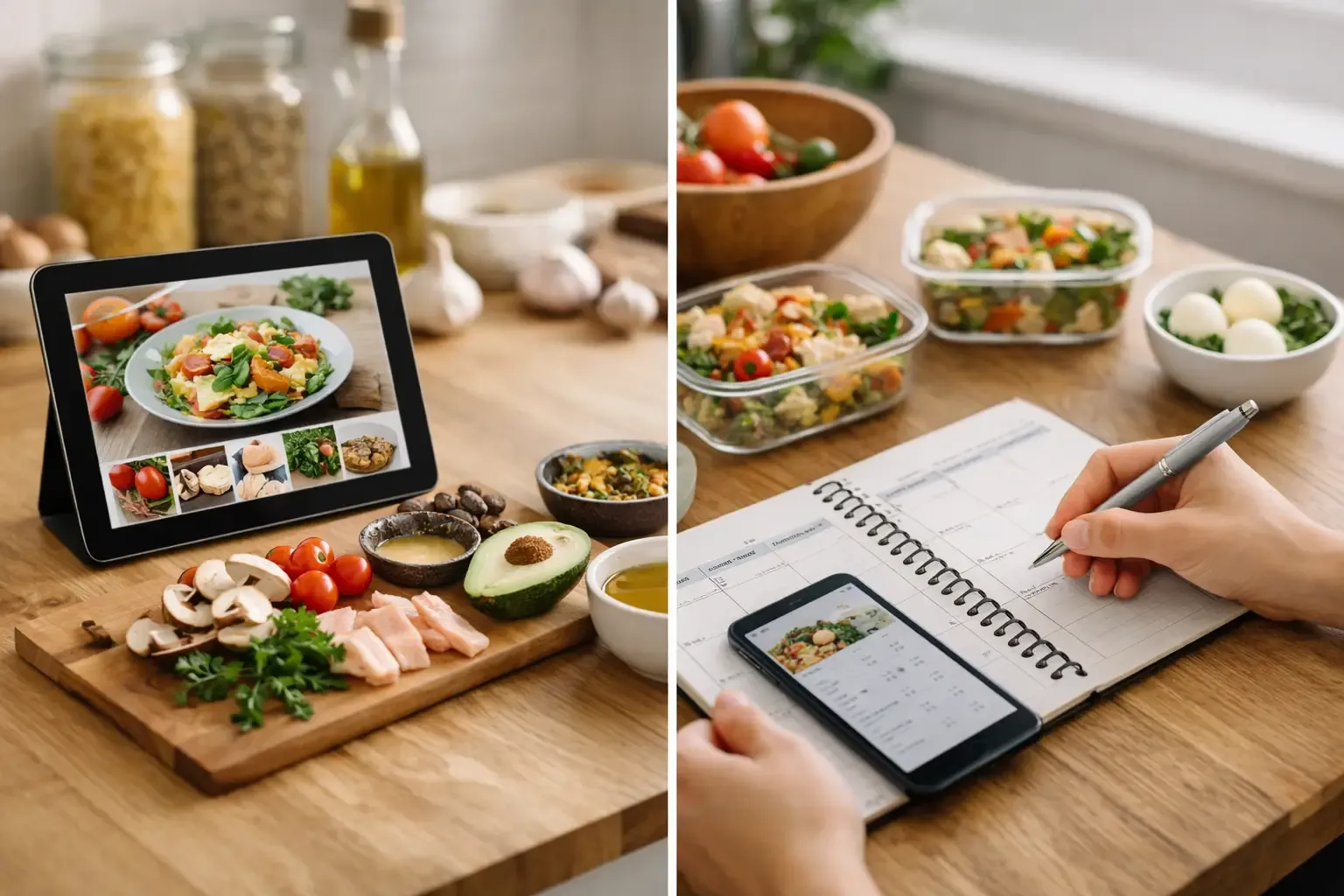
The cleanest way to shop better is to treat grocery shopping as the final step, not the starting point. That means looking at your kitchen first, then deciding on meals, then generating a list based on what is missing.
Step 1: Check inventory with a use-first mindset
Do not start by asking, what sounds good this week? Start with, what is already here and what expires first? That single shift changes what goes on the list.
Look at the fridge, freezer, and pantry in one pass. You are not doing a full audit. You are identifying the ingredients that should drive the next few meals: half a carton of mushrooms, a bag of frozen chicken thighs, two cans of chickpeas, tortillas, spinach that will not survive another week.
This is where many people overcomplicate the process. You do not need a perfect count of every spice jar. You need enough visibility to avoid buying duplicates and enough accuracy to trust your plan. If your kitchen feels disorganized, start with your frequent ingredients and your short-shelf-life items. Those create most of the waste.
Step 2: Plan meals around overlap, not novelty
A common mistake is planning five unrelated dinners with five separate ingredient lists. That creates expensive carts and partial leftovers that sit in the back of the fridge.
Efficient meal planning uses overlap on purpose. If one meal uses cilantro, another should use the rest. If you buy a pack of chicken, it should cover at least two meals. If you open sour cream, tortillas, or a bag of spinach, give those items a second job before they become waste.
This does not mean eating the same dinner all week. It means choosing meals that share ingredients while still feeling distinct. Tacos one night and a rice bowl the next can use the same protein, herbs, onions, and lime. Pasta with vegetables can be followed by a frittata that clears the remaining produce drawer.
For beginners, three planned dinners is often enough. The rest can come from leftovers, freezer staples, pantry meals, or a low-effort backup like eggs, soup, or grilled cheese. Planning every meal sounds efficient, but for many small households it leads to overbuying because schedules change.
Step 3: Build the list from gaps only
Once meals are chosen, the list should answer one question: what is missing from the plan? Not what sounds nice to have. Not what was on sale but has no role. Just the gaps.
This is the part that works best when pantry tracking and meal planning live together. When your list subtracts ingredients already on hand, shopping gets cleaner fast. You stop buying the second bottle of soy sauce and the backup pasta you forgot was already in the cabinet. Sously is built around that exact workflow: plan the week, check what you have, and generate a shopping list for only what is needed.
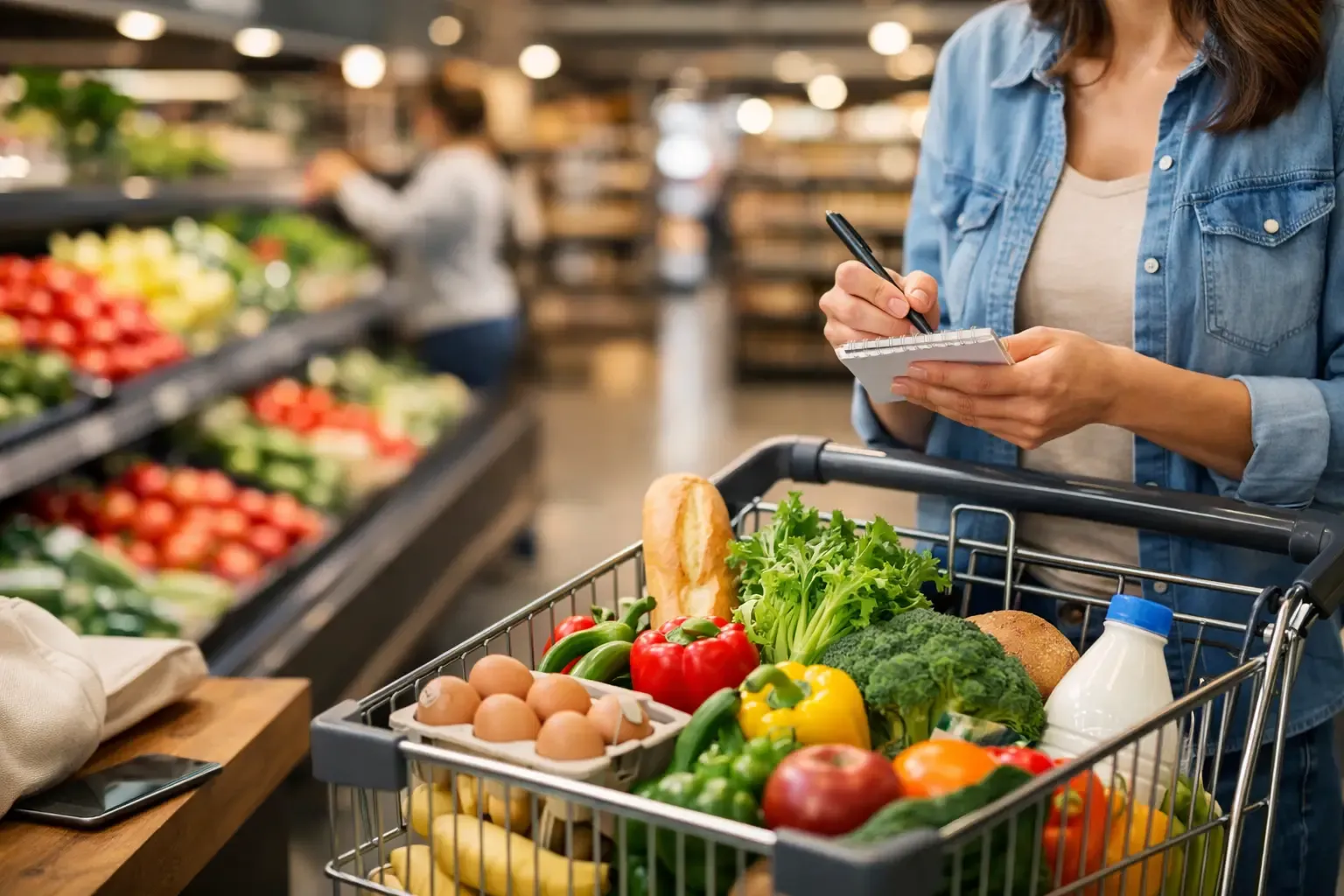
If you are doing this manually, keep the list grouped by store section. Produce, proteins, dairy, dry goods, frozen. The goal is not aesthetic organization. It is fewer missed items and less backtracking in the store.
Where most grocery trips go off track
The store itself is usually not the main problem, but it does expose weak planning. If the list is vague, the trip gets slow. If the plan is too ambitious, impulse buys fill the gaps. If you are hungry and undecided, almost any snack aisle can wreck the budget.
One of the biggest leaks is buying ingredients without a full meal attached to them. A container of mushrooms feels useful. A sauce feels flexible. Fresh herbs feel aspirational. But if those items are not tied to a specific dinner or a known backup use, they become future waste.
Another issue is overestimating cooking energy. People often shop for their ideal week, not their real one. If Tuesday is always hectic, do not buy ingredients for a labor-heavy recipe that night. Buy for the week you are actually going to live.
There is also a trade-off with bulk buying. Warehouse-size packs can lower unit cost, but only if your household will use them in time and has space to store them properly. For couples and small households, the cheapest package is often not the most efficient purchase.
How to shop faster without shopping worse
A faster trip starts with a shorter list and a clearer route. If your store layout is familiar, organize the list in the order you walk it. This sounds minor, but it cuts down on the loop-back effect that turns a simple stop into 45 minutes.
It also helps to standardize part of your week. Keep a small set of repeat meals, staple ingredients, and backup items. Standardization reduces decisions, and fewer decisions usually means fewer mistakes. That does not make meals boring. It makes the system lighter.
Timing matters too. If you can shop at off-peak hours, do it. But that is a convenience factor, not a core strategy. A bad list at a quiet store is still a bad list.
For online grocery orders, the same rule applies: efficiency depends on plan quality. Online shopping reduces aisle distractions, which helps some households spend less, but it can also make substitutions harder and encourage stock-up behavior. It depends on whether your bigger problem is impulse buying or forgetting what is at home.
A simple weekly rhythm that holds up
The best grocery shopping efficiency guide is one you can repeat without thinking too hard about it. A practical weekly rhythm might look like this.
Do a five-minute kitchen check before planning. Choose three core dinners and one backup meal. Reuse ingredients across those meals. Generate a list based on missing items only. Shop once for the main trip, then use your pantry and freezer to absorb schedule changes.
That rhythm works because it is realistic. It respects the fact that people get tired, plans shift, and leftovers happen. It also keeps grocery shopping connected to cooking instead of treating them as separate chores.
If you want to tighten the system further, track a few patterns for two weeks. Which foods are repeatedly wasted? Which staples run out unexpectedly? Which nights are too busy for anything beyond 20 minutes? Those answers matter more than generic advice because they show where your household actually loses time and money.
Efficiency is really about trust
The end goal is not a perfect fridge or a beautifully optimized spreadsheet. It is trust. You want to trust that your list is complete, your pantry data is close enough to be useful, and your meals match the week ahead.
Once that trust is in place, grocery shopping becomes less of a recurring reset and more of a short maintenance task. You stop re-solving the same problem every Sunday. You stop buying food for a fantasy version of your week. And you give yourself a kitchen that is easier to use because it is easier to see.
Start small. Clean up the process, not your entire life. The fastest grocery trip is usually the one built on a calm, accurate plan.
Cook from what you have.
Sously is the meal-planning kitchen co-pilot the blog is written from — free to start on iPhone and Android.
Get Sously