Meal Kits Versus Pantry Cooking for Busy Weeks
Meal kits versus pantry cooking: compare cost, time, food waste, flexibility, and planning to choose a smarter weeknight system in your home kitchen.
A meal kit can feel like a rescue plan at 6:20 p.m.: open the box, follow the card, eat. But by Friday, you may still have half a bag of spinach, three condiment packets, and a fridge full of groceries you forgot to use. The real choice in meal kits versus pantry cooking is not convenience versus effort. It is whether your weekly food system helps you use what you buy.
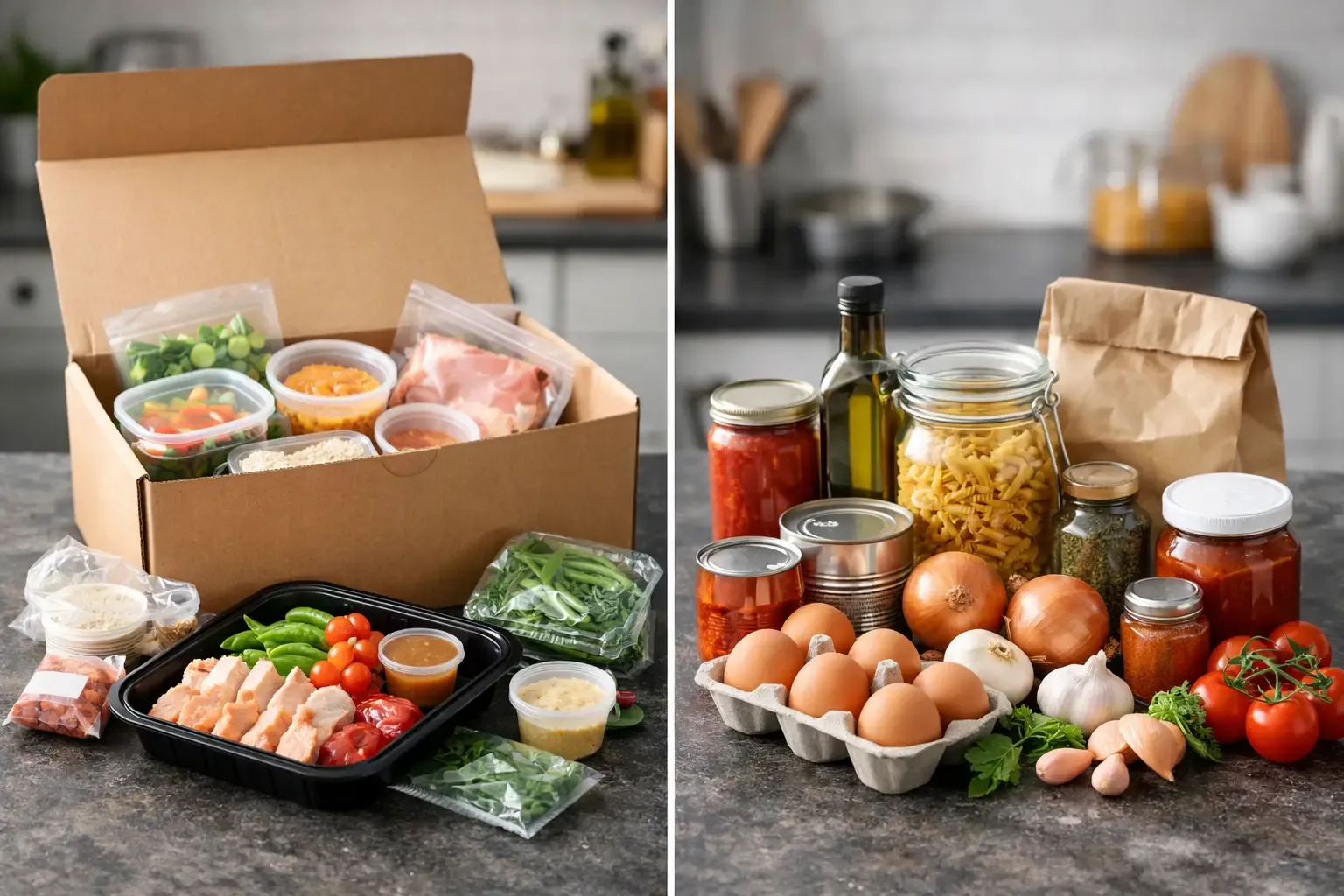
Meal kits solve a narrow problem very well: they remove the decision of what to cook tonight. Pantry cooking can solve the bigger problem: planning meals, using ingredients across the week, and buying only the few things you are missing. Neither approach wins for every household. The better fit depends on your schedule, cooking confidence, budget, and how much food you already have at home.
Meal Kits Versus Pantry Cooking: The Real Trade-Offs
Meal kits are built for predictability. You choose recipes, receive measured ingredients, and follow a clear sequence. For a newer cook or a week when work is unusually hectic, that structure has real value. It limits last-minute takeout and reduces the mental load of choosing a meal.
The trade-off is that convenience is purchased one dinner at a time. Most kits cost more per serving than a grocery-based meal, especially after shipping and premium recipe add-ons. Portions are designed around a fixed number of people, which can be awkward for one-person households, changing schedules, or lunches made from leftovers.
Pantry cooking works differently. Instead of starting with a recipe and buying every listed ingredient, you start with the rice, canned beans, frozen vegetables, chicken thighs, sauces, and produce already in your kitchen. Then you choose meals that use them well and shop for the gaps.
That approach is usually less expensive and produces less waste, but it requires visibility. If you do not know what is in the freezer or which vegetables need to be used first, pantry cooking turns into another round of guessing. The issue is not a lack of recipes. It is a lack of an organized starting point.
Cost: Convenience Has a Price
Meal kits can make grocery spending easier to predict because the weekly charge is fixed. They can also reduce impulse purchases if they replace several restaurant meals. That makes them a reasonable short-term option for a busy week or a household that is rebuilding a cooking routine.
For regular use, however, the price adds up. You are paying for ingredient sourcing, portioning, packaging, delivery, and menu planning. A meal that uses a tablespoon of sour cream or a teaspoon of spice often arrives with a dedicated packet, while pantry cooking lets you use what you already purchased for another meal.
Pantry cooking has its own cost trap: buying ingredients without a plan. A grocery cart filled with good intentions is not automatically cheaper if herbs wilt, produce disappears behind leftovers, and duplicate jars accumulate in the cabinet. The savings come from connecting your plan to your actual inventory.
A practical middle ground is to use meal-kit-style recipes while shopping yourself. Pick two or three meals with overlapping ingredients, then build the rest of the week around pantry staples. For example, buy one bunch of cilantro for tacos, grain bowls, and a quick sauce rather than buying a separate set of ingredients for every dinner.
Time: Prep Time Is Only Part of the Equation
Meal-kit services save time before cooking. There is no menu research, no aisle-by-aisle grocery list, and no measuring of basic seasonings. On the other hand, the advertised cooking time does not include unpacking, breaking down packaging, or managing deliveries.
Pantry cooking may take a few extra minutes upfront, especially when you first create a meal plan. Once your pantry is organized, it can be faster than starting from scratch. A frozen vegetable, cooked grain, jarred sauce, and protein already on hand can become dinner faster than a delivery box can solve an unexpected schedule change.
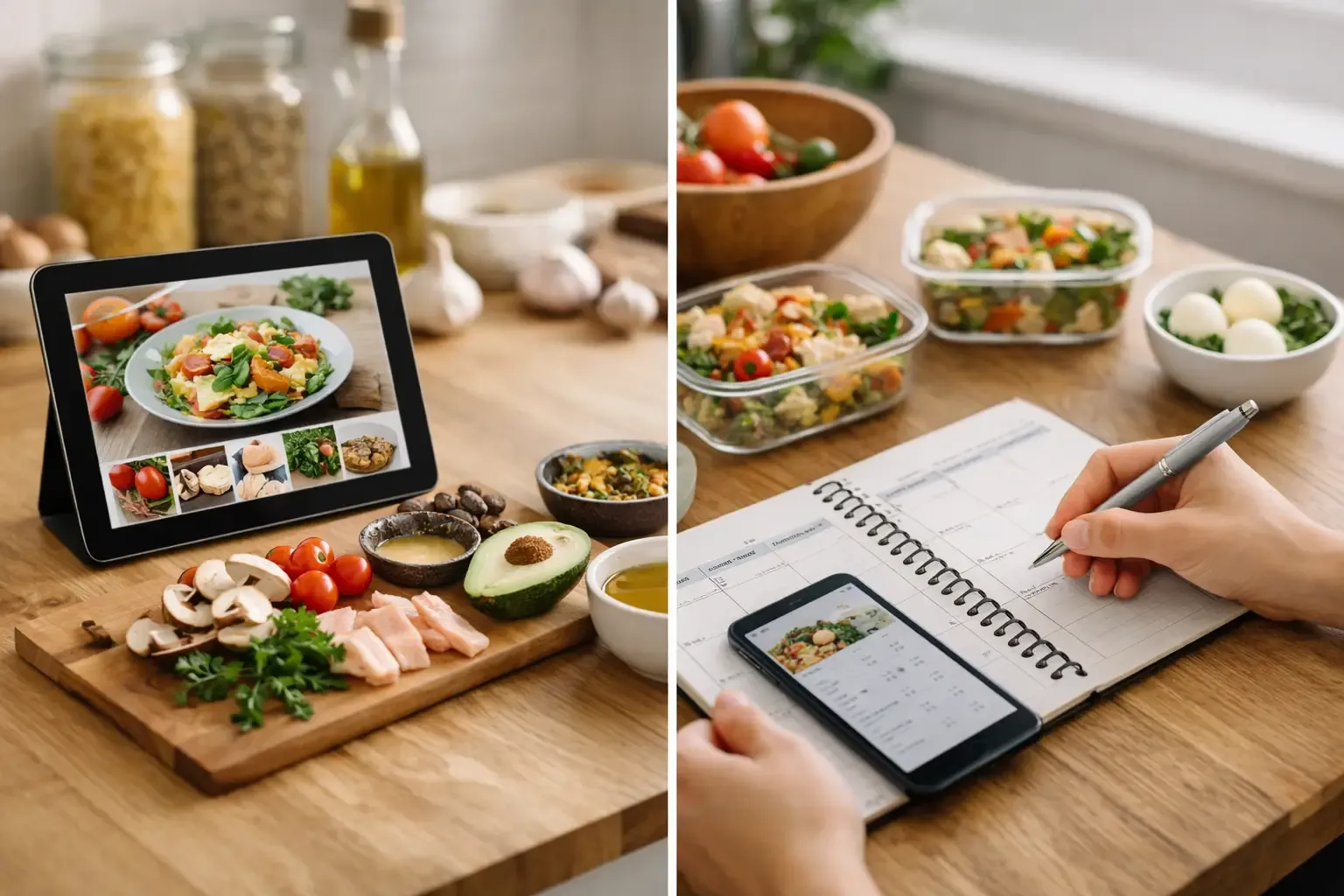
The best system separates planning from the weekday rush. Spend a few minutes once or twice a week checking what needs to be used, choose meals that share ingredients, and create a shopping list for only what is missing. Then a Tuesday dinner is an execution task, not a research project.
Where Food Waste Actually Happens
Meal kits are often presented as a low-waste option because ingredients are portioned. They do prevent the classic problem of buying a large container for a single recipe. But portioned packaging does not eliminate waste. You may still discard ingredients you do not enjoy, skip a delivery during a busy week, or throw away leftover sauce packets that never fit another meal.
Pantry cooking can produce more waste when the kitchen is unmanaged. It can produce far less when you routinely use first-in ingredients, freeze food before it spoils, and plan around open items. The difference is operational: can you see what you own, and does your plan account for it?
This is especially useful for small households. A family of four may finish a full bag of greens quickly. A couple may need to use those greens in two or three meals, add them to eggs, or freeze them for smoothies before they become a slimy surprise in the crisper drawer.
A pantry-first workflow also makes substitutions easier. No broccoli? Use green beans. Out of breadcrumbs? Toast and crush stale bread, or use oats where the dish allows it. The goal is not to force a recipe to work at any cost. It is to understand which ingredients are structural and which can flex.
Flexibility: Pantry Cooking Handles Real Life Better
Meal kits work best when the week goes as planned. If you are home for dinner, want the selected recipes, and can use the delivery shortly after it arrives, the experience is efficient. When travel, late meetings, sick days, or spontaneous plans intervene, the fixed menu can become a source of pressure.
Pantry cooking is more adaptable because it gives you options instead of assignments. You can move a freezer meal to next week, turn planned tacos into a bowl, or make soup from vegetables that are nearing the end of their useful life. That flexibility is valuable when your calendar changes faster than your meal plan.
It does require a small set of dependable building blocks. Keep proteins you will actually use, a few shelf-stable carbs, frozen produce, flavorful sauces, and basic aromatics. This is not a call to stock a restaurant kitchen. It is a way to ensure that an unplanned night does not automatically become an expensive order.
A Better Weekly System Than Choosing One Side
You do not need to swear off meal kits or become the person who tracks every grain of rice. Use the tool that removes friction at the point where your routine breaks.
Meal kits make sense when you are learning to cook, need a temporary reset after a hectic stretch, or want to try a new technique without buying several unfamiliar ingredients. They can also be useful for one or two planned meals a week, particularly if the recipes use ingredients you can carry into other dishes.
Pantry cooking is the stronger default when you want lower grocery costs, fewer forgotten ingredients, and more control over your week. The key is to make planning lightweight. Track the food that matters, especially perishables, freezer items, and staples you tend to overbuy. Choose a few meals before shopping. Let the list subtract what is already in the kitchen.
Sously is designed around that workflow: plan meals, see what you have, generate a focused shopping list, and get practical recipe help when a meal needs to change. It keeps the useful parts of meal-kit convenience without requiring every dinner to arrive in a box.
Start with one week, not a full kitchen overhaul. Cook two meals from ingredients you already own, buy for two more, and leave room for leftovers or a flexible freezer night. A food routine does not need to be impressive. It needs to make Wednesday easier and keep Sunday’s groceries from becoming next week’s waste.
Cook from what you have.
Sously is the meal-planning kitchen co-pilot the blog is written from — free to start on iPhone and Android.
Get Sously