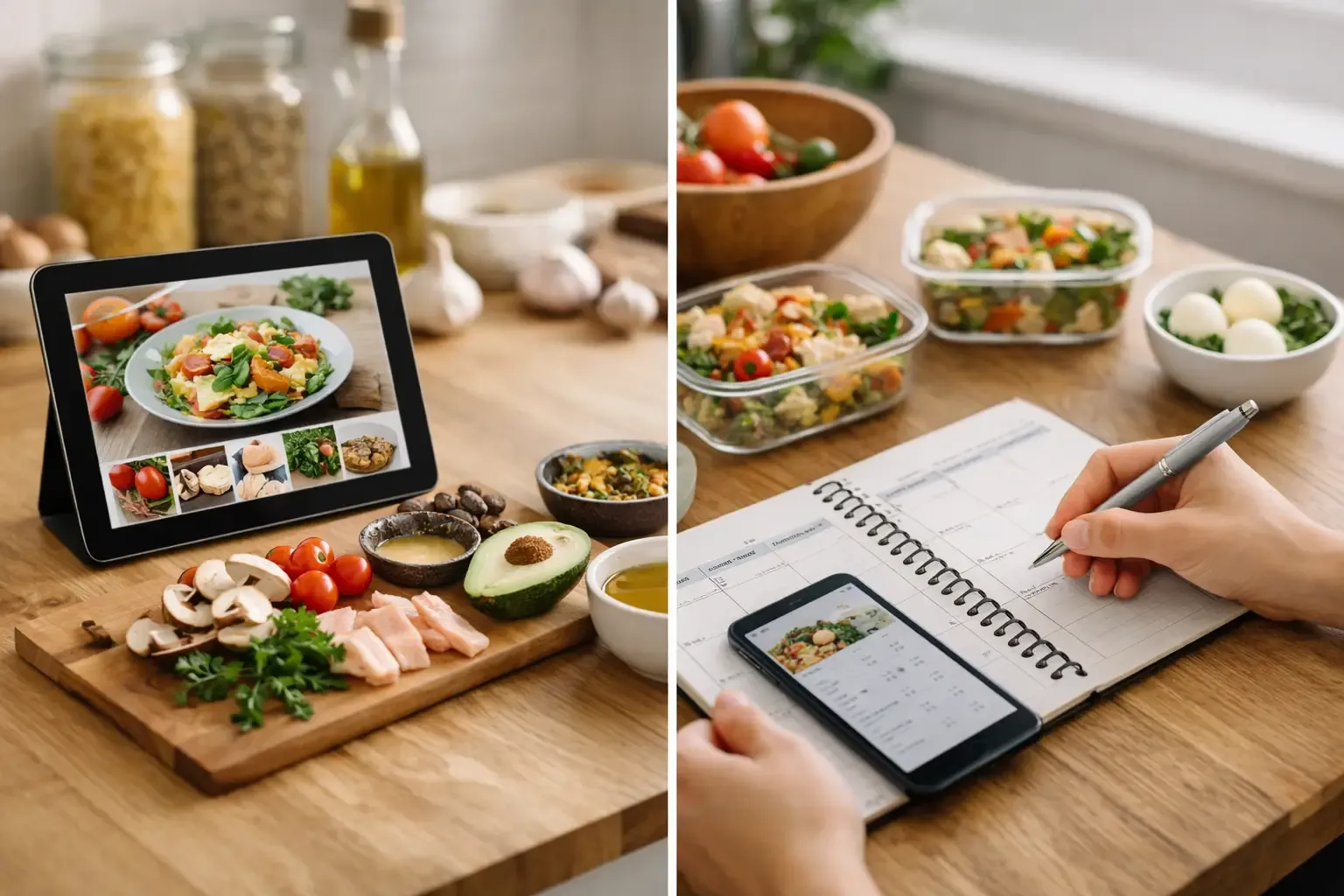

How to Organize Weekly Meals for Couples
Learn how to organize weekly meals for couples with a flexible plan, shared grocery list, pantry check, and simple rules that make weeknights easier too.
Two people can create more meal-planning friction than a full family. One person wants tacos on Tuesday, the other has a late meeting. One notices the chicken needs to be used, the other comes home with another package of chicken. To organize weekly meals for couples, you need a shared system that handles real schedules, different appetites, and the ingredients already in the kitchen.
The goal is not to map out seven perfect dinners. It is to make the 5 p.m. decision easier, buy less food you will not use, and give both people a clear answer to one question: what are we eating tonight?
Start with a short weekly meal check-in
Set aside 10 minutes before your usual grocery trip. Do it together if possible, but do not turn it into a meeting with too many rules. Check calendars first: late work nights, workouts, social plans, travel, and nights when one person will be eating alone all change what makes sense to cook.
Then decide how many dinners actually need a plan. For most couples, that number is four or five, not seven. Leave room for leftovers, takeout, a freezer meal, or the night when plans change. Planning every dinner often causes overbuying because it assumes every ingredient, schedule, and energy level will cooperate.
A useful weekly plan includes three types of meals: one fast meal for a busy night, two standard dinners you both like, and one flexible meal that can absorb odds and ends. That might be fried rice, pasta, grain bowls, tacos, soup, or a big salad with whatever protein and vegetables need using.
Decide what counts as a meal
Couples often get stuck because they are planning at different levels. One person is thinking "salmon with potatoes and broccoli." The other is thinking "something light." Get specific enough to shop, but not so specific that dinner becomes a production.
For example, write "sheet-pan sausage, peppers, and potatoes" rather than "roasted dinner." Include a simple backup beside it, such as eggs on toast or frozen dumplings. A backup is not a failure of the plan. It is part of a plan built for weekdays.
Organize weekly meals for couples around what you have
Before choosing recipes, look through the fridge, freezer, and pantry. Start with ingredients that are perishable, opened, or nearing their useful life. Half a bag of spinach, a container of yogurt, cooked rice, tortillas, and frozen ground turkey are not random leftovers. They are the start of the week.
This reverses the usual workflow. Instead of choosing five recipes and buying every ingredient from scratch, choose meals that use what is already available. You will spend less, waste less, and avoid accumulating duplicate condiments, grains, and freezer items.
Keep the pantry check practical. You do not need to log every pinch of salt or inventory every shelf each Sunday. Track the ingredients that meaningfully affect your shopping decisions: proteins, produce, dairy, bread, grains, canned goods, sauces, and frozen staples. If you have a kitchen app that combines pantry tracking with meal planning, use it to see on-hand ingredients while building the week rather than maintaining separate notes and lists.
Sously is built around this workflow: add what is in your kitchen, plan meals around it, and let the shopping list account for what you already have. The useful part is not more meal ideas. It is fewer duplicate purchases.
Build a plan that works for two different people
A shared meal plan does not require identical tastes. It requires a few repeatable ways to handle differences without cooking two entirely separate dinners.
Use a shared base and separate finishes
Choose meals with a common foundation: rice bowls, baked potatoes, pasta, salads, tacos, or stir-fries. Cook the base once, then adjust toppings, sauces, heat, or protein portions at the end. One person can add hot sauce, while the other uses a milder dressing. One can have chicken, the other beans or tofu.
This works especially well when dietary preferences differ, but it also helps when one person wants a larger meal. Make extra rice, potatoes, or vegetables rather than doubling every component. It is lower effort and creates useful leftovers.
Agree on a rotation, not a rigid menu
Most couples do better with a small set of dependable categories than an endless search for novelty. Keep a rotation of meals you both reliably enjoy, then add one new recipe when you have time and interest.
Your rotation might include a pasta night, a bowl night, tacos, a sheet-pan meal, breakfast for dinner, and a soup or sandwich night. The ingredients can change with the season, but the structure stays familiar. Familiarity makes shopping faster because you know which staples support multiple meals.
The trade-off is variety. If you crave new food every night, a rotation can feel repetitive. Solve that by changing one element at a time: a different sauce, vegetable, grain, or seasoning blend. You get novelty without buying a cart full of one-use ingredients.
Plan for nights you eat separately
Do not force a two-person dinner onto a one-person night. Mark those nights clearly and plan individual options that use leftovers, freezer portions, or simple staples. This avoids the common problem of cooking for two, storing one portion, then forgetting it behind newer food.
If one partner regularly gets home late, set aside their portion before serving. That small habit protects dinner from becoming a vague container in the fridge and makes the plan feel fair to both people.
Create one grocery list with clear ownership
A meal plan falls apart when both people shop from memory. Keep one shared grocery list and sort it by the way you shop: produce, protein, dairy, pantry, and household items. Add quantities when they matter. "Limes" is vague; "4 limes for tacos and dressing" prevents a second store run.
Assign ownership before shopping. One person can place the pickup order while the other checks the kitchen and adds missing items. Or one person handles the main trip and the other picks up a short list later in the week. What matters is that both people know the list is the source of truth.
Avoid buying aspirational ingredients without a use date. A specialty herb, sauce, or snack can be worth it, but attach it to a planned meal or a known habit. Otherwise, it becomes expensive pantry clutter.
Make cooking easier after the plan is made
Planning does not help much if every dinner still starts with chopping, searching, and guessing. Use a small prep window after shopping or on the first calm evening of the week. Wash greens, chop a few vegetables, thaw a protein safely, cook a grain, or portion snacks and lunch leftovers.
Do not prep every meal fully unless that genuinely suits your schedule. Fully assembled meals can lose texture by day three, and extensive Sunday prep can make the system feel like a second job. Prep the bottlenecks instead: the tasks most likely to make you order takeout when you are tired.
Keep recipes accessible where you cook. Save the final version, including substitutions and timing, rather than reopening a crowded recipe page each time. If you are missing an ingredient, choose a replacement based on its job in the dish. Greek yogurt can stand in for sour cream in many cold sauces, while lemon juice can add brightness but will not replace the richness of butter. Good substitutions keep dinner moving without pretending every ingredient is interchangeable.
Review the week without making it complicated
At the end of the week, take two minutes to notice what happened. Which meal was easiest? What did not get cooked? Which ingredients remained? Use those answers to begin next week's plan.
If a meal keeps getting skipped, it may be too ambitious for the day you assigned it. Move it to a quieter night, simplify it, or stop planning it. The best meal system is not the one that looks organized on Sunday. It is the one that still works when Thursday runs late and both of you are hungry.
A good weekly plan gives you options, not obligations. Keep it visible, keep the grocery list shared, and let the food already in your kitchen tell you what should happen next.
Cook from what you have.
Sously is the meal-planning kitchen co-pilot the blog is written from — free to start on iPhone and Android.
Get Sously