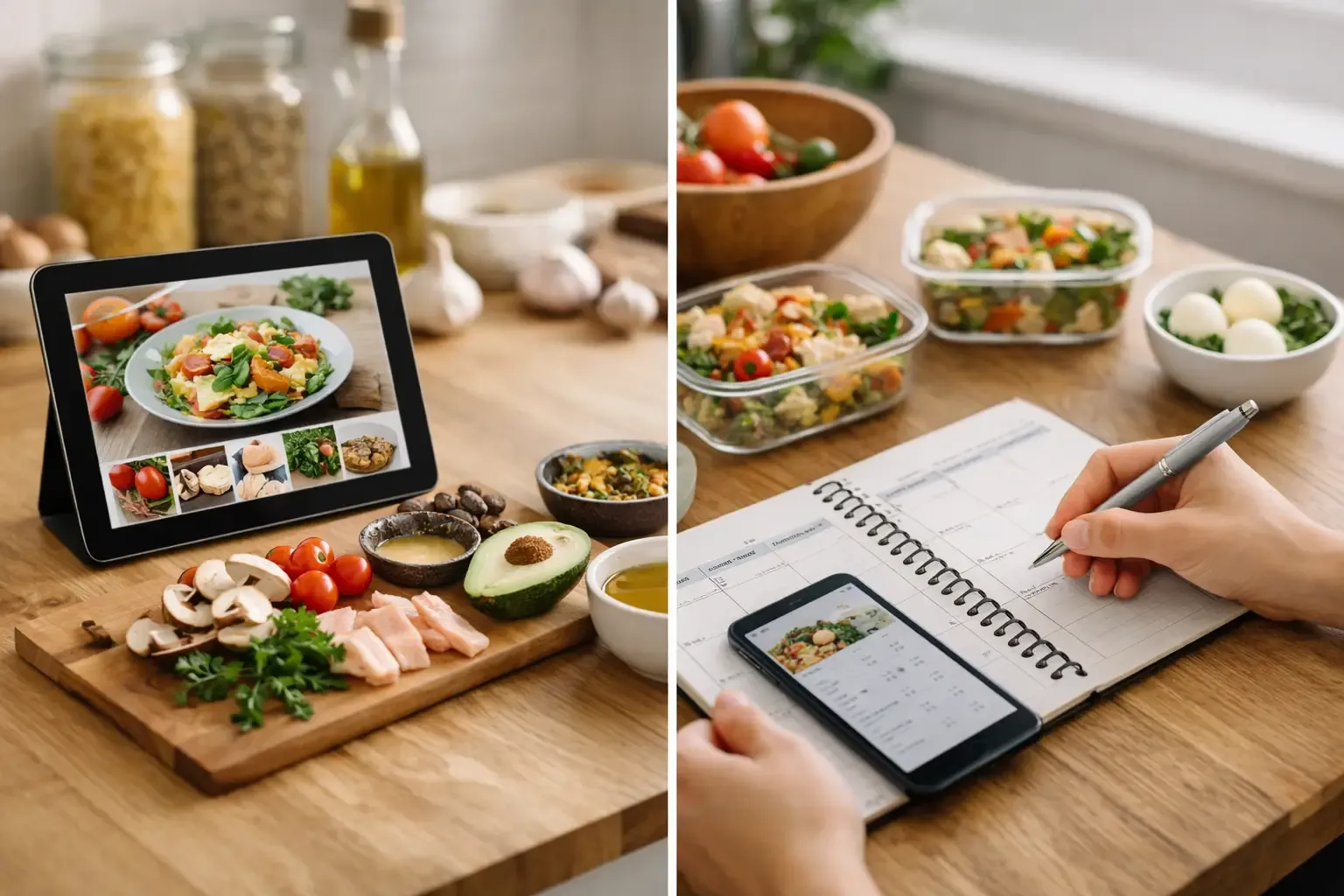
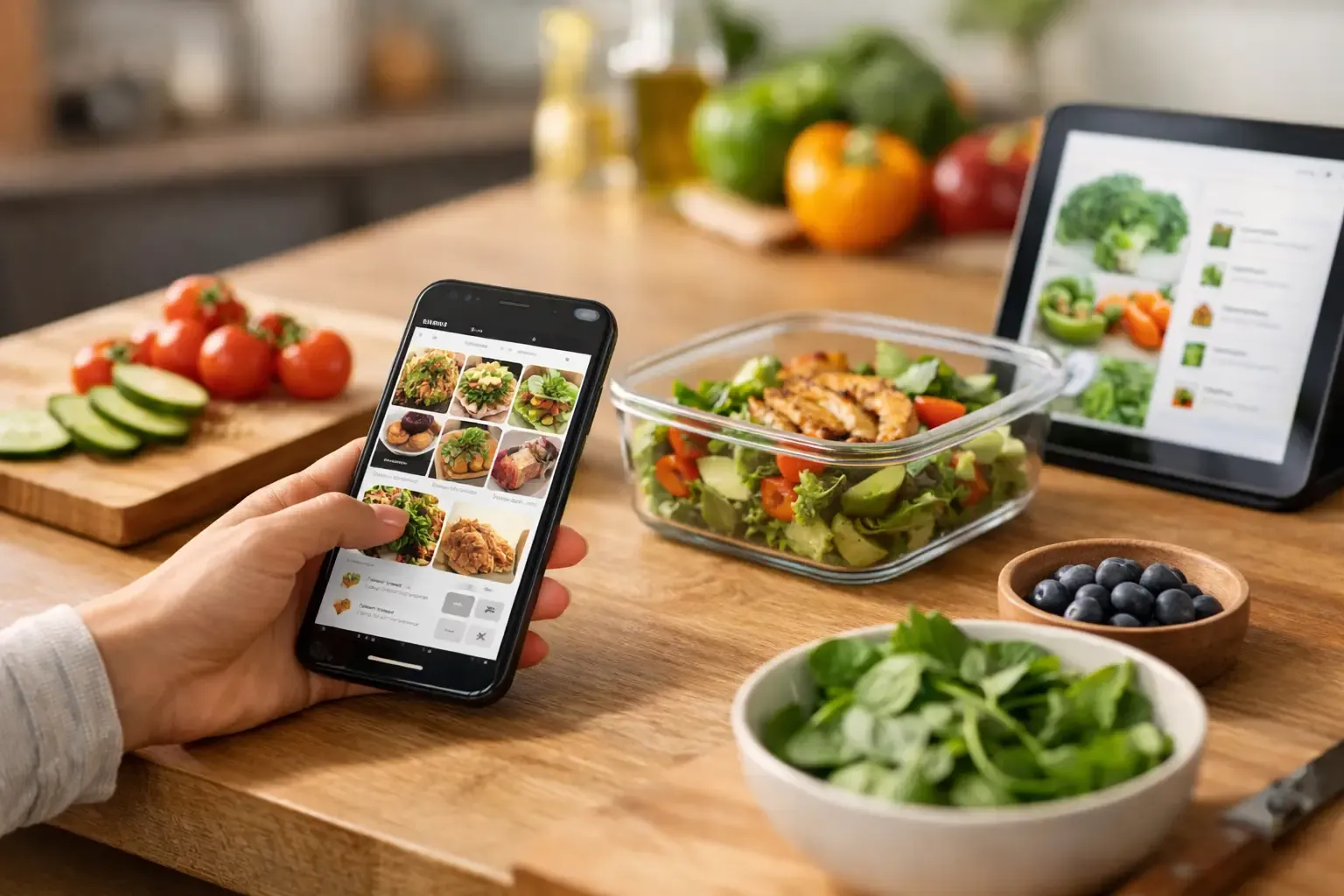
What a Private Meal Planning App Should Do
A private meal planning app should cut food waste, simplify shopping, and protect your data - without ads, account friction, or recipe clutter.
If your meal plan starts in one app, your grocery list lives in another, and your pantry exists mostly in your head, the problem is not your discipline. It is the setup. A private meal planning app should reduce moving parts, not add more of them.
For most people, meal planning breaks down in predictable places. You forget what is already in the fridge. You buy ingredients you already own. You save recipes you never make because they require a special trip or half a dozen extra items. Then, on a busy weeknight, you still end up asking the same question: what can I make right now?
That is where privacy and execution start to matter more than inspiration. A good app does not just collect recipes. It helps you plan the week, use what you have, generate a realistic shopping list, and make decisions faster. If it also respects your data and avoids unnecessary account gates, even better.
Why a private meal planning app matters
Meal planning apps often pitch convenience, but many create a different kind of friction. They ask you to sign up before you can test anything. They push content before utility. They treat your kitchen like a content feed instead of an operational system.
A private meal planning app takes a different approach. It assumes your food habits, pantry inventory, and household routines are not marketing assets. They are personal data. That matters because meal planning can reveal more than people realize - dietary preferences, health goals, shopping patterns, family schedules, and budget constraints.
Privacy on its own is not enough, though. An app can be privacy-friendly and still be a pain to use. The real value shows up when privacy is paired with low-friction design. Local-first storage, limited account requirements, and a free tier that actually works all reduce the barrier to getting started. You should be able to test whether a system helps before you are asked for commitment.
What a private meal planning app should actually help you do
The baseline job is simple: help you decide what to eat and what to buy. But in practice, that breaks into a few connected tasks.
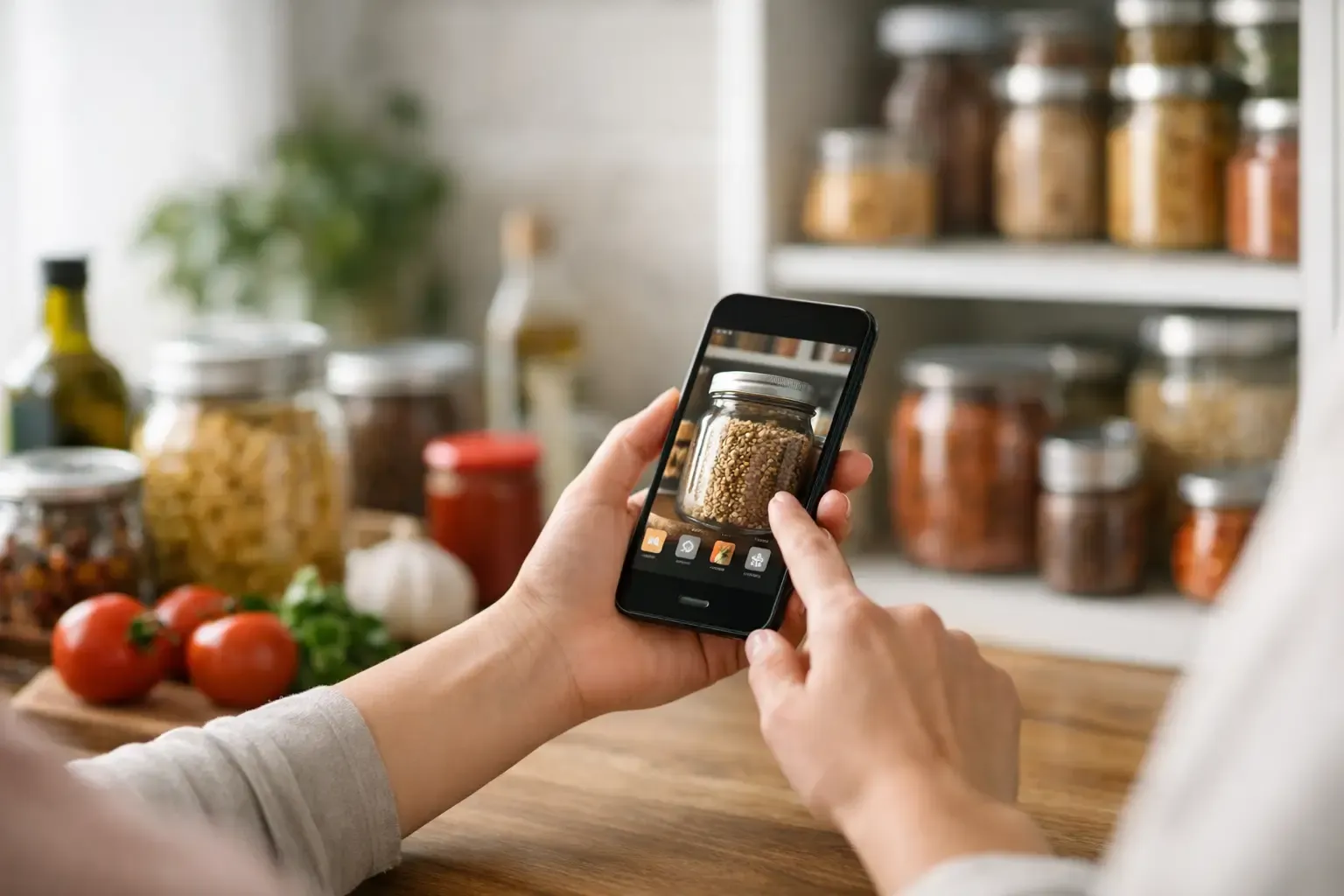
First, you need pantry visibility. Not a perfect inventory of every spice grain, but a useful picture of what is in the fridge, freezer, and pantry. Without that, meal planning turns into guesswork. You either underbuy and need an extra store run, or overbuy and waste food.
Second, you need planning that works at weeknight speed. That means reusable meal templates, quick drag-and-drop scheduling, and some way to fill gaps without rebuilding the week from scratch. A planner should help you answer Tuesday and Thursday, not just look organized on Sunday.
Third, you need shopping logic. A shopping list should not be a separate manual project. It should reflect your planned meals and subtract ingredients you already have. This is one of the clearest differences between a useful kitchen app and a glorified recipe box.
Fourth, you need cooking support that adapts to real life. Sometimes you have chicken, half an onion, and yogurt that needs to be used tonight. Sometimes you are missing one ingredient and need a substitution that will still work. Generic recipe collections do not solve that very well. An app that can build around what is already in your kitchen is far more practical.
The trade-off: privacy versus convenience
Not every private meal planning app will handle sync and sharing the same way. That is where trade-offs come in.
If an app stores most data on your device, that can be excellent for privacy and speed. It also means setup feels lighter because you are not forced into an account immediately. But local-first design can limit cross-device access unless you choose to enable cloud sync. For a solo user, that may be completely fine. For couples or shared households, sync becomes more important.
This is not a flaw so much as a design decision. The better products make that decision visible and optional. They let you start privately and add shared access when you need it, instead of assuming every user wants the same level of connectivity from day one.
How to evaluate a private meal planning app
The fastest way to judge an app is to ignore the marketing language and look at the workflow. Open it and ask a few practical questions.
Can you start using it without creating an account? Can you add pantry items quickly enough that you will actually keep doing it? Can you plan several meals in a week without too much tapping? Does the shopping list automatically account for ingredients on hand? Can it help you cook from leftovers, partial ingredients, or a photo of what is in your kitchen?
Those questions get to the real issue: does the app remove friction at the moments where people usually quit?
A lot of apps are strong in one area and weak in another. Some are decent planners but ignore pantry tracking. Some have recipe discovery but no meaningful grocery automation. Some offer nutrition data, but it is vague or inconsistent. If your goal is less waste and fewer repeated decisions, fragmented tools tend to recreate the same problems in a nicer interface.
What separates useful apps from content-heavy ones
Many food apps still behave like media products. They are built to keep you browsing. That can be enjoyable, but it is not always useful at 6:15 p.m. when you need dinner and have no interest in reading a backstory before finding the ingredient list.
A practical private meal planning app should prioritize execution over browsing. That means fewer ads, less filler, and more direct utility. Search should help you find a recipe that fits your ingredients. Pantry data should connect to your plan. Substitutions should be specific, with ratios and some indication of how the swap will affect the dish.
This is also where trustworthy nutrition data matters. If ingredient information is inconsistent, the shopping list, pantry counts, and nutrition estimates all get weaker. Reliable data makes the whole system more usable, especially for households trying to manage macros, calories, or basic nutrition without turning dinner into a spreadsheet.
Where a private meal planning app fits in real life
For a single person, the biggest win is often waste reduction. You buy less duplicate food, use perishables sooner, and avoid the cycle of aspirational shopping followed by takeout. For couples, the value usually shows up in coordination. One person can plan, the other can shop, and both can see what is already available. For small households, the best app reduces decision fatigue more than anything else.
This is why one-size-fits-all meal plans often fall short. People do not need a rigid meal system. They need a tool that supports the way they actually shop and cook. Some weeks that means cooking from the freezer. Some weeks it means stretching ingredients until payday. Some weeks it means solving dinner with whatever is left before the next grocery run.
An app that adapts to those conditions is more useful than one that simply presents idealized meal prep routines.
A better standard for private meal planning apps
The best version of this category is not flashy. It is calm, fast, and specific. It helps you track what you have, plan a realistic week, generate a clean shopping list, and cook with fewer interruptions. It respects privacy without turning setup into a project.
That is the standard more people should expect from a private meal planning app. Not more recipes. Not more content. Just fewer gaps between planning, shopping, and cooking.
Sously is a good example of that direction because it combines pantry tracking, weekly planning, recipe generation, shopping automation, and cooking help in one place, with a privacy-forward structure and a free start that does not force an account.
If you are choosing a meal planning app, look for the one that makes your next grocery trip and your next weeknight dinner easier, not the one that gives you the most to scroll through.
Cook from what you have.
Sously is the meal-planning kitchen co-pilot the blog is written from — free to start on iPhone and Android.
Get Sously