How to Prevent Grocery Overbuying Every Week
Learn how to prevent grocery overbuying with a pantry-first routine that plans meals, builds a tighter list, and keeps food from going to waste each week.
A second bag of spinach, another jar of pasta sauce, chicken pushed behind the yogurt. Grocery overbuying rarely looks dramatic at checkout. It shows up later, when the fridge is full but dinner still feels unclear. To prevent grocery overbuying, the goal is not a stricter budget or a perfect meal plan. It is a clearer view of what you have, what you will actually cook, and what needs to be used first.
For busy households, the usual system is fragmented: a vague idea of meals, a shopping list built from memory, and a pantry that only becomes visible when something expires. That system makes duplicate purchases almost inevitable. A better approach connects the kitchen before the store.
Why Grocery Overbuying Happens
Most people do not overbuy because they are careless. They overbuy because the grocery store asks them to make decisions without the right information. You remember buying rice, but not whether there is half a bag or three unopened bags. You know you need vegetables, but not which ones are still good in the crisper drawer. You add ingredients for an ambitious recipe, then Tuesday turns into takeout.
Sales and bulk packages can make the problem worse. A lower price per ounce is only a savings if you use the food. Buying a large container of berries for one person or two people may be a good deal during a week of breakfasts at home. It is usually not a good deal before travel, a busy stretch, or a week when the freezer is already full.
Recipe-driven shopping also creates excess when each meal is planned in isolation. Five recipes can call for five specialty ingredients, leaving half-used herbs, sauces, and produce with no assigned purpose. The issue is not cooking from recipes. It is shopping for recipes without checking what can overlap.
Start With the Kitchen, Not the Store
The most reliable way to prevent grocery overbuying is to make the kitchen your starting point. Before adding anything to a list, take a quick inventory of the ingredients that are most likely to be forgotten: produce, proteins, dairy, opened packages, freezer items, and leftovers.
This does not require a Sunday afternoon spreadsheet. A five-minute check is enough when it focuses on decisions. Ask: What needs to be used in the next few days? What staples are genuinely low? What can become dinner without another store trip?
Prioritize foods by urgency, not by aspiration. A bag of carrots can wait. Opened salsa, soft peppers, cooked rice, and chicken with a near expiration date should shape the next meals. When you start there, the grocery list gets shorter on its own.
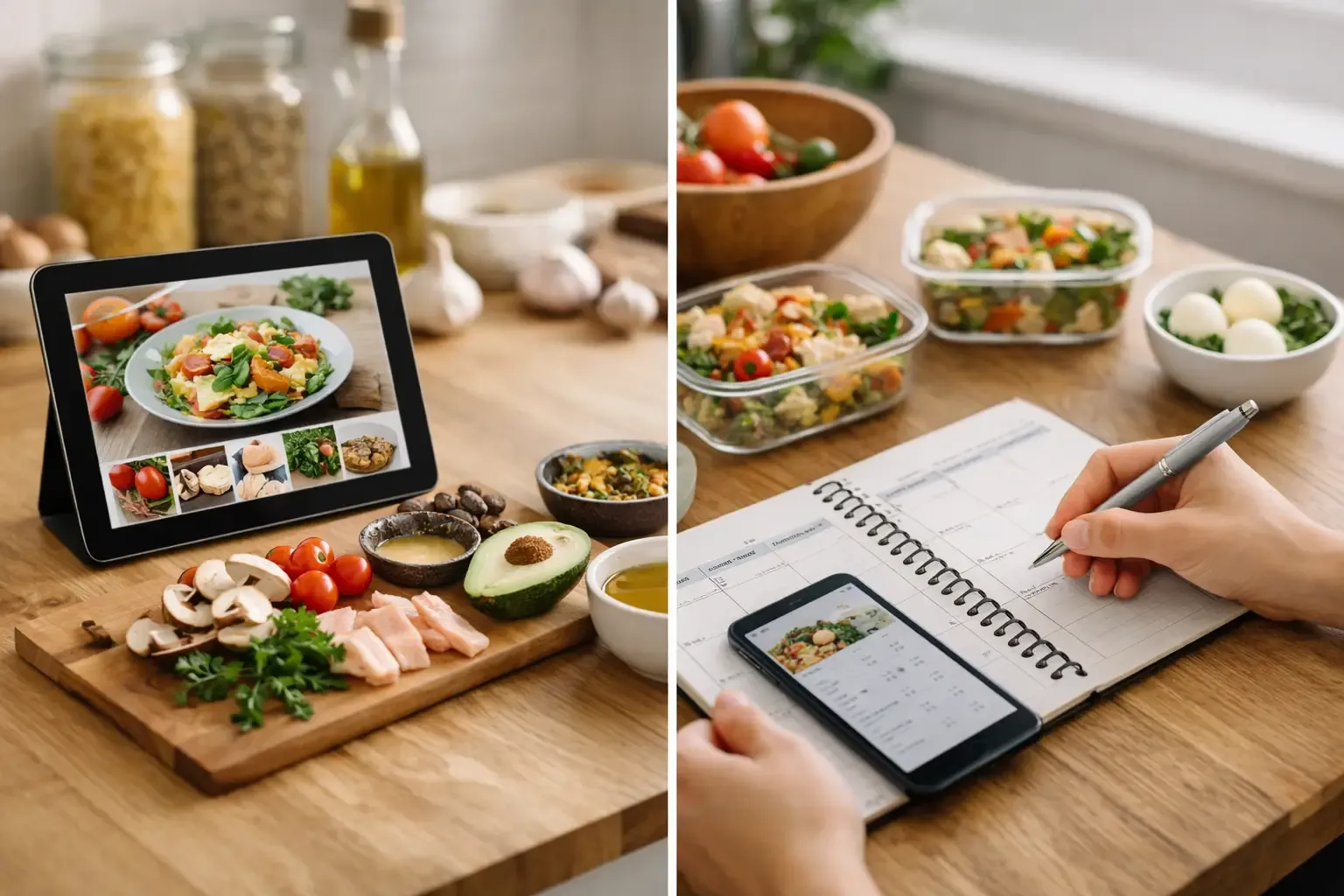
A smart pantry tool makes this easier because it keeps the inventory available when you are planning, rather than requiring you to remember it in the store aisle. The value is not tracking every grain of salt. It is avoiding the common, expensive duplicates: another carton of eggs, a second bottle of soy sauce, or more frozen vegetables when the freezer already has plenty.
Use a simple inventory standard
Track items that affect shopping decisions. Fresh food, proteins, dairy, freezer staples, and frequently duplicated pantry goods are worth keeping visible. Items you replace only once or twice a year are less urgent unless they are central to your cooking.
For produce, use a practical quantity instead of false precision. “Three apples” or “half a bag of spinach” is more useful than trying to weigh every item. For pantry staples, a simple status works well: enough, low, or out. The system should save time, not become another chore.
Plan Meals Around What Is Already There
A meal plan should answer one question: what will we cook with the food we already own? That is different from collecting seven new recipes and buying everything they require.
Start by choosing two or three meals that use your most perishable ingredients. If you have ground turkey, tortillas, peppers, and shredded cheese, tacos or a skillet bowl may be the obvious first meal. If you have cooked rice, broccoli, and eggs, fried rice can use up several items at once. Then add a few flexible meals built around long-lasting staples, such as pasta, beans, frozen vegetables, or canned tomatoes.
You do not need to schedule every dinner in detail. In fact, overly rigid plans often cause waste because real weeks change. Plan enough meals to cover the number of nights you expect to cook, then leave room for leftovers, social plans, and low-effort meals. A household that realistically cooks four nights should not shop for seven elaborate dinners.
Ingredient overlap is where planning becomes efficient. Use one bunch of cilantro across tacos, grain bowls, and soup. Buy one protein that can appear in two meals in different forms. Choose recipes that share onions, greens, lemons, or a sauce base. This creates variety without filling the cart with one-use ingredients.
Build in a use-it-up meal
Reserve one flexible meal near the end of the week. It can be a sheet-pan dinner, soup, frittata, stir-fry, grain bowl, or pasta built from remaining ingredients. This is not a punishment meal. It is a pressure-release valve for produce that did not get used as planned.
The format matters more than a specific recipe. A flexible meal lets you swap green beans for broccoli, rice for noodles, or chicken for beans without another trip to the store. When substitutions are clear, you are less likely to buy a specific ingredient just because a recipe named it.
Turn the Plan Into a Tighter Shopping List
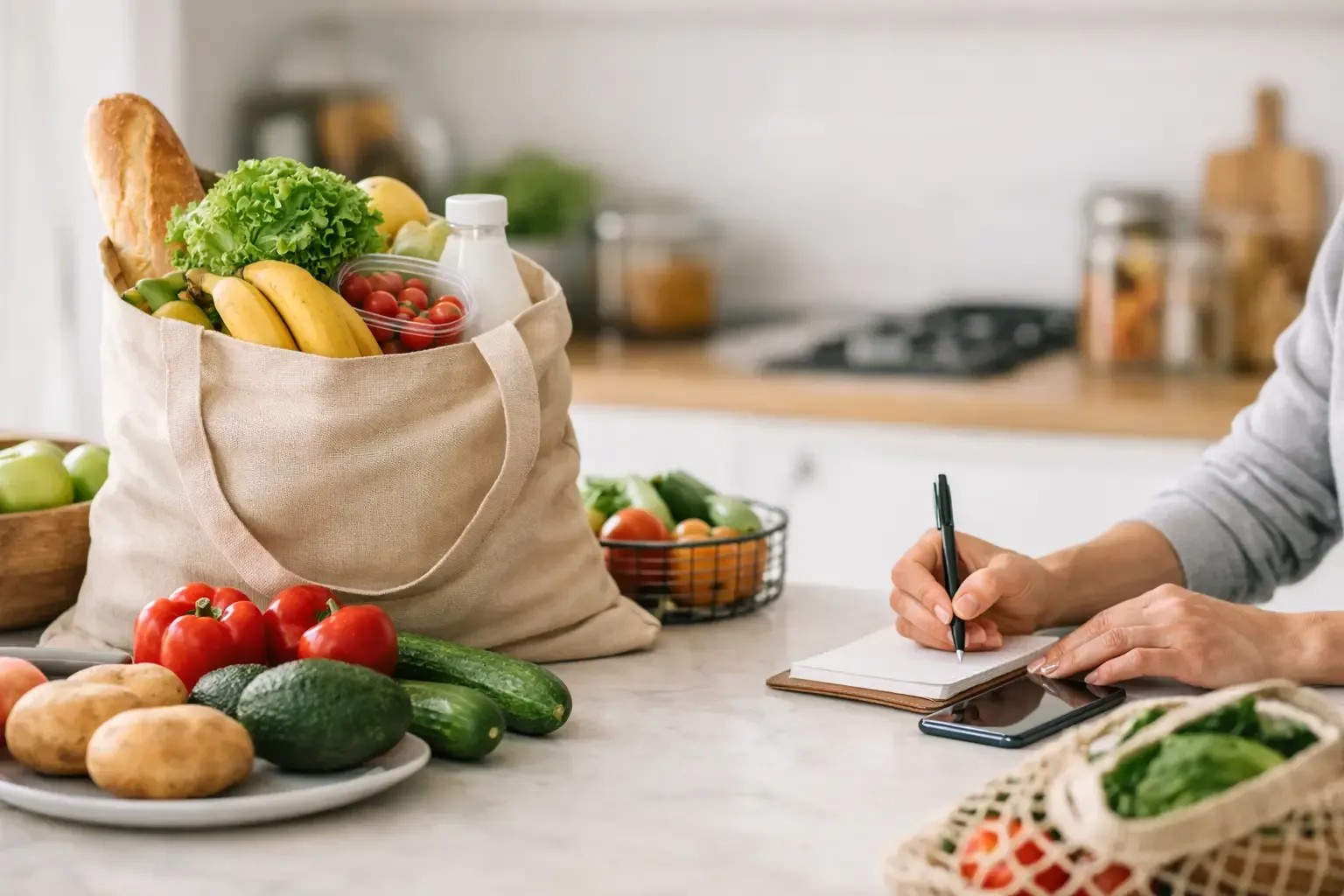
Once meals are selected, list only the missing ingredients. That sounds obvious, but many shopping lists are really wish lists: things that might be useful, ingredients for meals that may happen, or backups for food already at home.
A useful list has quantities and a reason for each item. Instead of “vegetables,” write “1 bag salad greens for lunches” or “2 bell peppers for fajitas and snacks.” Instead of “chicken,” write the amount needed for two planned meals. Specificity helps prevent both underbuying and the instinct to toss extra items into the cart.
It also helps to separate replenishment from meal ingredients. Replenishment items are the basics you routinely replace, such as milk, coffee, bread, or lunch staples. Meal ingredients have a job in the current plan. If an item fits neither category, pause before adding it.
Automated shopping lists are particularly useful when they subtract what is already in the pantry. Sously, for example, connects pantry tracking, meal planning, and a generated grocery list so the list reflects the gap instead of repeating what is already in your kitchen. That is the workflow that matters: plan the meals, check on-hand ingredients, then shop for the difference.
Shop for the Week You Will Actually Have
Your calendar is part of your grocery plan. Check it before you shop. Late work nights, a dinner out, a weekend trip, and a kid's activity all change what you will realistically cook.
If the week is unpredictable, buy fewer delicate ingredients and lean more on freezer and pantry options. Frozen vegetables, beans, eggs, shelf-stable grains, and sauces can cover a meal without demanding immediate attention. Save highly perishable purchases for weeks when you know they will get used.
At the store, follow the list closely, but allow reasonable substitutions. If the planned vegetable is unavailable or looks tired, choose another that works in the same dish. Do not buy three alternatives unless you have a clear plan for each. A substitution should replace an item, not expand the cart.
Be especially careful with promotions. A buy-one-get-one offer is useful when both items have a designated use, can be frozen, or are staples you consistently finish. If you are buying because the price feels hard to pass up, it may still cost more than buying one item you will use.
Make the System Easier After You Get Home
The first few minutes after unpacking influence whether the next week goes smoothly. Put new items behind older ones when possible, so older food gets used first. Freeze meat, bread, or extra portions before they become a question mark. If you bought ingredients for a specific meal, store them together or make a quick note in your planner.
Then update the items that changed. You do not need a full inventory reset after every grocery trip. Add the foods that will drive future decisions and mark the staples you restocked. The point is to preserve enough visibility that next week's list starts from facts.
Over time, pay attention to your repeat waste. If salad greens regularly spoil, buy a smaller package or choose a sturdier vegetable. If you always run out of lunch food, make it a replenishment category. If a particular recipe leaves specialty ingredients behind, either plan a second use or skip it. Good grocery systems improve through small adjustments, not willpower.
A calmer grocery trip begins before you enter the store. See what is on hand, give it a place in the week, and buy only the gap. That leaves you with less clutter in the fridge, fewer decisions at dinner, and food that has a real chance of being eaten.
Cook from what you have.
Sously is the meal-planning kitchen co-pilot the blog is written from — free to start on iPhone and Android.
Get Sously