Recipes Made With Ingredients You Already Have
Make smarter meals with recipes made with ingredients you already have. Cut waste, skip extra shopping, and cook faster on busy weeknights.
The 6:15 p.m. question is rarely about cooking skill. It is usually about visibility. You have eggs, half an onion, a can of beans, some pasta, and something in the freezer you forgot about. What you need are recipes made with ingredients you already have, not another dinner idea that starts with a grocery run.
That shift matters more than it sounds. Cooking from what is already in your kitchen reduces waste, shortens decision time, and keeps weeknights from turning into a low-grade logistics problem. It also works better for real households, where ingredients are uneven, plans change, and nobody wants to scroll through ten pages of filler to figure out what to do with rice, spinach, and chicken thighs.
Why recipes made with ingredients you already have work
Most home cooking friction comes from a mismatch between recipes and reality. Standard recipes assume a full shop, exact ingredients, and enough patience to chase one missing item. Real kitchens do not work that way. Real kitchens have partial bags, leftovers, staples, and produce on a deadline.
When you cook from your pantry, fridge, and freezer first, the meal gets built around constraints. That is a good thing. Constraints narrow decisions. They make dinner easier to start because your options are grounded in what is physically available.
There is also a cost angle, but not just in the obvious sense. Yes, using what you already bought saves money. It also reduces duplicate buying. If you cannot quickly see that you already have coconut milk, tortillas, or frozen peas, you buy them again. Then they pile up, get forgotten, and become waste.
The trade-off is that pantry-based cooking is less rigid. You need a system that can handle substitutions and uneven quantities. That is where people often get stuck. They are not missing ingredients so much as they are missing structure.
Start with ingredient roles, not recipe names
If you open the fridge asking, What recipe can I make, you may hit a wall fast. If you ask, What do I have for protein, vegetables, starch, and flavor, dinner gets easier.
Most weeknight meals are built from the same basic framework. You need something filling, something with texture, and something that brings salt, acid, fat, heat, or aromatics. Once you think in roles, not perfect ingredient matches, you can swap more confidently.
An egg can be the protein in fried rice, a quick scramble, or a frittata-style skillet meal. Beans can become tacos, soup, grain bowls, or pasta add-ins. Rice can be the base for a stir-fry, soup, or baked casserole. That leftover yogurt might be breakfast one day and a sauce the next.
This is also how good substitutions work. Replacing spinach with kale changes texture and cook time. Swapping lemon for vinegar changes brightness and sharpness. Using oats instead of breadcrumbs can work in meatballs or patties, but the texture shifts. The goal is not pretending every substitute is identical. It is knowing the job each ingredient is doing.
A practical way to build dinner from what you have
The fastest method is a three-part scan: use-soon ingredients, reliable staples, and flavor boosters.
Start with use-soon ingredients. These are your soft vegetables, cooked proteins, open jars, herbs, dairy, and leftovers. If mushrooms need to be used tonight, they should shape the meal. The same goes for half a rotisserie chicken or a container of rice from two nights ago.
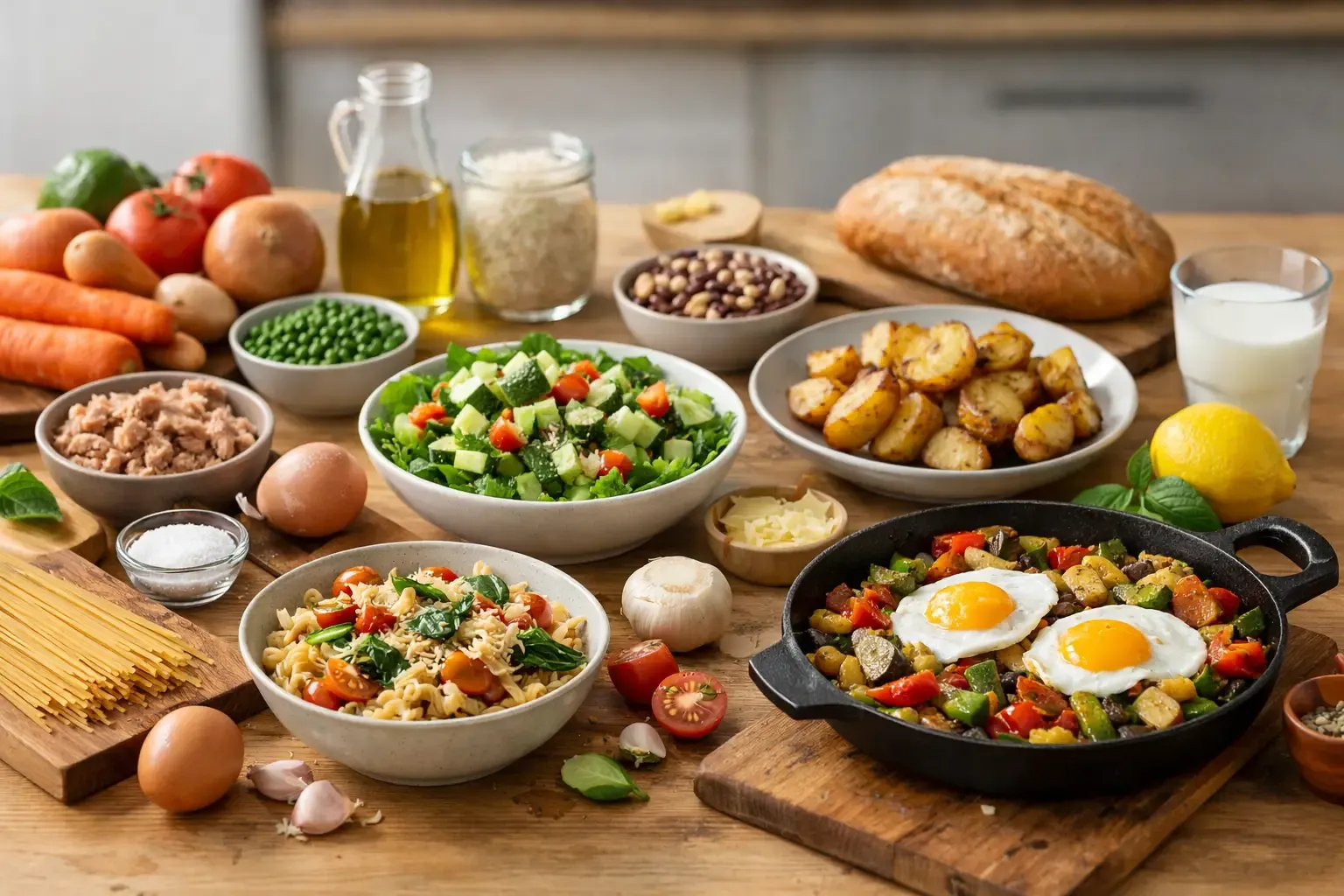
Then check reliable staples. This is where most workable dinners come from: pasta, canned tomatoes, beans, lentils, rice, tortillas, broth, frozen vegetables, eggs, potatoes, and shredded cheese. Staples give the meal backbone.
Finally, look at flavor boosters. Onion, garlic, soy sauce, mustard, hot sauce, butter, broth concentrate, salsa, tomato paste, citrus, and spice blends are what make a sparse ingredient list taste intentional instead of improvised.
From there, choose a format before you choose a recipe. Bowls, soups, pasta, scrambles, tacos, sheet-pan meals, and skillet sautés are forgiving formats. They can absorb swaps without collapsing.
Five dinner formats that rarely fail
Pantry pasta
Pasta solves more ingredient gaps than almost any other staple. If you have garlic, olive oil, canned tomatoes, frozen spinach, beans, tuna, or Parmesan, you have options. A tomato base can handle vegetables that need to be used up. An oil-based pasta works well when you have fewer ingredients but want speed.
The caution is balance. If your mix-ins are soft, add crunch with toasted breadcrumbs or nuts. If everything tastes flat, acid usually fixes it faster than more salt.
Fried rice or grain skillet
This is one of the best recipes made with ingredients you already have because it is designed for leftovers. Cold rice works best, but other grains can work too. Add egg, leftover meat, frozen peas, carrots, scallions, or whatever vegetables are available. Use soy sauce, sesame oil, garlic, or chili crisp if you have them.
If you do not have classic fried rice ingredients, the format still holds. Rice plus vegetables plus protein plus seasoning in one pan is enough. The exact flavor direction can shift.
Soup from scraps and staples
Soup is efficient because it turns small amounts into a complete meal. Broth, beans, pasta, lentils, potatoes, canned tomatoes, and nearly any vegetable can become dinner with the right seasoning. It is especially good for produce that is not at peak texture anymore.
The trade-off is time. Soup can be quick, but some versions need simmering to build flavor. If speed matters, start with aromatic ingredients and a strong seasoning base instead of expecting magic from water and random vegetables.
Tacos, wraps, and quesadillas
These formats are built for partial quantities. A little chicken, beans, roasted vegetables, cheese, salsa, slaw, rice, or avocado can go a long way. Tortillas also rescue leftovers that might feel unappealing on their own.
Quesadillas are the most forgiving. Tacos need a bit more texture contrast. Wraps work best when wet ingredients are controlled so they do not turn soggy.
Egg-based meals
Eggs are the fastest route from scattered ingredients to dinner. Scrambles, omelets, frittatas, and breakfast-for-dinner plates all work with small amounts of vegetables, cheese, herbs, or cooked meat. Potatoes, toast, or a side salad can make them more substantial.
The main variable is moisture. Watery vegetables should be cooked down before eggs go in, or the texture turns loose fast.
What usually goes wrong
The biggest mistake is trying to force a specific recipe from an incomplete set of ingredients. That often creates frustration and one more grocery trip. A better approach is matching what you have to a flexible meal format.
The second problem is not tracking quantities. Knowing that you have pasta is useful. Knowing you only have four ounces left is more useful. The same applies to broth, tortillas, and frozen proteins. Good meal planning depends on accurate inventory, not optimistic guesses.
Third, people underestimate seasoning. A pantry meal can feel repetitive if every dish relies on the same salt-pepper-garlic pattern. Small flavor shifts matter. Salsa, curry powder, Italian seasoning, miso, Dijon, smoked paprika, and vinegar can turn the same base ingredients into different meals across the week.
The easiest way to make this sustainable
Cooking this way works best when your kitchen is organized around visibility, not memory. You should be able to answer three questions quickly: what needs to be used first, what staples are available, and what is missing for the next few meals.
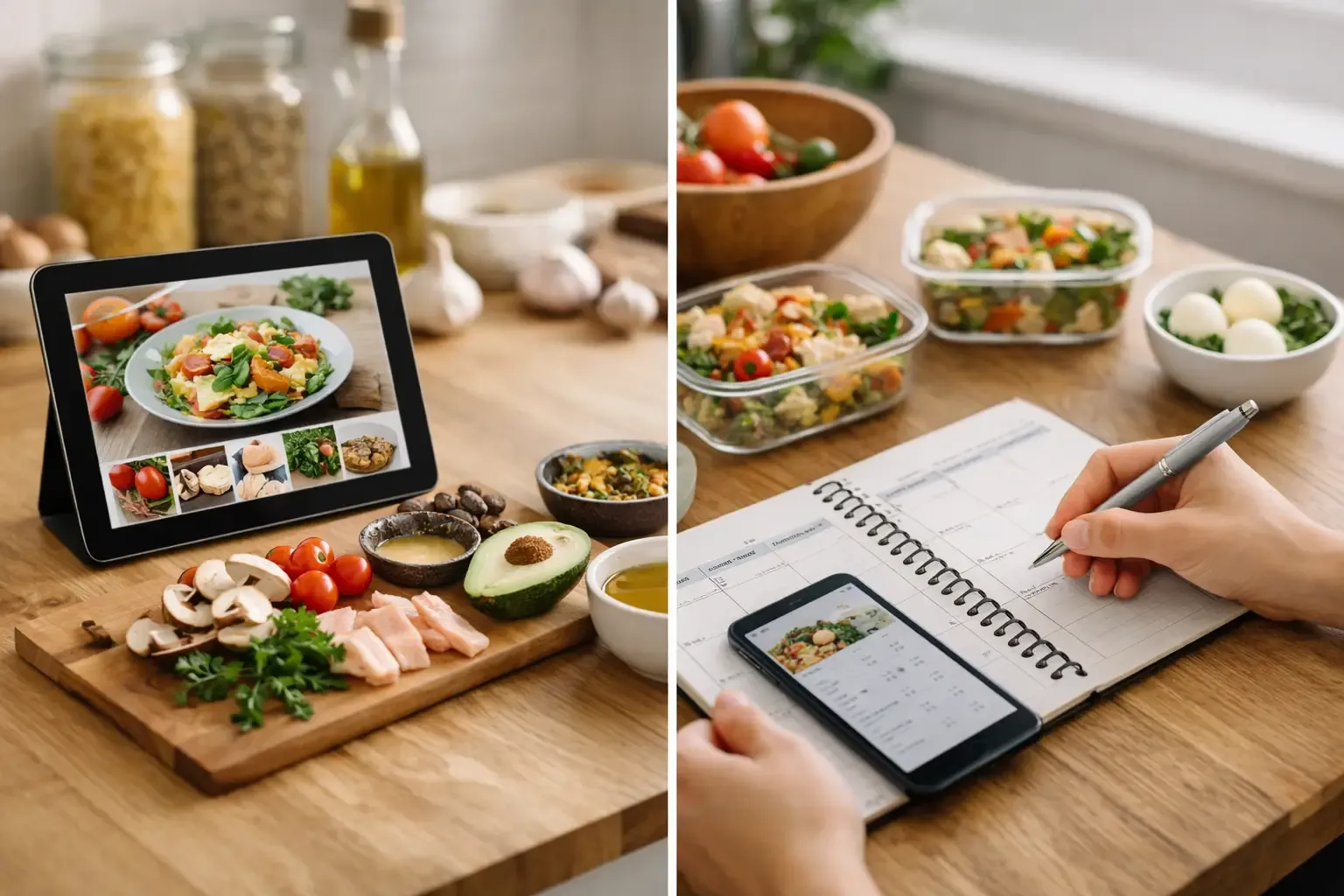
That is why the process matters as much as the recipe. If your pantry, fridge, meal plan, and shopping list all live in separate places, cooking from what you have becomes harder than it should be. A tool like Sously helps because it connects those steps instead of treating them as separate chores. You can track what is on hand, build meals around those ingredients, and only add what is actually missing.
That approach also makes substitutions more practical. Instead of searching for a perfect match, you can work from what is available and adjust with clear ratios and expected dish impact. That is a better fit for weeknight cooking than recipe-blog perfection.
Build a kitchen that gives you options
If you want more recipes made with ingredients you already have, the real fix is not collecting more recipes. It is maintaining a kitchen with flexible staples, visible inventory, and a simple planning rhythm.
Keep a few versatile proteins. Stock a mix of shelf-stable and frozen vegetables. Hold onto dependable carbs like rice, pasta, potatoes, or tortillas. Make sure your seasoning shelf can push meals in different directions. Then, when the week gets busy, dinner is not a search problem. It is a quick assembly job.
That is the difference between a kitchen that creates friction and one that helps. You do not need a bigger pantry or more complicated meal plans. You need a clearer view of what you already have and a better way to use it before it gets wasted.
Cook from what you have.
Sously is the meal-planning kitchen co-pilot the blog is written from — free to start on iPhone and Android.
Get Sously