How to Reduce Duplicate Grocery Purchases
Reduce duplicate grocery purchases with a pantry, meal plan, and shopping workflow that keeps your cart accurate and food in use each week without more tracking
You buy a second jar of salsa because the first one is behind the pickles. You add shredded cheese to the cart, then find an unopened bag in the freezer two days later. These are small mistakes, but they add up fast. To reduce duplicate grocery purchases, you do not need a color-coded spreadsheet or a perfect inventory. You need a kitchen workflow that connects what you have, what you plan to cook, and what you buy.
The problem is usually not poor budgeting or poor memory. Grocery shopping happens separately from meal planning, and both happen separately from the fridge and pantry. When those decisions live in different places, your cart becomes a guess. A simple system closes that gap.
Why duplicate purchases keep happening
Most duplicate buying starts before you leave home. You decide on meals while hungry, build a list from memory, and shop without a clear view of what is already open, frozen, or about to expire. A crowded pantry makes the issue worse because food that is technically owned is not always visible.
Small households face a particular version of this problem. A family may use a large package of spinach or tortillas quickly. A couple or one-person household may buy the same package again before finishing the first one. The food is not necessarily wasted immediately, but it occupies space, expires quietly, and makes the next shopping trip less accurate.
The fix is not to track every grain of rice. Track the ingredients that influence your decisions: items you buy often, foods with short shelf lives, freezer staples, and ingredients that tend to disappear behind other food.
Start with a useful pantry view
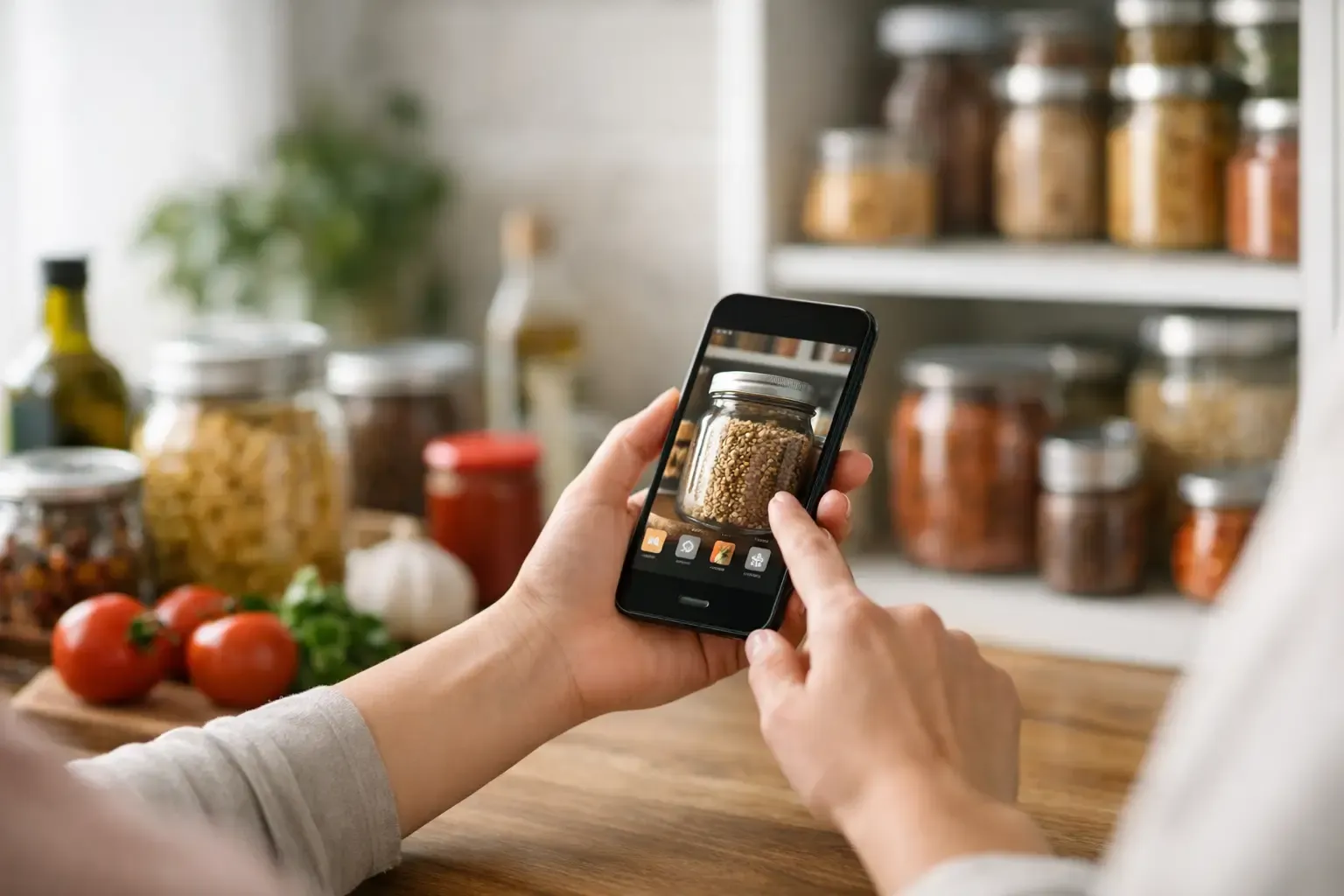
A pantry inventory only works when it is easy enough to maintain. Begin with the categories that create the most duplicate purchases: produce, dairy, proteins, freezer items, sauces, canned goods, grains, and baking basics. You do not need exact counts for every spice. “Half bag of frozen broccoli” is more useful than a perfect inventory that you stop updating after three days.
As you put groceries away, keep similar items together. Put open packages in front and backups behind them. Store freezer vegetables in one area, not wherever they fit. This is basic organization, but it creates the visual signal that prevents a second purchase.
For fast-moving items, use a simple status rather than a precise quantity: plenty, low, or out. Plenty means do not buy it. Low means it can go on the next list if a planned meal needs it. Out means it belongs on the list now. This avoids the false precision that turns pantry tracking into another chore.
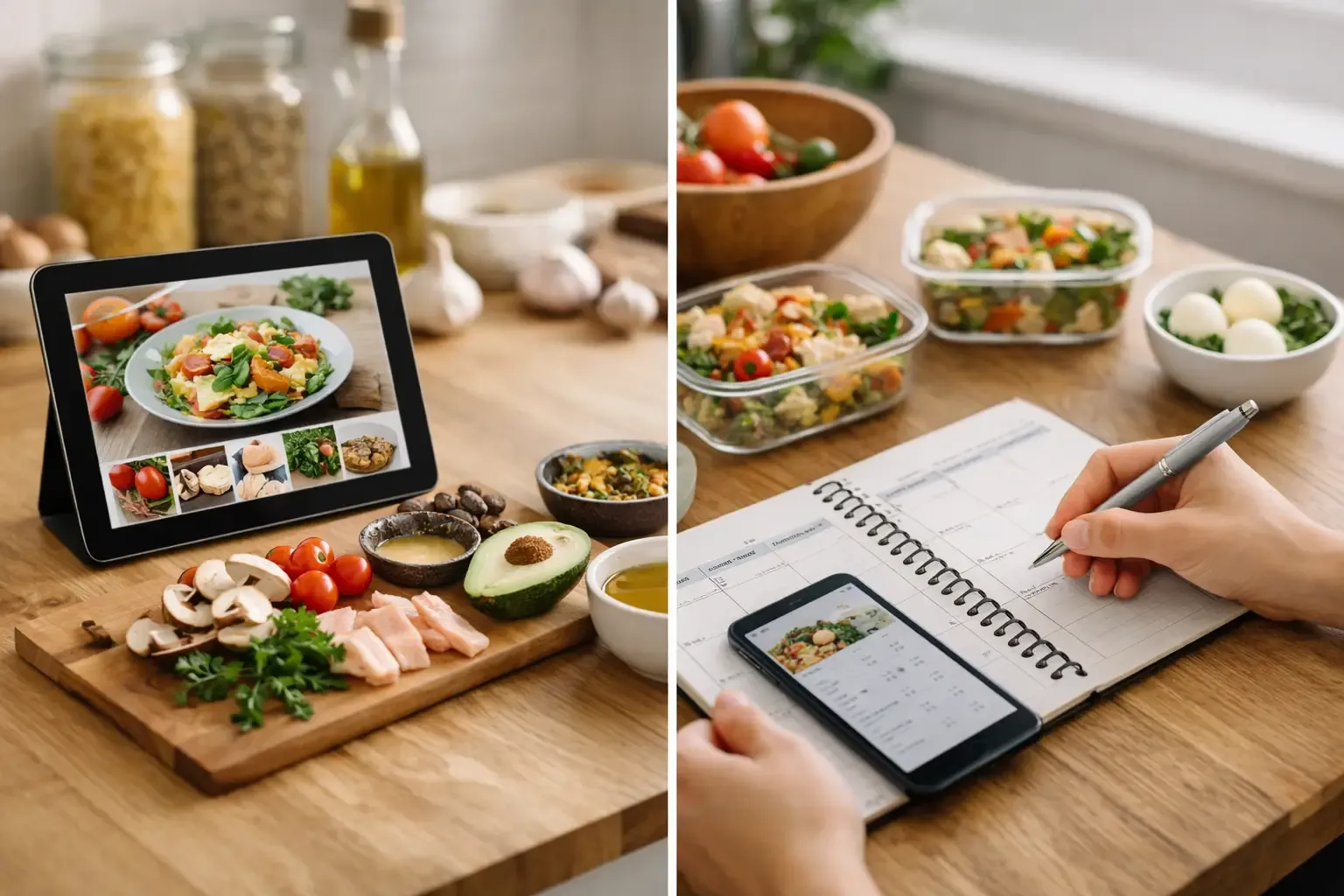
A digital pantry can make this easier when it is tied to planning and shopping rather than treated as a separate database. Sously, for example, keeps pantry, freezer, and fridge items connected to meal planning and a generated shopping list, so ingredients already on hand can be subtracted before you shop.
Plan meals before you make the list
A grocery list should be the result of a meal plan, not a running collection of ideas. Start by looking at the ingredients that are already open or need to be used soon. Then choose meals that use them.
If you have half a container of Greek yogurt, plan a yogurt sauce, breakfast bowls, or a marinade. If there are tortillas in the freezer, build one dinner around tacos, quesadillas, or breakfast burritos. This turns the question from “What should I buy?” into “What can this ingredient become?”
Plan for the number of meals you will realistically cook. A common source of duplicate buying is planning seven ambitious dinners, shopping for all of them, then ordering takeout twice and eating leftovers another night. The groceries remain, but the next week’s list is built as if they do not exist.
For many busy households, three to four planned dinners is more accurate than seven. Leave room for leftovers, a pantry meal, and one flexible night. The right number depends on your schedule, but the plan should reflect your actual week, not your ideal one.
Use repeatable meal templates
Reusable meal templates reduce decision fatigue without forcing you to eat the same thing every week. Keep a few patterns that share ingredients: grain bowls, pasta with vegetables, tacos, sheet-pan chicken, soup and sandwiches, or eggs for dinner.
The value is not variety for its own sake. It is overlap. A bag of spinach can work in eggs, pasta, and grain bowls. A rotisserie chicken can cover tacos, salads, and soup. One ingredient used across two meals is less likely to be forgotten and less likely to be purchased twice.
Build a shopping list that knows what is on hand
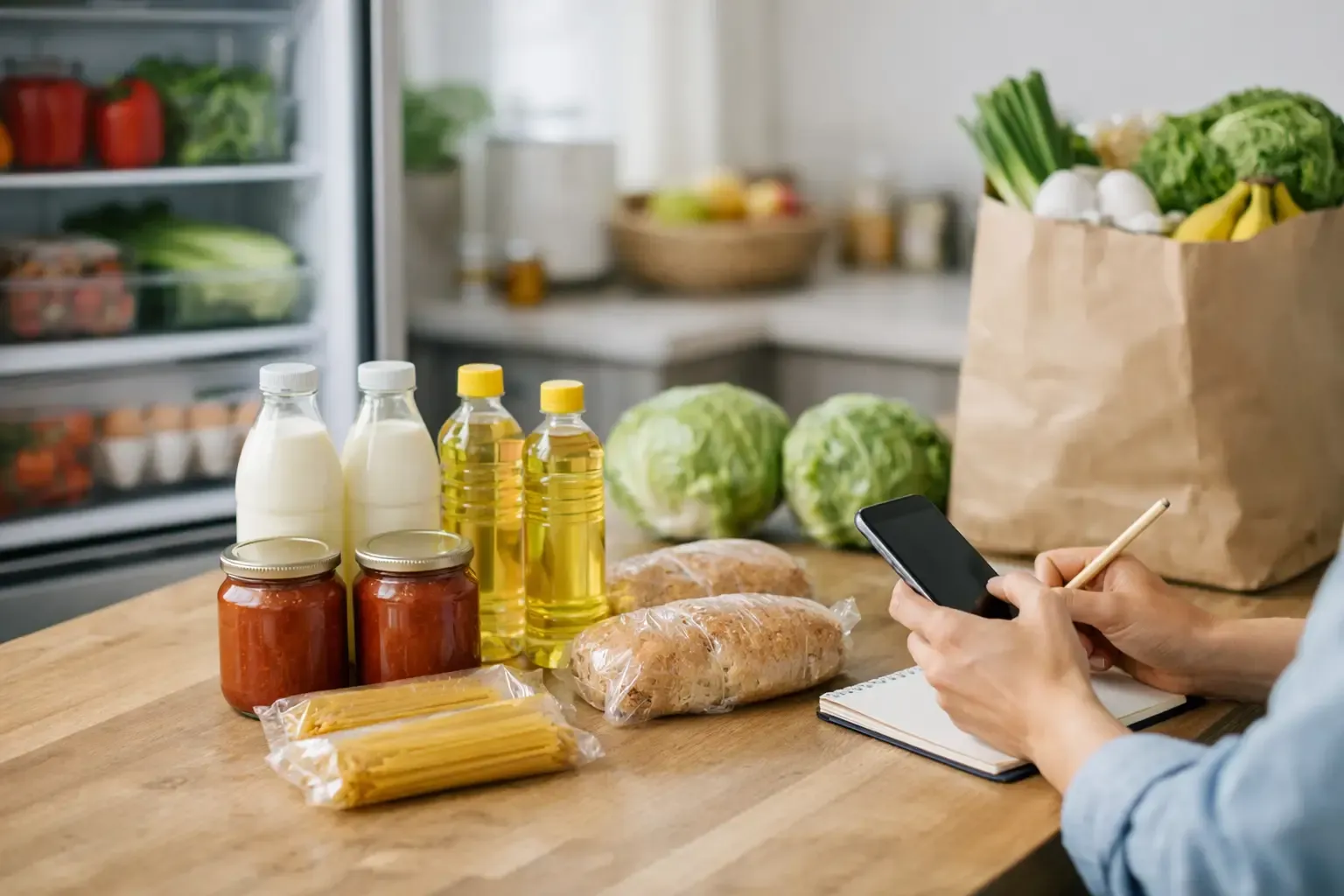
Once meals are planned, list only the missing ingredients. This sounds obvious, but it is where many grocery systems fail. A recipe may call for a full bottle of soy sauce or a whole bag of rice even when you already have enough for the week.
Before adding an item, ask two quick questions: Do I have it? If yes, do I have enough for the planned meal? Check the pantry, fridge, and freezer, not just the shelf where the item usually belongs. Cheese may be frozen. Ground turkey may be in the back of a freezer drawer. An extra can of tomatoes may be in a cabinet you rarely use.
When shopping with another person, use one shared list. Separate notes, text messages, and memory are a reliable way to come home with two cartons of eggs and no onions. A shared list works best when it updates in real time and has one rule: if you put an item in the cart, mark it complete immediately.
Avoid adding “just in case” items without a purpose. A small backup of household staples makes sense if you use them constantly or live far from a store. But a backup habit can turn into a cabinet full of duplicate condiments and snacks. Set a clear threshold for your true staples, such as one unopened backup of olive oil or coffee, and skip extras beyond that.
Shop with a tighter decision rule
At the store, buy from the list first. Promotions, endcaps, and bulk displays are designed to make an extra item feel sensible. Sometimes they are sensible. If chicken is deeply discounted and you have freezer space and a plan to use it, buying extra can lower your food cost. If it is simply a good deal without a meal attached, it is more likely to become inventory you forget.
Use a simple test for off-list purchases: Can you name when you will use it, where it will go, and what it replaces? If the answer is vague, leave it. This rule still allows flexibility for seasonal produce or a useful sale, but it prevents the cart from becoming a collection of future intentions.
Bulk shopping deserves the same test. Larger packages have a lower unit price, but only if you use the full amount before quality drops. For shelf-stable items your household moves through quickly, bulk can work well. For fresh herbs, specialty sauces, bakery items, and large produce packs, the smaller size is often the better value.
Keep the system accurate after the trip
The best time to update your pantry is while unloading groceries. Add new items, mark items as replenished, and place older food where you will see it first. This takes a few minutes and prevents the inventory from drifting away from reality.
Then make one small habit part of cooking: when you finish an ingredient or notice it is low, update it immediately. Do not rely on a mental note. Mental notes disappear between work, errands, and deciding what to cook at 6:30 p.m.
You also do not need to correct every tiny discrepancy. If your list says you have two cans of beans and you have three, move on. The goal is a dependable enough picture to make better shopping decisions, not a warehouse audit.
A 10-minute weekly reset
Before the next grocery trip, take ten minutes to check the fridge, freezer, and pantry. Pull forward food that needs attention. Choose meals that use it. Confirm what is low, then generate or write the list from those meals.
This reset matters more than daily maintenance because it catches the ingredients that slip through normal routines: half-used produce, leftover proteins, open jars, and freezer items bought with good intentions. It also gives you permission to plan a low-shop week when the kitchen is already full.
A grocery cart should reflect a decision, not a guess. When your pantry is visible, your meals are realistic, and your list accounts for what you own, duplicate purchases become the exception. The next time you reach for salsa, you should know whether you need it before you walk into the store.
Cook from what you have.
Sously is the meal-planning kitchen co-pilot the blog is written from — free to start on iPhone and Android.
Get Sously