Weekly Dinner Planning Guide That Works
A weekly dinner planning guide for busy home cooks who want faster meals, less food waste, smarter shopping, and fewer weeknight decisions.
Dinner usually goes off track at 5:37 PM, not on Sunday. That is why a good weekly dinner planning guide is less about making a perfect menu and more about building a system that still works when the day runs long, the fridge is half-full, and nobody wants to think.
Most meal planning advice fails for one simple reason: it starts with recipes instead of reality. Real weeknights start with what you already have, how much time you actually have, and whether Wednesday is a cook-from-scratch night or a use-up-the-leftovers night. If your plan ignores those constraints, it becomes another abandoned spreadsheet, not a useful kitchen tool.
What a weekly dinner planning guide should actually do
A useful plan should answer four questions fast. What is for dinner each night? What ingredients are already on hand? What needs to be bought? And what is the backup if the original plan stops making sense?
That sounds basic, but it is where most friction lives. People overbuy because they cannot see what is in the freezer. They waste food because ingredients are purchased for one recipe and never used again. They burn time because the shopping list, pantry, and meal plan all live in different places.
A solid dinner plan cuts that friction. It reduces decisions, narrows the grocery list, and gives each ingredient more than one job. That last part matters. If spinach only appears in one meal, the odds of waste go up. If it shows up in pasta on Monday and eggs on Thursday, it is much more likely to get used.
Start with your kitchen, not the internet
The fastest way to improve weeknight cooking is to plan from inventory. Before choosing meals, check the fridge, freezer, and pantry. You do not need a full audit every week, but you do need a current read on the ingredients most likely to expire or get forgotten.
Look for three things: proteins that need to be used soon, produce with a short remaining life, and partial ingredients from last week such as half an onion, cooked rice, broth, tortillas, or an open jar of sauce. Those items should shape the week first.
This is the difference between planning and collecting recipes. Planning starts with constraints and available ingredients. Recipe collecting starts with aspiration. One helps you cook dinner on Tuesday. The other gives you twelve tabs open and no answer by 6 PM.
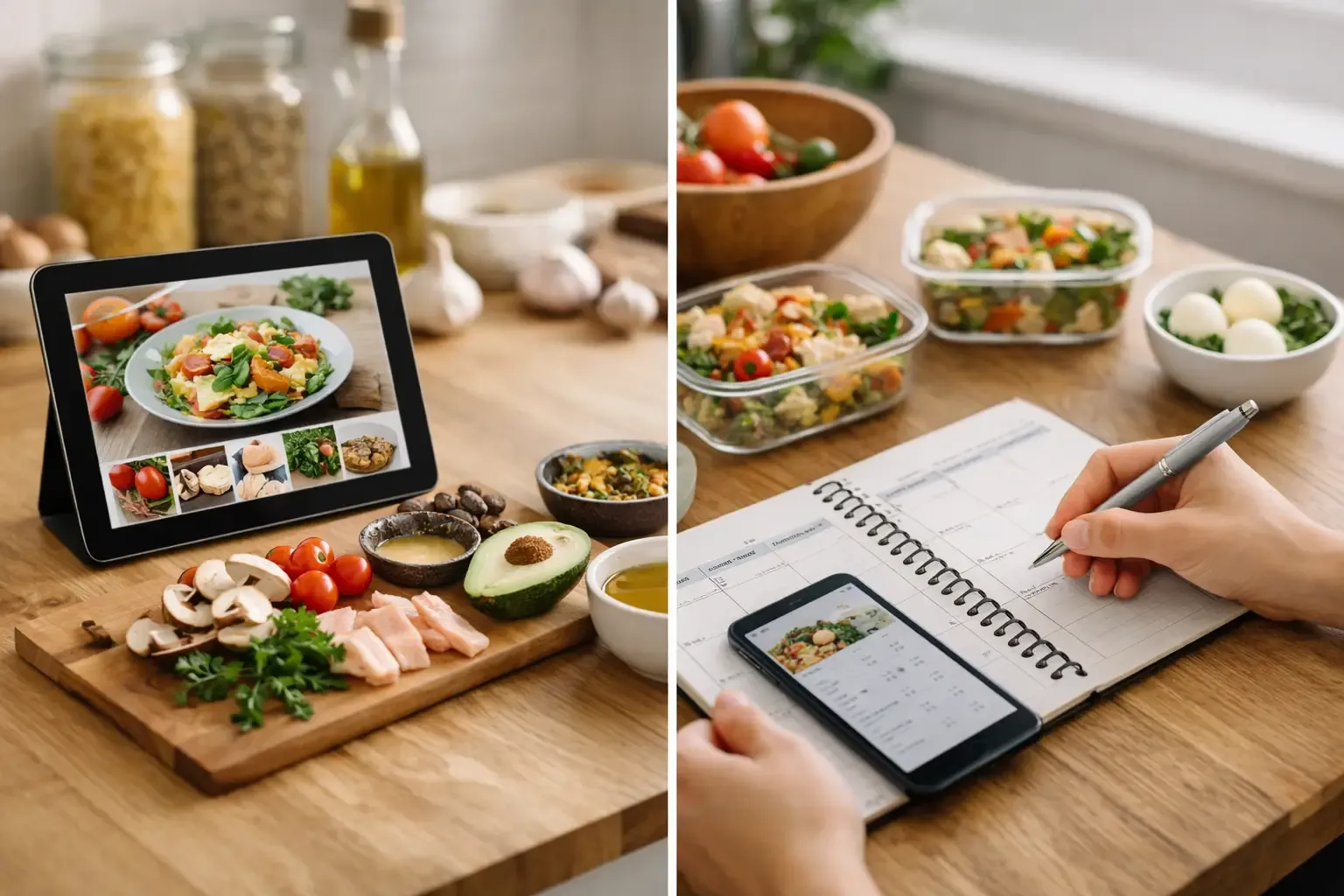
If you use a kitchen app, this is where it should earn its place. The useful version is not a content feed. It is a working view of what is in your kitchen, what meals fit those ingredients, and what you still need to buy.
Build the week around meal types, not seven random recipes
A practical weekly dinner planning guide works best when each night has a job. That keeps the system flexible without making it vague.
For many households, a simple weekly rhythm works better than a strict cuisine schedule. Think in terms like quick skillet night, leftovers night, soup or grain bowl night, pasta night, and one higher-effort meal if you genuinely have time for it. The category matters more than the exact recipe because categories are easier to swap.
If Tuesday is your fast night, then anything that fits your time window can slot in: tacos, stir-fry, eggs and toast, rotisserie chicken with roasted vegetables. You are not locked into one dish. You are protecting the function of the night.
That flexibility is what keeps the plan alive. Some weeks are packed with meetings, school pickup, or travel. Some weeks give you an extra 30 minutes to cook. A system based on meal types can absorb that. A system based on seven fixed recipes usually cannot.
The five-part planning workflow
1. Check what needs to be used
Start with perishables and leftovers. If mushrooms are near the end, they should appear early in the week. If you already have cooked chicken, plan one dinner that uses it directly and another that can turn the remainder into wraps, rice bowls, or soup.
This single step reduces waste more than any coupon or grocery trick. Food gets wasted when it is invisible.
2. Match meals to your actual week
Be honest about time and energy. A 45-minute recipe on your busiest day is not ambitious. It is a setup for takeout.
Assign lower-effort dinners to the nights when you know attention will be thin. Save more involved meals for evenings with margin. If your schedule is unpredictable, make sure at least two dinners can come together from pantry and freezer staples.
3. Reuse ingredients across multiple meals
This is where planning becomes efficient. Buy one bunch of cilantro for tacos and grain bowls. Roast extra vegetables once and use them in pasta, salads, or wraps later. Cook rice once and carry it across two meals.
The goal is not repetition for its own sake. It is reducing prep, shrinking the shopping list, and giving ingredients a clear path out of the kitchen.
4. Keep one fallback dinner in reserve
Every good plan has a release valve. That might be frozen dumplings, tomato pasta, quesadillas, or breakfast-for-dinner ingredients. It should be fast, low-effort, and made from items you usually keep on hand.
Without a fallback, one disrupted night can derail the rest of the week. With one, the plan bends instead of breaking.
5. Generate the shopping list from the plan
The shopping list should come last, not first. Once dinners are assigned, the list becomes simple: buy only what the meals require after subtracting what is already on hand.
That subtraction matters. It is the difference between a useful list and a duplicate-buying machine. If you already have soy sauce, rice, and frozen broccoli, your stir-fry may only need fresh garlic and protein. Most people overbuy because their list is disconnected from their pantry.
A weekly dinner planning guide for busy households
For busy adults and small households, the best plan is usually four core dinners, one leftovers night, one fallback night, and one flexible slot for eating out or using up odds and ends. You do not need to force seven fully planned dinners unless that genuinely matches how you live.
This matters because overplanning creates its own waste. If you buy ingredients for seven detailed meals and only cook five, the leftovers are not a bonus. They are often the start of spoilage.
Small households also need to watch recipe yield. A six-serving recipe may look efficient, but it depends on whether you actually want that meal three times. Sometimes a smaller recipe plus one intentional leftovers night is the better call.
Where apps help and where they do not
A planning tool is useful when it shortens the path between inventory, meals, and shopping. It should help you see what you have, suggest meals that fit, and build a list that reflects real inventory. It should not ask you to maintain five separate systems just to get dinner on the table.
The trade-off is setup. Any tool is only as good as the information it starts with. If your pantry is never updated, recommendations will drift. But that does not mean the system needs to be perfect. Even partial visibility is better than guessing.
Sously is built for this exact workflow: plan the week, cook what you have, and shop only what you need. The useful part is not just storing recipes. It is connecting pantry tracking, meal planning, recipe generation, and shopping in one place so weeknight decisions stop bouncing between notes apps, grocery apps, and memory.
Common planning mistakes that make dinner harder
The first mistake is planning for your ideal week instead of your real one. The second is choosing meals with no ingredient overlap, which inflates both cost and waste. The third is skipping a fallback option and assuming every evening will go to plan.
Another common issue is treating leftovers as accidental. Leftovers work better when they are assigned. If Thursday is leftovers night, Wednesday's larger batch has a purpose. If leftovers are unplanned, they often just become containers in the back of the fridge.
There is also the question of variety. Yes, it matters. But too much variety in one week can mean extra prep, extra shopping, and more half-used ingredients. For most households, the sweet spot is different formats with some shared components, not seven completely unrelated dinners.
Make the plan easier to repeat
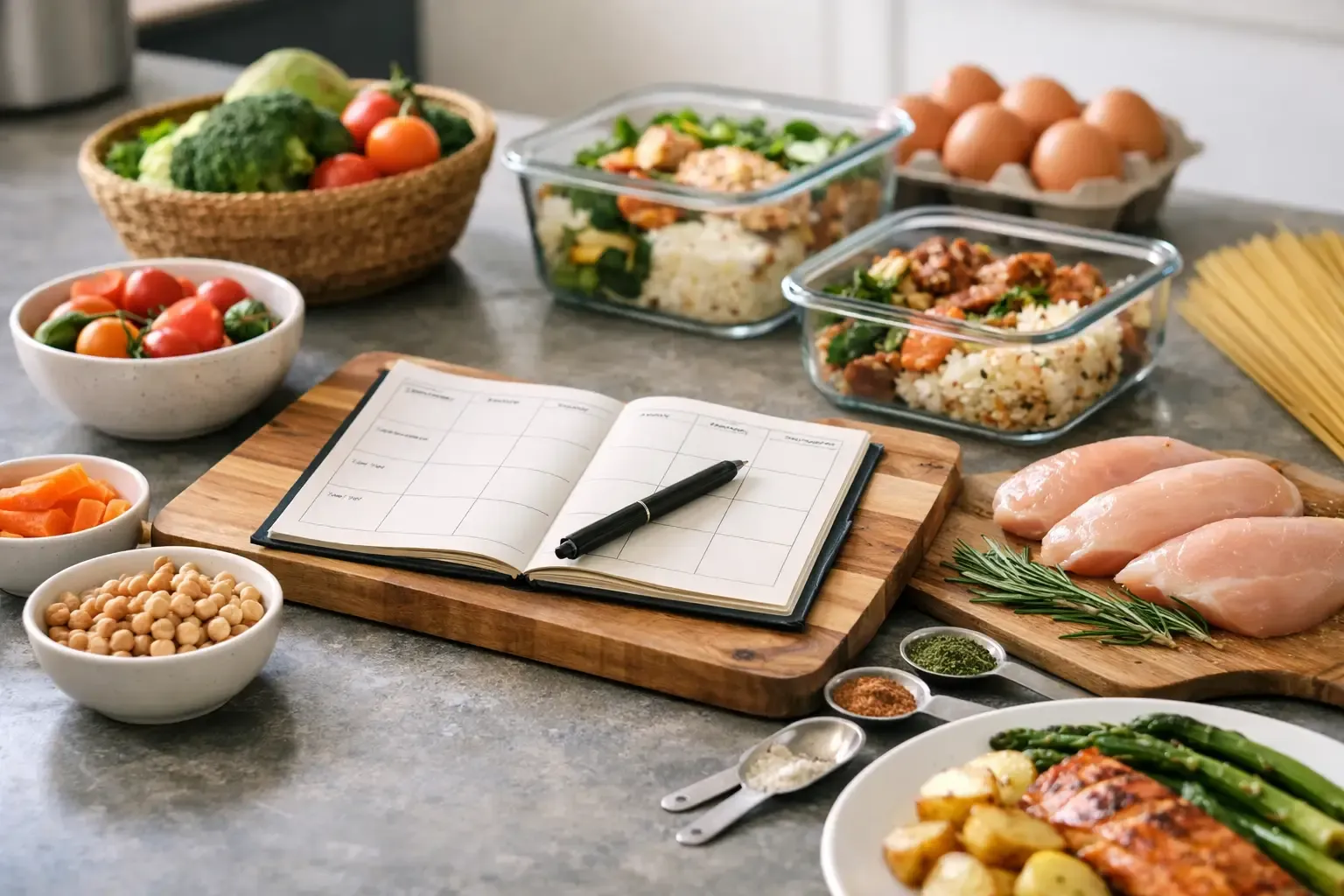
The best weekly dinner planning guide is the one you can reuse next week without starting from zero. Save successful dinner combinations. Repeat anchor meals. Keep a short list of reliable, low-effort dinners that fit your kitchen and schedule.
Templates help here. Not because life should feel automated, but because routine removes friction. If Monday is often a bowl night and Thursday is often pasta or soup, that is not boring. That is operationally smart.
Planning dinner should not feel like a side project. It should feel like a short setup step that makes the rest of the week easier. If your system is asking for too much attention, it is probably overbuilt.
A good dinner plan is quiet. It helps you use what you have, keeps shopping tighter, and gives you one less decision to make when the day is already full. Start there, keep it light, and let the system do the work.
Cook from what you have.
Sously is the meal-planning kitchen co-pilot the blog is written from — free to start on iPhone and Android.
Get Sously